Results matching “paint”

Monthly Artists: Barbara Szepesi Szucs

Barbara Szepesi Szucs is a Hungarian illustrator. She is inspired by children and nature and paints watercolours of birds, flowers, animal, and people. Her artwork varies in different style, but I prefer the whimsical illustrations instead of the more detailed and figurative ones. (A few of my favourite pieces from her are below.)
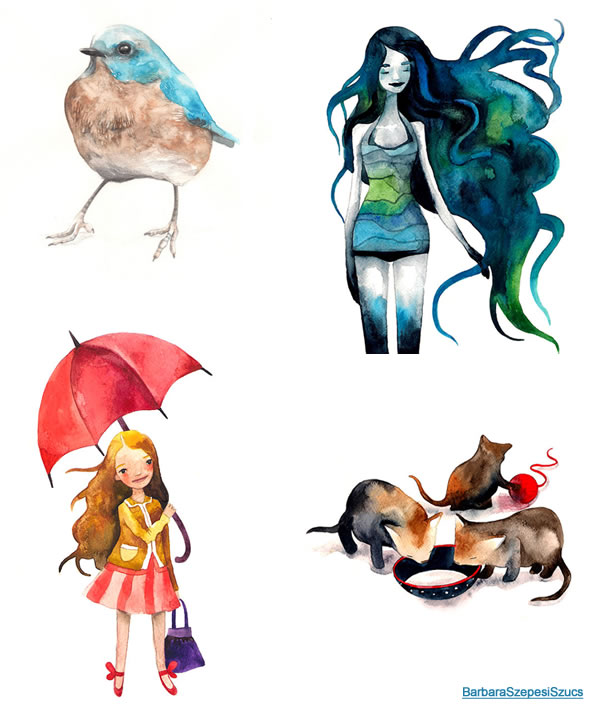
BarbaraSzepesiSzucs.jpg

You can view and buy her work here: http://www.etsy.com/shop/BarbaraSzepesiSzucs
Street Art: Lister

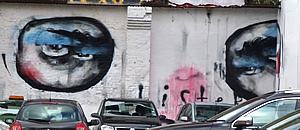
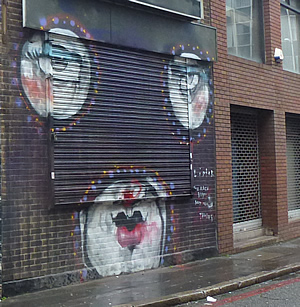
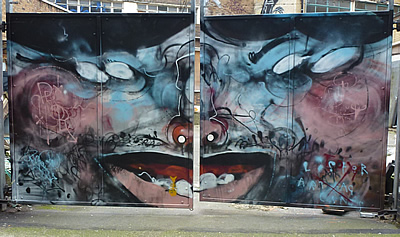
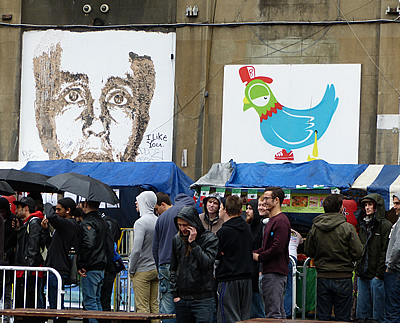
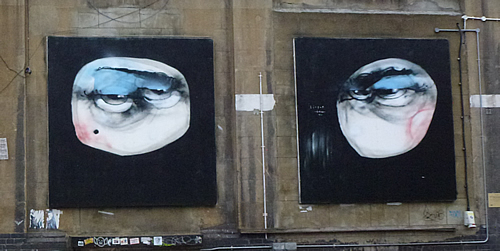
Street art from Anthony Lister, an Australian who is now living in New York City, is located throughout Shoreditch in London. I first discovered the large pieces in Corbet Place in the instantly-recognisable style. These include a series of slightly out-of-focus eyes. Another large piece is located in a car park near Shoreditch's Box Park. As I mentioned, the style of painting is recognisable. Black is used to outline, and light shades of pale blue and red can be seen to add additional detail. The artwork mainly depicts human features, such as eyes and faces. The following pieces on a wall in Corbet Place look like they are watching all passing by.

lister4.jpg

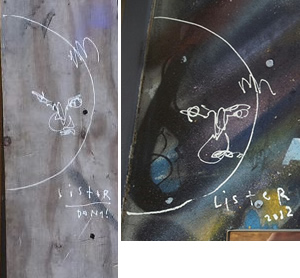
Paste-ups, stickers, and other small drawings bearing the name of the artist can be discovered in all corners of Shoreditch. On two separate walls near some other street art, I discovered the same "moon face" doodle with the name of the artist and the year.

lister1.jpg

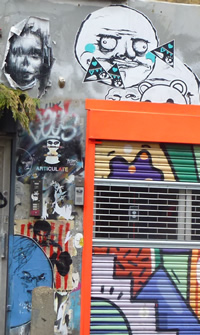
Similar doodles and paste-ups were discovered on this wall, at the corner of Brick Lane and Bethnal Green Road, which is plastered in street art. 

lister3.jpg lister5.jpg

lister7.jpg lister-7.jpg

For more information about this street artist, read the article below and see one of the works in progress. Sadly, this work no longer exists: http://streetartlondon.co.uk/blog/2012/11/16/lister-street-art-london/

Street Art: Thierry Noir

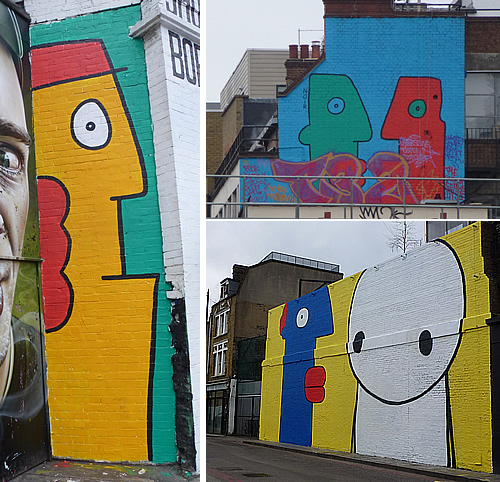
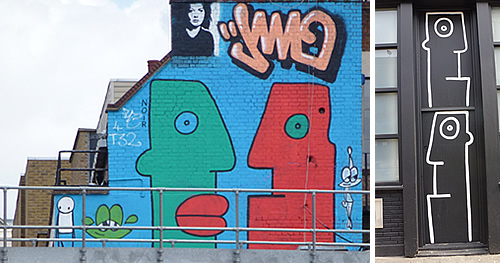
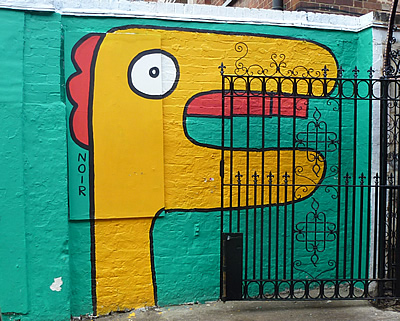
Street artist Thierry Noir has arrived in London. The Berlin artist was one of the first in the street art movement and famously painted on the Berlin Wall from 1984 (until its fall in 1989). Some of his work has started to appear in Shoreditch, and I captured a glimpse of some of his work at the end of last week with the Village Underground Wall near Great Eastern Street alive with one of his figures. The figure appears with one of my favourite street art artists' figures, Stik. Both artists use bright colours and simplified drawings of figures. At the end of last week, Stik and Thierry Noir presented a discussion about street art at Somerset House.
tnoir2.jpg
A bright Thierry Noir figure on Great Eastern Street; Thierry Noir figures near Great Eastern Street above a car park; Thierry Noir and Stik in conversation.
 
thierry2013-20.jpg
In addition to the Village Underground Wall, I noticed a couple of Thierry Noir's figures appeared to be in conversation on a wall above the car park opposite. These were a little bit difficult to spot and photograph, but I managed to get a photograph of them on Monday, though they'd sadly been painted over by another 'artist'.
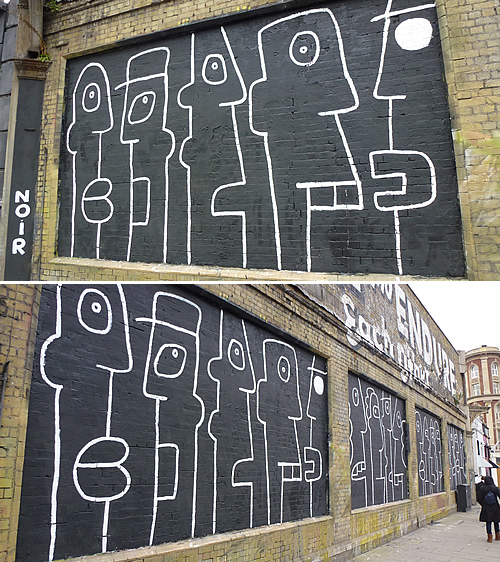
On Monday, I spotted one of the well-known walls that hosts street art (on Great Eastern Street) was decorated with his figures against a black background. This made me think of chalk drawings.  
tnoir1.jpg
Thierry Noir's figures appear on a giant 'chalkboard-like' painted wall in Great Eastern Street.
tnoir3.jpg
Taken on Rivington Street
I like the simplicity of this street artist's style and the bright colours. Seeing Thierry Noir's figures with Stik's last week made me smile as both have a similar style of simplicity and bright colours. His figures remind me of the large stone sculptures on Easter Island.

Street Art: London's Mushrooms

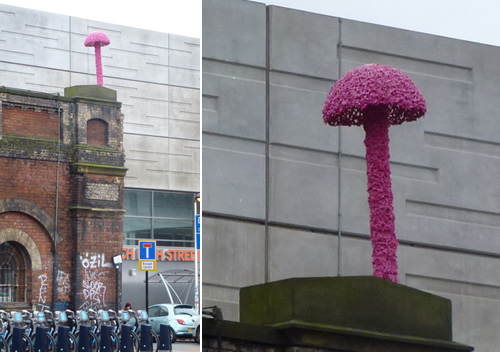
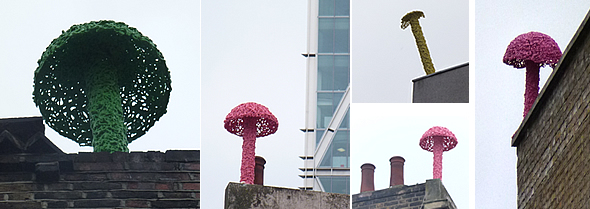
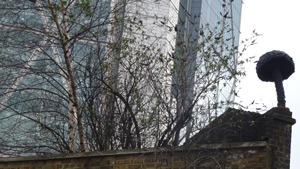
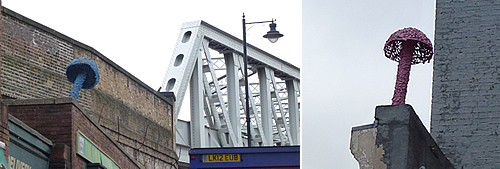
One of my favourite pieces of street art to be discovered in London are the mushrooms by street artist Christiaan Nagel. The mushrooms are made of foam, fiber glass, stainless steel, and they are painted in bright colours. They can be discovered on the tops of buildings and walls in Shoreditch, London. 

mushrooms2.jpg

The reason I enjoy them is that they seem to "appear" or "pop up" unexpectedly, like a mushroom does. They seem to make the city look natural or organic by bringing a little bit of life into the structure that they 'sprout' from. They are a bit unexpected and make the drab city (wall or building) a colourful, playful, and 'growing' place. 

mushrooms-3.jpg

In an interview (1), Nagel states that he choose to create these mushrooms because:

"They're pop-up art, they could be mushroom clouds, they could be psychedelic drugs," he said. "I suppose they tie in with the sub-culture of street art, which is guerrilla art, which is illegal."

For me, this street art is a welcoming sight. (I, like many others, do appreciate the street art that does have an artistic merit and that does not destroy personal property or offend in any way.) I think many more are appreciating street art, and I often see tourists with cameras looking at the street art. I also see or have seen advertised about London walks to see the street art in and around Shoreditch.

mushroom1.jpg mushroom5.jpg
londonmushrooms5.jpg

1) British artists take to the streets. http://gulfnews.com/news/world/uk/british-artists-take-to-the-streets-1.1014636 [28 April, 2012].

Street Art: Ronzo

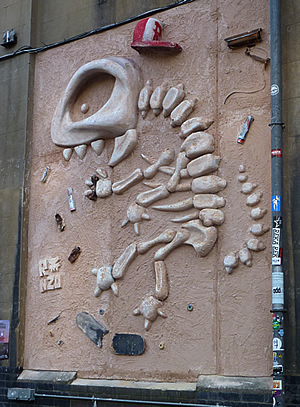
The street artist known as Ronzo completed new street art at the weekend just off Brick Lane near another one of his pieces. I've been waiting for artwork to appear here for a little while now, so I was glad to see the new artwork appear on Monday morning on my way to work. The artwork features dinosaur bones in concrete with a broken skateboard, spray paint cans, and a CCTV camera. The toothy dinosaur wears the trademark Ronzo red and white ball cap. 

ronzo1.jpg
Ronzo's street art in Corbet Place

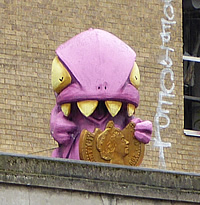
Below is a photograph of one of Ronzo's monster sculptures in the same square as the street art photographed above. These fellows started to appear at the City's boundaries, but most of them have been removed except the ones located in Shoreditch. They are known as the 'credit crunch monsters'. Smaller ones appeared in the City (known as 'Pity of London'), but these were removed. However, this character has become quite popular. It's a pity that I did not get to see the smaller versions in the City.

ronzo2.jpg
Ronzo's street art in Corbet Place, known as 'Crunchy'

Ronzo is a street artist from Germany, and he arrived in London in 2000. Many of his artworks feature toothy monsters or the trade-mark hat.

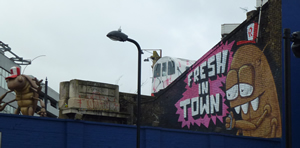
freshintown.jpg
'Fresh in Town' and cockroach sculpture off Great Eastern Street

In addition to the above, Ronzo has created additional artwork in London. This "Fresh in Town" artwork with the cockroach sculpture appeared earlier this year near Great Eastern Street in Shoreditch. He also created a series of street art featuring pigeons with gold chains and ball caps. The one below was also located in Corbet Place off Brick Lane, but it was replaced sometime at the end of last year or beginning of this year. I think it's brilliant.

corbet-1.jpg
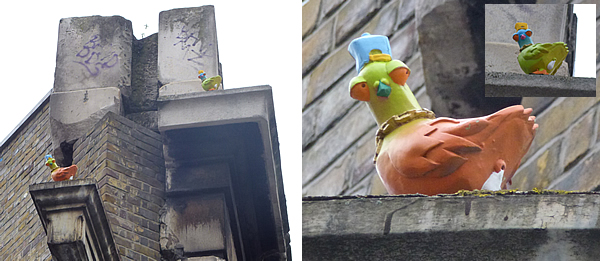
Ronzo's pigeon, a.k.a. Birdz

One of the works of street art to appear before the Olympics featured Ronzo's pigeon with the Olympic logo. Recently, sculptures of pigeons have appeared on Great Eastern Street. 
ronzo-3.jpg
Birdz

To read more about this street artist and to read an interview from him, go to: http://www.veryverylondon.com/2012/03/08/interview-ronzo-a-street-artist/

Street Art: "Super Foetus"

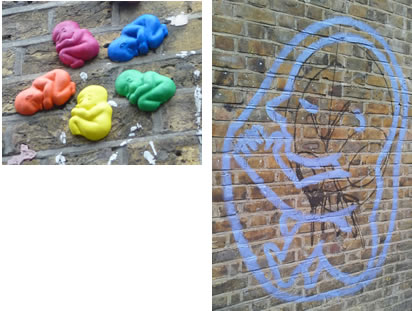
I've been seeing the "Super Foetus" street art in Shoreditch, mainly on and near Brick Lane; a particular concentration of the image has been seen in and around Corbet Place off of Brick Lane. The imagery includes wall paintings, street paintings, paste-ups, and clay decorations stuck on the sides of buildings and walls. According to the official blog (1), the image is also on clothing, body tattoos, and jewellry. 

superfoetus1.jpg

Sebastien Lecca is the creator of the concept. On his Facebook "Super Foetus" page (http://www.facebook.com/SuperFoetus), he states that the foetus is a sign of faith in humanity. The imagery has caused controversy with some feeling it portrayed political views. An interview by Lecca to explain the image and the different views is located here: http://superfoetus.wordpress.com/2012/11/21/article-paru-sur-le-blog-mcwp-en-reponse-aux-attaques/

The image is also being used with the super hero image, such as Superman in a baby form. The image can be found on t-shirts and in sculptures. 

For more information about this artist and the image, go to the following:

Blog: http://superfoetus.wordpress.com/
Web: http://www.superfoetus.com/

Street Art Near Brick Lane

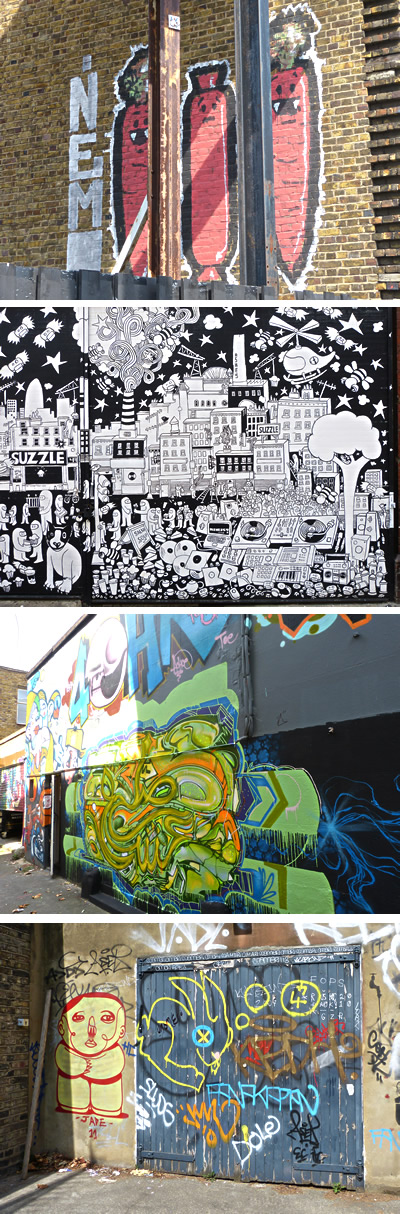
�I enjoy seeing the street art around Brick Lane whenever I visit. Every time I visit Brick Lane and Shoreditch, there is always something new to see. In fact, in one of the photographs of the street art below  of the shop door (the black and white one), I watched the artist painting the image on a trip to Brick Lane during my lunch hour when I worked in London. 

I am actually not sure which street artists were responsible for some of the artwork below to credit them. Let me know if you are aware of the artist so that I can credit their work.
streetart-brick01.jpg
From top:
1. 'Carrots with fangs' street art is located near Brick Lane - Nemo. 2. A shop door painting on Brick Lane. 3. A large-scale abstract image. 4. A man that resembles Hitler by Jade 11.
Just a side-note here, but the carrots with fangs remind me of one of my favourite book series as a child, Bunnicula (by James Howe). The Celery Stalks at Midnight was one of the books in the series, and the vampire carrots and other vegetables made me think of these books.
Moving on...
bricklane03.jpg
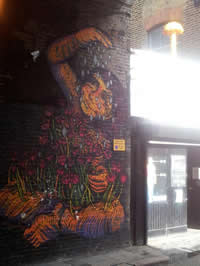
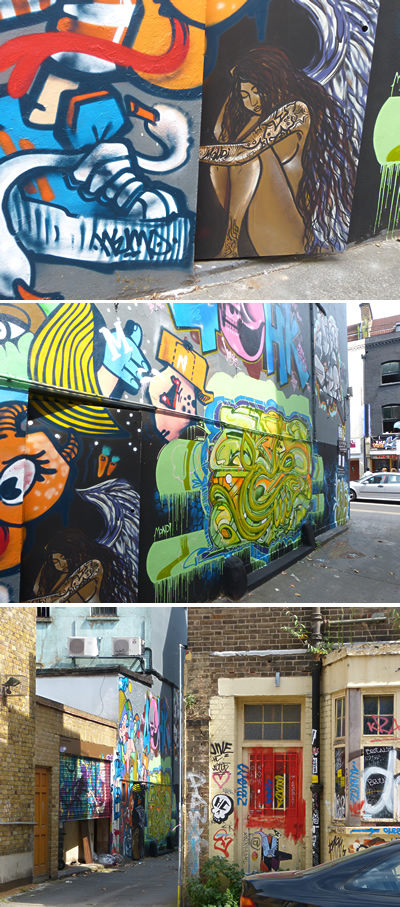
Various collages from the same alleyway and inner courtyard off of Brick Lane. I particularly liked the girl with the tattoos sitting on her own in a 'shadow' beneath the more colourful pieces.
bricklane02.jpg
bricklane04.jpg
From top:
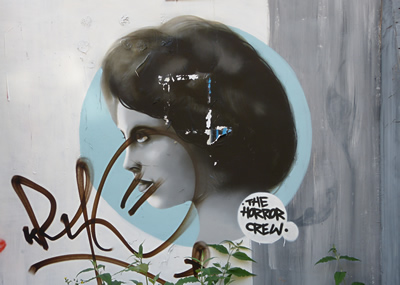
1. Balloon-shaped crown for the Queen's Diamond Jubilee by Fan (Horror Crew). 2. A balloon dog by Fan (Horror Crew) and a lady with flowing hair (Vdeng). 3. Street artist Jimmy C. painted this skull using dots of colour, inspired by Damien Hirst's jewel skull. Unfortunately, it has been damaged. 4. A robin, artist unknown. 5. A collage of photographs 6. A portrait of a lady by Horror Crew, which is sadly damaged.
bricklane01.jpg
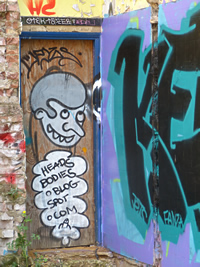
Street art advertisement for a blog.

Tracing Ancestry in Yorkshire: Welburn & Bulmer

I headed up to Yorkshire this summer as part of a weekend break during my anniversary weekend. Actually, because this year is a leap year, the day itself fell on the Monday, but the bloke and I decided to celebrate at the weekend.

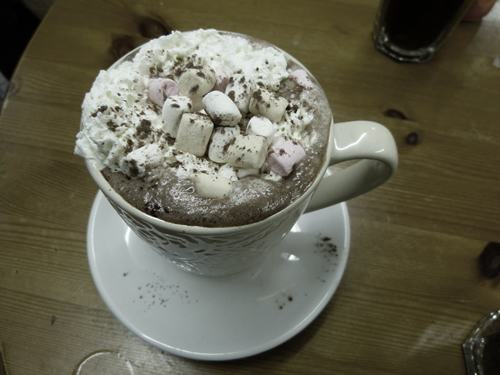
The last time I visited Welburn and Bulmer in Yorkshire was close to ten years ago. The villages are still beautiful with golden stone cottages and nice gardens, and they are still very quiet. Apparently the ancestors lived in Welburn, but they were buried in Bulmer, which is the next village just down the road. Both villages are near Castle Howard. The last time I was at Welburn, I was certain it had another shop or post office; however, a small bakery/restaurant had opened up where I'd always remembered there being a small shop. This appears to be the only shop in the village now. I had a hot chocolate and toastie here. Across the road is an old schoolhouse with a single clock, and this had not changed.

yorks06.jpg
The schoolhouse and a beautiful garden. I think they love purple lavender.

yorks08.jpg
The hot chocolate I had in Welburn.

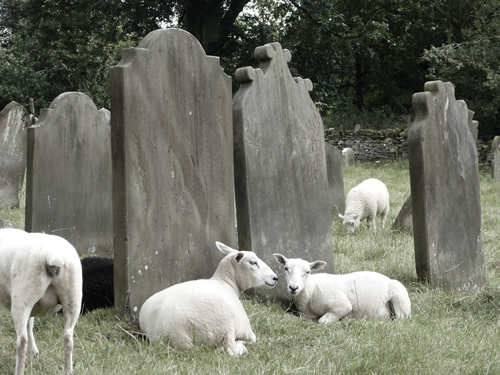
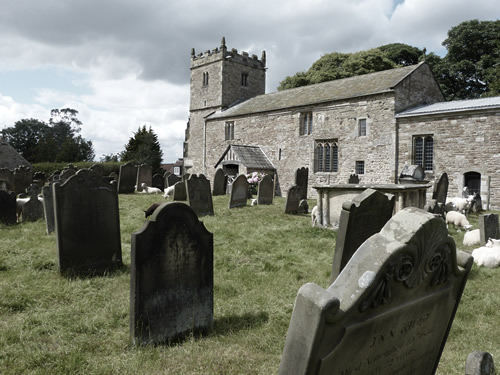
After the quick meal, we headed over to Bulmer. This village is smaller and quieter. I took a quick walk up to the little church and noticed more changes. The last time I had visited, the graves were open with high grass around, and they were not well-tended. This time, they had put fence around the graves and kept sheep inside. This looks picturesque with the sheep amongst the graves, but the sheep are no doubt wearing away the grave stones as they eat the grass near it and lay against the stones. I noticed that several stones seemed to be wearing away at the bottom. 

[The ancestor's grave - Richard Smailes. The grave reads: "Sacred to the memory of Richard Smailes of Welburn who died Feb. 27, 1838 ages 48 years. And of Ann, his wife, who died Dec 20, 1854 aged 64. Also in affectionate remembrance of Jane Dobson, daughter of the above and wife Robert Dobson Master Mariner who departed this life Feb 21, 1858 aged 42 years from fever in the West Indies during a voyage. "Sorrow not as those without hope - 1st Thes. Chap. IV.]

yorks07.jpg
Bulmer's Cemetery near the church now contains sheep amongst the stones.

yorks09.jpg
A view of the graves and Bulmer's church.

After visiting the graves, we drove to Bridlington seaside resort before continuing on the journey to Hull. Although much of Hull is modern, the city has a lot of history and was also once popular in Victorian times. Unfortunately, the city suffered during the second World War, but the docks and gardens are good to visit, and there's many places to shop. 

yorks05.jpg
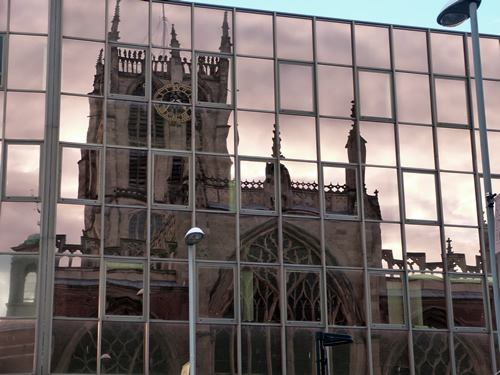
Holy Trinity Church in Hull reflects in newer buildings across the street

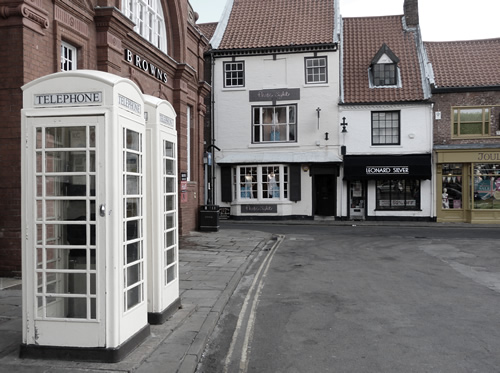
On Sunday morning, we stopped off at Beverley, which is a picturesque town north of Hull. Apparently, it was one of the ten most populated towns in England and was made rich and popular due to the wool trade. Beverley has many beautiful historic buildings and cottages, and the phone boxes are painted white (as they are in Hull). This is the only part of the UK where the phone boxes are a different colour to the standard red.

yorks01.jpg
White phone boxes in Beverley.

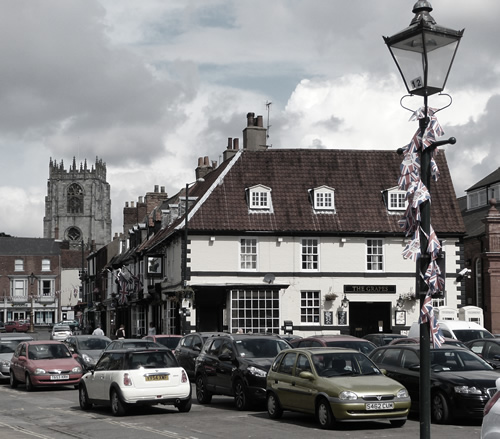
Beverley has a nice market square, church, and a cathedral. The town seems to be built in a linear fashion instead of surrounding a central point. I parked near one of the city gates and walked through two or three squares before arriving at Beverley Minster. The town was quiet as it was Sunday morning.

yorks03.jpg
Beverley Market square with the church in the background.

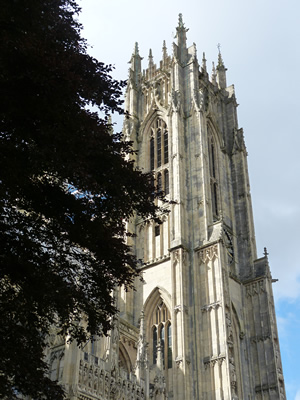
Walking further down the main streets, the beautiful Beverley Minster came into view. Walking early on Sunday morning was nice; the streets were quiet except for the melodic ringing of the church bells.

yorks02.jpg
I especially loved the facade of the church and the fine detail of Beverley Minster.

yorks04.jpg
Beverley Minster

[I've included a family letter from one ancestor to another, to encourage them to leave England for America. This is included below. Maybe someone reading this will share the same ancestry.]

Virginia
Nov. 18th 41 

My Dear Brother, To my great surprise I rec'd yours on the 14th ultimo. As you state a many things that are news to me, I hardly know where to commence my Epistle. Shall, however, in the first place, begin by telling you that through the good wife and mercy of God, I am well and doing well and to the praise of our heavenly Father, my family are all alive and in tolerable good health -- not one hoof of my tribe are in wanting since we left England, but have encreased one by the name of Bridget. With respect to my circumstances, I stated to you in my last that we are living upon the same farm. Three of my children are married near to us. I have the pleasure to see them every few days. They are all doing well. Robert, I have a farm for him adjoining mine containing sixty two acres. He has moved upon it last week. I bought it since I last wrote you. I have set him out with furniture, two four year old colts, 2 cows, hogs, pigs, geese, ducks, hens, etc. In fact, he has got what was necessary to give him a good start and make him an independent man. John is living with me (as he is not married) and going to work my farm upon shares, so we shall only have four in family -- me and my wife, John and Bridget. I shall next reply to your request with respect to your coming to America. I see nothing to hinder you from doing far better for your family that you seem to be doing at present. You do not state what money you have (or will have) to bring with you but I suppose you will have some at least to bring you to this goodly land -- and if you can get here, I hereby assure you dear George you will find in me an affectionate Brother and friend. The experience will (I suppose) be from Liverpool to New York in the steerage -- about 20.00 sterling or as we say near one hundred dollars. 

 From Welbourn to Liverpool you can form the best idea. From New York to my house is about 850 miles, all the way by water. This will seem a great distance to you but it is nothing to us. It will cost you (I suppose) about 30.00 or one hundred and fifty dollars. That is if you do not bring too much luggage. I would advise you to bring nothing but your beds, bedding and clothing as you can get every necessary here same as at Malton. I think I gave you directions in my last but should you have lost them, I will renew them. When you get to New York, start by the Steam Boat for Albany, from thence up the canal for Buffalo, then up the lake to Cleveland, then down the Ohio Canal to Roscoe. Then you arrive at Roscoe, enquire for me at Judge Retillys Store (as he knows me well) and he will take care of you, and your goods untill I can bring my waggon to fetch you home. What money you have to bring, you had best exchange at Liverpool for Guineas or Spanish Doubloons or Silver Dollars and be sure you do not lose them for they are a set of sharpers -- likewise at New York -- in fact -- all the way you must be wide awake or you are sure to be robbed or swindled somehow or other. Your Gold or Silver is now worth here from eight to ten per cent premium. Had I known what money you would have, I could have purchased a small place for you against Spring but as you have not said anything about it -- I shall wait until I see you. I can buy several places near me. For instance, one farm 15 acres for about 30- or one hundred and fifty dollars with dwelling house etc upon it and I think about 10 acres cleared -- another 100 acres for $750.00 seven hundred and fifty dollars and other places in the same ratio according to improvements, location etc. With respect to myself, I like America as well as ever and instead of groaning out my days in England in poverty -- I am independent in a free country -- thanks be to God. The death of dear Uncle did not surprise me but poor brother Richard -- I feel for his small family but must acquise in the will of the Lord. You mention something misterious to me about Brother Gibson -- with respect to that money -- will you please see him and assure him I have never rec'd any money nor had any invoice respecting it -- but I intend to write to him in a few days. If the money be not paid -- I wish you could get it and bring it with you -- as I had rather you had use of it to bring you here, as to let it lay as it is. Give my kind respects to him and dear Mary. I would advise you to start about the ___ of April ____ I expect ___ for your Christmas dinner, (while we shall dine upon Roast Goose or Turkey.) If you will write me the receipt of this, I shall be glad to answer you and give more particulars as there will be time enough before you will want to start. I have been very brief. As I must mention dear Cousin John Wilson -- give my best respects to him and should be glad to see him or hear from him -- remember me to all my old play fellows at Welbourn -- and all relations or enquiring friends -- and my new sister. Tell her to come and see America and then if she doesn't like it she can return to her own country -- like Orpha in the days of Ruth. My family join in their kind respects to you and your dear family and will be glad to hail them on the Valley of Wakotomaca. 

Farewell, dear George, for the present -- let not thine heart fail thee, but commit thy way unto the Lord. Trust also in him -- and he will bring it to pass -- Psalm 37-C5. Again, dear Brother, farewell -- and may the blessing of heaven rest upon you and all your dear family shall still be the prayer of your Affectionate Brother and sincere well wisher. 


Thomas Smailes 

I could fill 2 or 3 sheets 

Cincinata is about 180 miles from us in this State.


Book Art and Cover Designs

I've recently been inspired by book art after seeing "Maze of Books" in South Bank this summer. This was a part of the London 2012 Festival. This consisted of a maze of 250,000 books in a room. 

I've also been considering the importance of the book spine. The book's spine is normally the first element of the book that the book browser in a shop (or in a library) sees. Of course, people do "judge a book by its cover", and that makes the spine all the more important. According to Sinclair (2), the book spine is often neglected by designers.

What elements make up a book design? The designer has to consider text direction, font size, and colour.

Berry (1), a book designer, gives a few pointers on text direction for book spines. The most readable book spines would be thick enough to list the title and author on the spine without the user tilting their head. However, most books are not thick enough to allow this, so the words must be written down the size. According to Berrry (1), viewers in North America read the spine from top to bottom; in Europe, they read from bottom to top.

Berry also states arguments for the book title or the author to be in larger font with the rule: If the author is well-known, it is best to have the author's name in larger font (1).

Fixabook is a consultancy that looks at book designs and gives guidance based on the spines (amongst other book-cover-related elements) (2). 

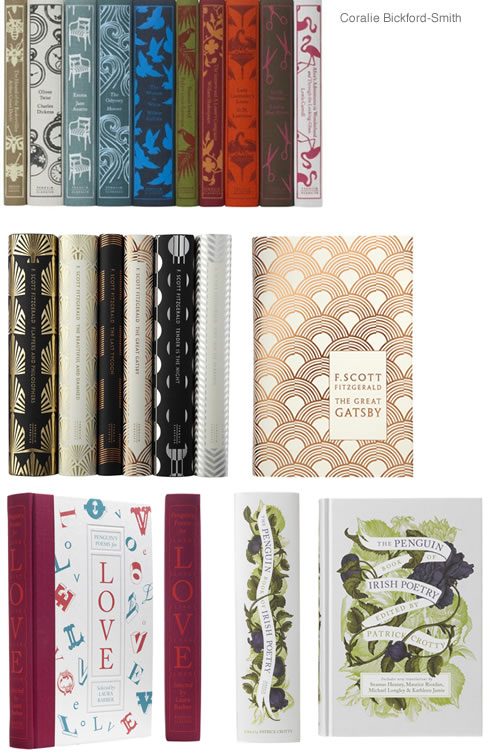
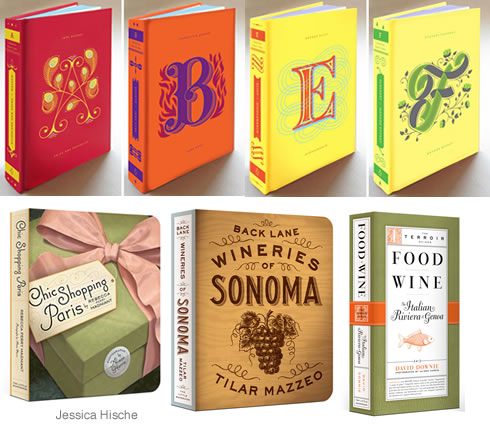
Readability of the font and the correct use of typography is the best indicator about a book and also determines if the book will stand out on the shelf. I have included some examples of good book spine designs.


coraliebickford.jpg

Coralie Bickford-Smith has had several awards for her book covers for Penguin Books. I have included a selection of her work below, but more of her work can be viewed on her website at:   http://www.cb-smith.com


jessicahische.jpg

Jessica Hische is another designer who has worked on Penguin books, and she uses bold typefaces.
More of her work can be found on her website at: http://jessicahische.is


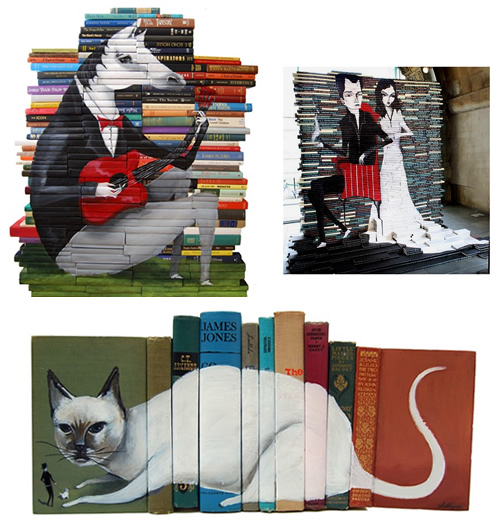
An artist uses books and book spines to create artwork:

mikestilkey1.jpg

Mike Stikley creates paintings on the fronts and spines of books. Many of the pieces use stacks of books created with the three-dimensional artwork, and some of them are floor to ceiling. Most of the paintings feature human or human-like figures, and they are Tim Burton-esque in appearance. More of his work can be discovered on his website here: http://www.mikestilkey.com/


1) Berry, John. D. Putting some spine into design. http://www.creativepro.com/article/dot-font-putting-some-spine-in-design [July 26, 2001].

2) Sinclair, Mark. Look after your spines, book designers. http://creativereview.co.uk/cr-blog/2011/february/book-spine-design-fixabook

Day 9: Exploring Sarajevo in May in ... Snow?!

Looking at my photographs of Sarajevo, you would not expect them to have been taken in the middle of May. The previous day (The great Bosnian Road Trip) having been a wash-out but the previous days being warm and beautiful, I don't think anyone expected snow in the middle of May in Sarajevo. Least of all, this was not only a little snow; this was a considerable amount of snow that settled on the ground and branches of trees in full bloom and leaf, breaking them with the extra weight.

I discovered the snow at about 5:00 in the morning as I noticed the brightness coming from the hotel window. I was shocked, to say the least. The snow was still coming down thickly and would continue to for the rest of that morning. Needless to say, we did not expect to have snow on our holiday to southern/south-eastern Europe in May, so our clothes were not the warmest. Despite this, we soldiered on to make the most of it. Unfortunately, many of the places we wanted to visit were closed due to the snow, and the viewpoints around the city had restricted visibility due to the snow and mist. We hired a guide to take us around and give us a tour of the city.

In short, Sarajevo is a multi-cultural city. Churches, mosques, and synagogues are within close proximity of each other and help to create a diverse skyline and architecture of Sarajevo. As a result, the city has much character. It has also seen much change from the beginning of its history; it became influenced by the Ottoman Empire, Astro-Hungarian Empire, and has seen more modern glories (host of the Olympic games in the 1980s) and downfalls (war in the 1990s).

sarajevo04.jpg
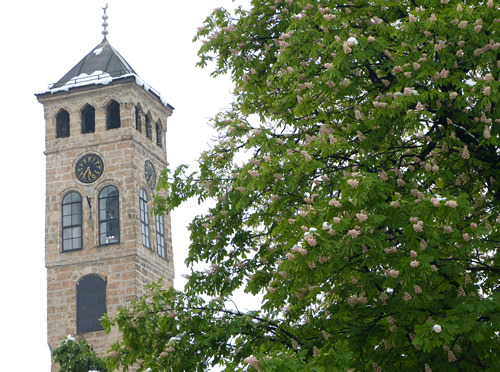
The Sarajevo Clock Tower, Sahat Kula - Gazi Mosque next to a tree in full bloom. This clock was made in London.

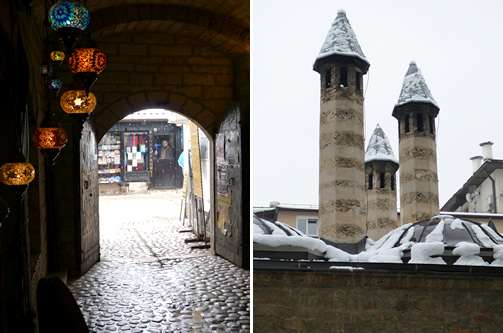
The old part of Sarajevo has eastern influences in architecture. A common sight to see in this area are buildings with large arched doorways and internal courtyards. Many of these were used as old inns for traders and travellers, and these could hold hundreds or people and horses each night. Many of these are now converted into shops or restaurants.

sarajevo03.jpg
(Left image) Looking out of the doorway of an inn in Sarajevo, now converted into a shop selling carpets. (Right image) Detail of the roof architecture of the Kuršumlija Madrassah, which was a school and is now used as a market area.

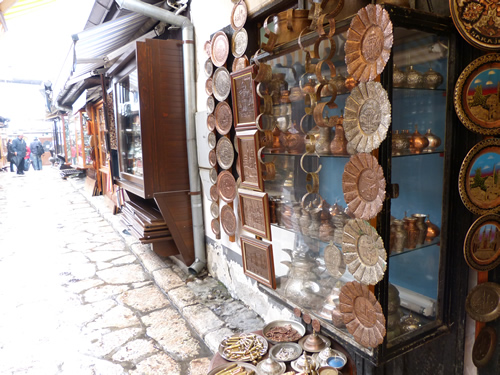
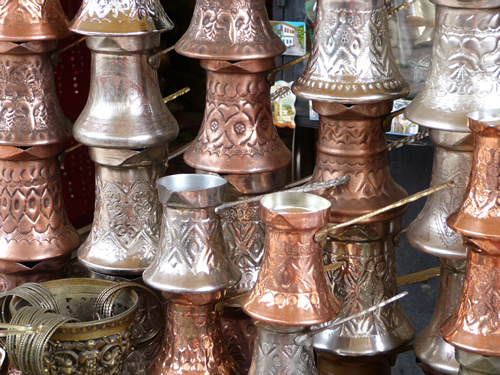
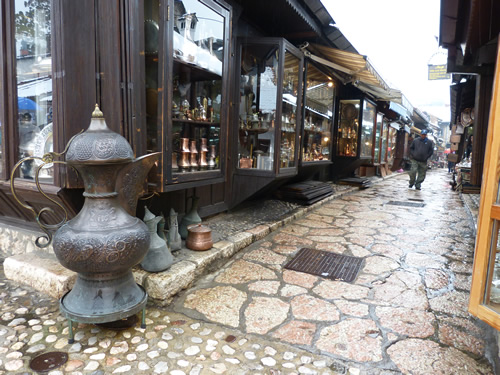
One of my favourite areas in old Sarajevo is Coppersmith Street. The street is built in the eastern style (from the Ottoman Empire) with small buildings and shops and cobbled streets. All of the shops on this street were selling metal goods, and this street reminded me of the souks I visited in Morocco and Egypt.

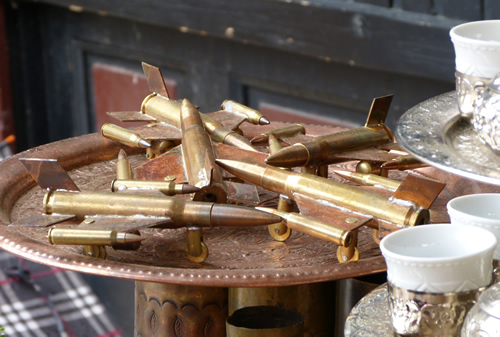
In addition to the copper and metal items for sale, visitors could also purchase many different types of souvenirs created from bullet casings. I assume that these casings were discovered after the war and created into various items for tourists. 

sarajevo10.jpg
Sarajevo's Coppersmith Street

sarajevo05.jpg
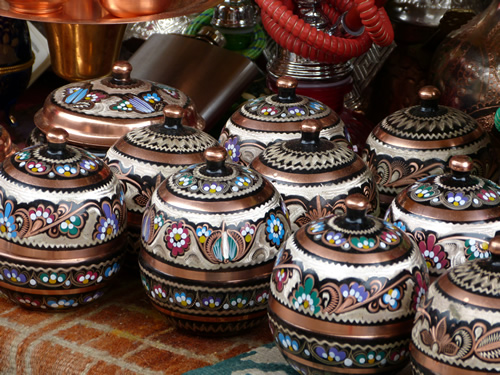
Coppersmith Street in Sarajevo has many decorated copper pots for sale. 

sarajevo06.jpg
Souvenir planes made out of bullet casings for sale on Coppersmith Street; the bullet-planes could be engraved when purchased.

sarajevo07.jpg
The people of Sarajevo love coffee, and these coffee grinders are for sale in Coppersmith Street.

sarajevo08.jpg
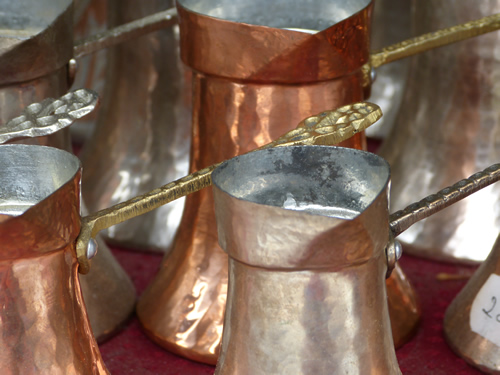
More tin goods for sale; I assume that these little tin jugs are for the Sarajevo coffee experience and may be used to hold milk.

sarajevo09.jpg
A close-up of the copper and tin goods on Coppersmith Street.

sarajevo17.jpg
Looking down Coppersmith Street; by this time in the late afternoon, the snow had melted.

Walking up a couple of blocks from Coppersmith Street, the architecture changes. This is where east meets west. The architecture is large and decorative, designed with the Austro-Hungarian influence. (The buildings reminded me of ones I saw in Prague.) We had a drink in one of the nice hotels in this area and admired the architecture and ceiling detail. Neither of us are coffee-drinkers, so we had hot chocolate, but coffee is the drink of choice in Sarajevo.

The people of Sarajevo were friendly, but I could not help but to notice poverty in some areas. I often saw a few older-looking ladies hunched over and walking slowly barefoot with a cane. We were approached a couple of times by beggars, particularly on the walk up to the Olympic stadium, which is disused. [Note to London: I hope London has plans for the stadium as I've been to many cities - Sarajevo and Barcelona - where the stadiums are just left to ruin.] Unfortunately, due to the snow, we were unable to see the Olympics bobsled track. I've seen pictures of the track, and the graffiti on this looks cool, so I am gutted to have missed it. It was also a pity to miss good views over the city due to the fog. 

sarajevo11.jpg
An older lady walks along a busy street in Sarajevo.

Over the years, Sarajevo has held historical importance. On one of the picturesque bridges over the river, Latin Bridge, Archduke Franz Ferdinand was assassinated. This event ultimately started World War I.

All eyes were on Sarajevo again in the 1990s when the city was under siege. One of the first places we visited in Sarajevo was the War Tunnels. The War Tunnels helped transport people and supplies into the city under siege. Upon arrival to the museum, we watched a video about the siege and saw some of the areas we had visited during the war. We also saw photographs of celebrities who have visited the war tunnels.

sarajevo01.jpg
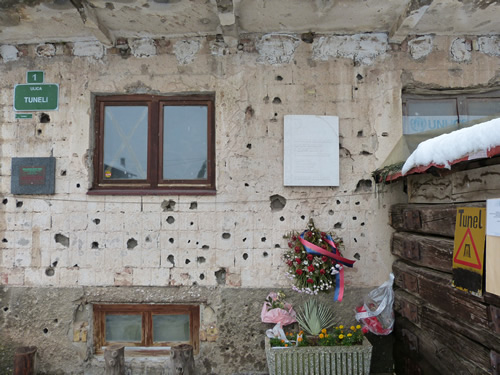
The War Tunnel's Museum, riddled with bullet holes.

sarajevo02.jpg
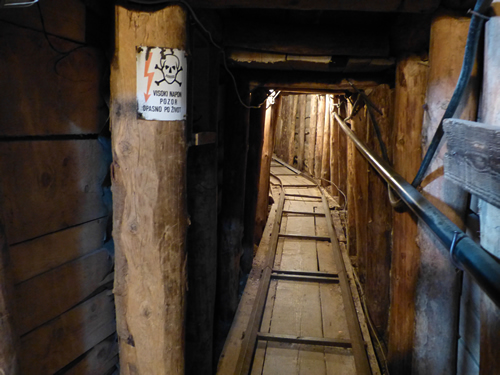
A section of the War Tunnels in Sarajevo that is open to the public.

It is hard to believe that this war happened not so long ago, and there are many reminders of this war around the city. Some of the buildings around Sarajevo have holes in them from bullets, and others had to be rebuilt or are currently in the process of reconstruction. "Sarajevo Roses" are also seen around the city. These are areas of the pavement painted red to mark where someone was struck down. Many times the damage to the pavement can be seen. I missed seeing the "Sarajevo Roses" during my trip, though I may have seen one but did not understand the significance at the time. Monuments have also been set up in Sarajevo for rememembrane of those who suffered in the war. 

sarajevo12.jpg
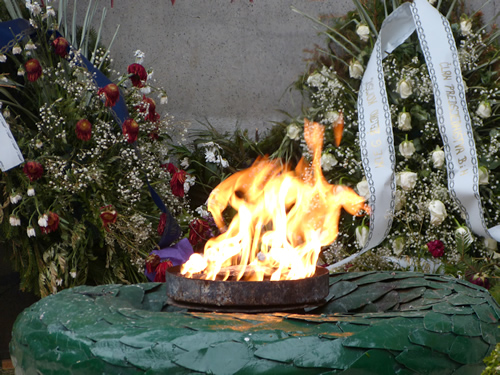
The eternal flame remembers those who passed on in World War II, but it also bears significance to the recent conflict 

sarajevo13.jpg

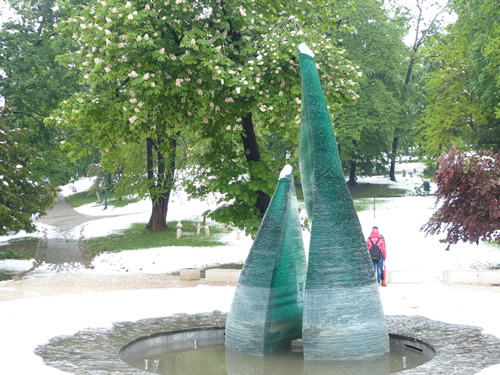
A memorial to the children who perished in the war. The names of children are inscribed around the monument.

The remaining time spent in Sarajevo was spent exploring the central part of the city. A lot of the snow had melted from the streets by the late afternoon, but the city was still covered in the mist and fog, so it was not possible to get any views of the city's skyline.

sarajevo14.jpg
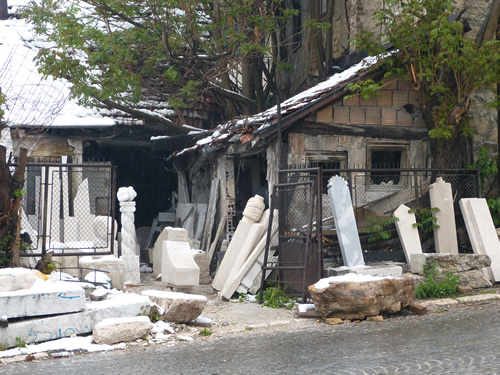
The building in this picture suffered from war damage; the owners appear to make the stones for Muslim graves.

sarajevo16.jpg
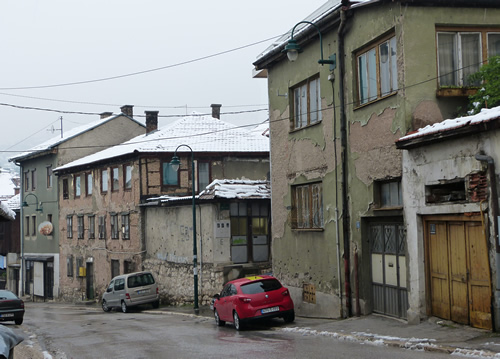
This hill leads down to the centre of Sarajevo, and some of these buildings have suffered damage.

sarajevo21.jpg
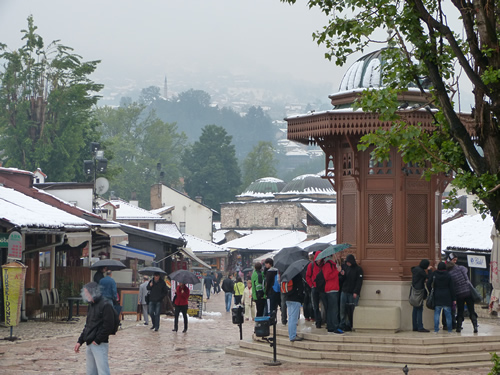
The small fountain, Sebilj. This is a centre point in Sarajevo. Water fountains were popular in Sarajevo.

sarajevo15.jpg
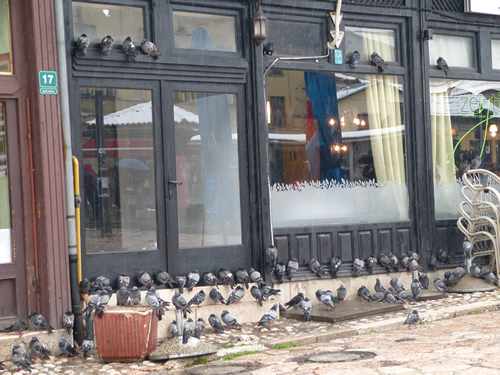
Many pigeons gather to keep warm near a shop window next to the Sebilj.

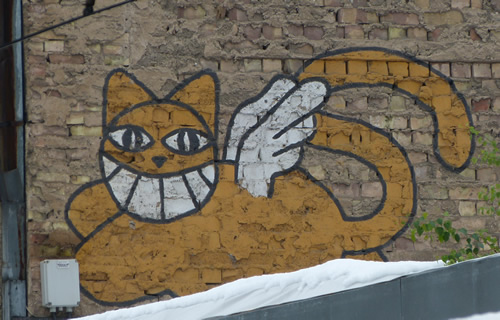
sarajevo18.jpg
This street art cat reminds me of the Cheshire Cat with its wide grin. I am not sure why the cat has wings or the meaning behind it.

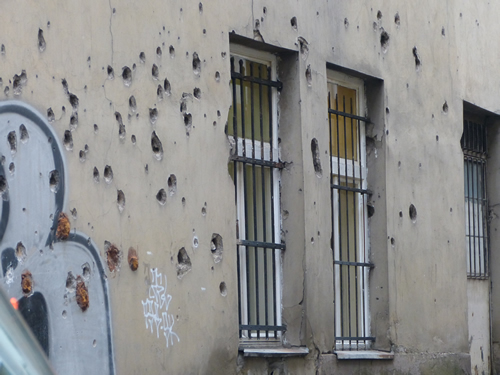
sarajevo19.jpg
Damage on a building in Sarajevo.

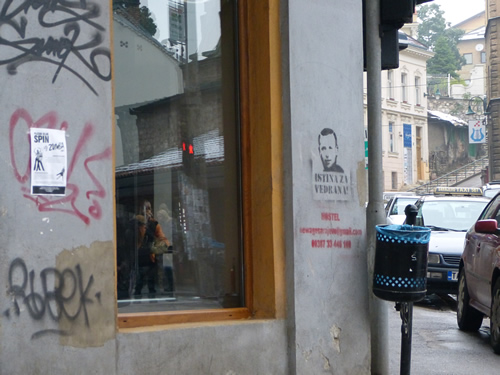
sarajevo20.jpg
I saw the "Istina Za Vedrana!" graffiti in many places in Sarajevo; this translates to "Truth for Vedrana!". Apparently he was a football fan killed by the police, but some think that the case into his death (accident or not) was not fully investigated. 

Have you visited Sarajevo? What do you think of the city?
  1 2 3 4 5 6 7 8 9 10 11 12 13 14 15 16 17 18 19 20 21 22 23 24 25 26 27 28 29 30 31 32 33 34 35 36 37 38 39 40 41 42 43 44 45 46 47 48 49 50 51 52 53 54 55 56 57 58 59 60 61 62 63 64 65 66 67 68 69 70 71 72 73 74 75 76 77 78 79 80 81 82 83 84 85 86 87 88 89 90 91 92 93 94 95 96 97 98 99 100 101 102 103 104 105 106 107 108  

Archives

Recent Comments

  • jenn: Thank you. read more
  • Murge: Amazing post. read more
  • Herbert: good post. site read more
  • Frank Quake: Hey, This is great when you said that I had read more
  • Chappy: You mention peptides here? I have had first hand experience read more
  • jenn: Thanks! I love the work. I have got more recent read more
  • Fanakapan: Thanks for the write up. This was some of my read more
  • jenn: Yes.... but that's only for the islands. Mostar and Montenegro read more
  • jenn: Hello, the code is not mine to hand out. I'll read more
  • pantich: More info about the best day trips from Dubrovnik can read more
OpenID accepted here Learn more about OpenID