Results matching “paint”

"Leeds Festival of Flowers" marks 900 years of Leeds Castle

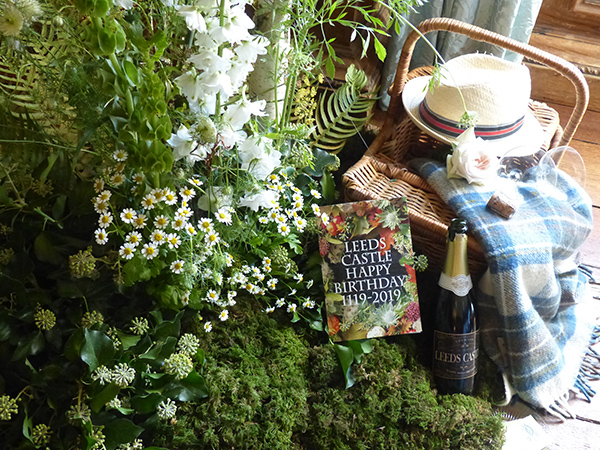
Every year, Leeds Castle hosts Leeds Festival of Flowers. 2019 marks the castle's 900th birthday, so the Festival of Flowers promised to be bigger than previous years. This year, I had a chance to go to Leeds Castle Festival of Flowers. The good thing about this is that visitors do not need an extra ticket for admission to this event; purchasing a visit to Leeds Castle gives the visitor free access for one year. I previously visited Leeds Castle in May for the annual motor show, Motors by the Moat, so this provided me with my ticket for the flower show. 
leeds-castle-flowers31.jpg

We arrived early, but there was already a queue, and we had to wait 45 minutes before we got into the castle. I didn't know what to expect, but I was wowed by the flowers as the displays were beautiful and helped to enhance the castle. Keep reading to learn about all of the displays at this year's Leeds Castle Festival of Flowers.
leeds-castle-flowers02.jpg

leeds-castle-flowers03.jpg

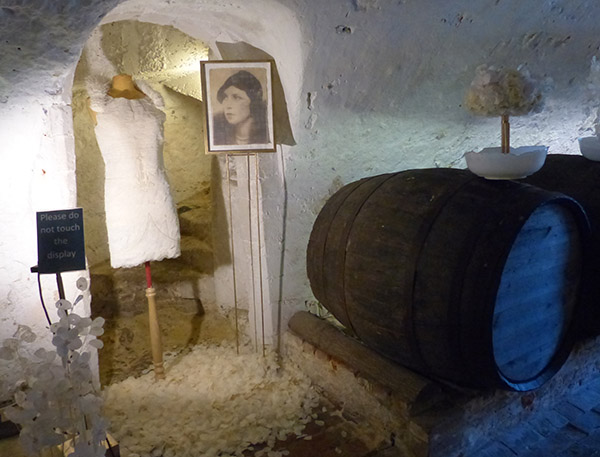
'Petals of the Moon' by Conny van der Westerlaken, Pasandeau Florale Vormgeving

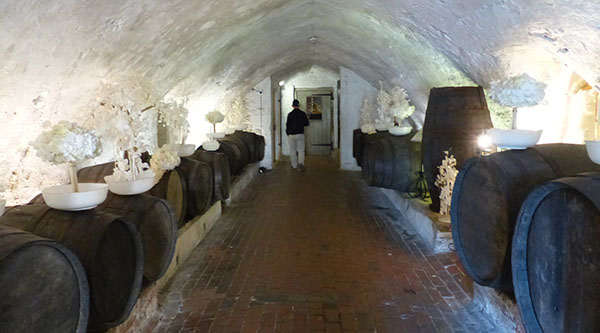
Visitors enter the castle via the cellar, and this is where the first floral display was. The theme of the flowers were whites placed in white bottles and bowls to mimic candles. White petals covered the floor in places. The soft white petals complemented the white dress.
leeds-castle-flowers04.jpg

leeds-castle-flowers05.jpg

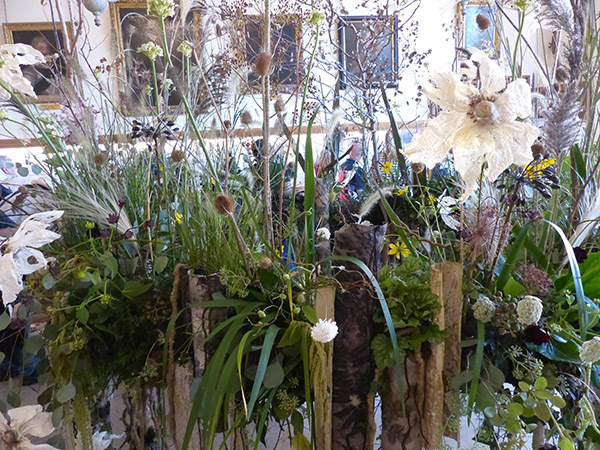
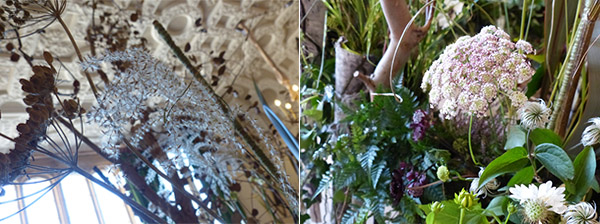
'Dancing in the Moonlight' by Maria Smith, The Lemon Hound

A circle of wooden branches, some covered and painted with linen and wildflowers, ferns, and thistles in shades of white, brown, yellow, and deep purple was the theme of the Heraldy Room. Some of the design also uses paper and wool plants. The circular floral arrangement with the lace-like flowers compliments the intricate ceiling. The artist was inspired by the ceiling and used a ring of flowers which were imagined as a silhouette in moonlight. The artist works with flowers and textiles. I did enjoy the range of flowers used here as it gives a "country" feeling to the room, which slightly contrasts the formal aspect of the room. The only problem is that this room was used as a waiting area before visitors could continue with the display, so I felt this one was over-looked.
leeds-castle-flowers06.jpg

leeds-castle-flowers08.jpg

leeds-castle-flowers07.jpg

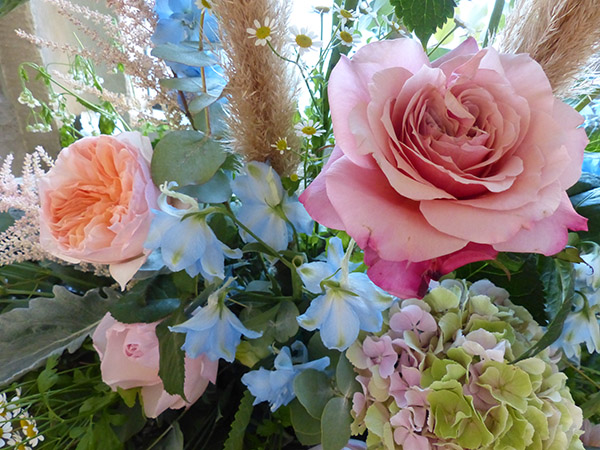
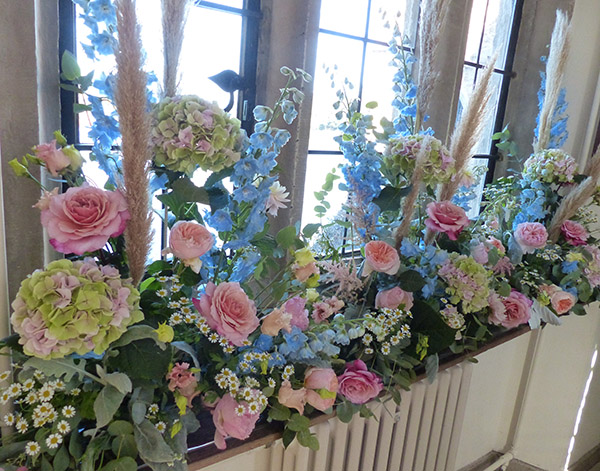
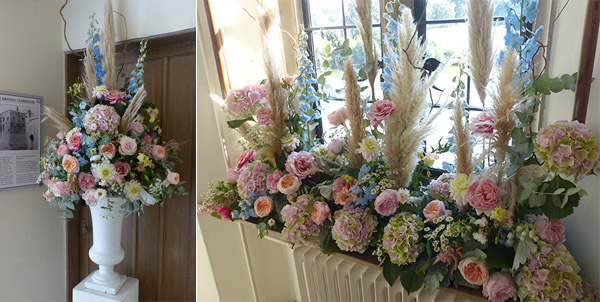
I am not sure who created the displays in the hallway leading from the Heraldy Room, but the flowers here were beautiful in pastel shades of pink, blue, green, and coral.
leeds-castle-flowers09.jpg

leeds-castle-flowers10.jpg

leeds-castle-flowers11.jpg

leeds-castle-flowers12.jpg

leeds-castle-flowers13.jpg

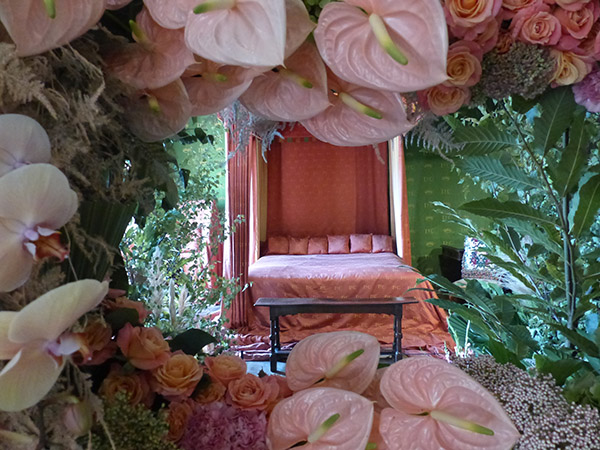
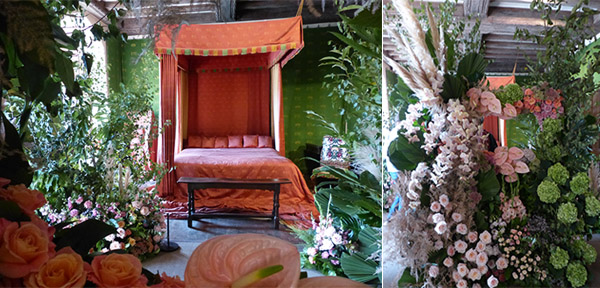
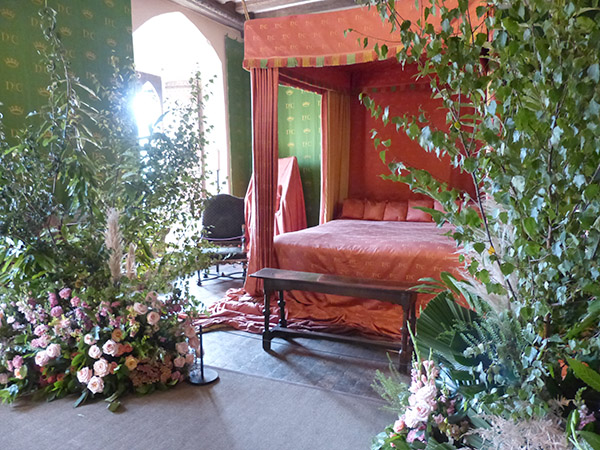
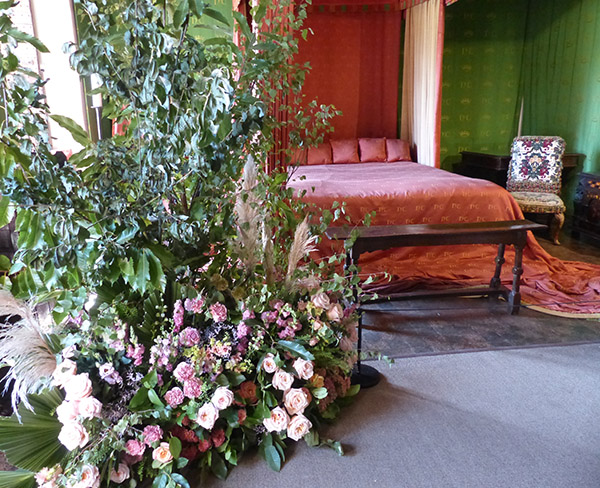
'Boujee Boudoir' by Matthew Landers

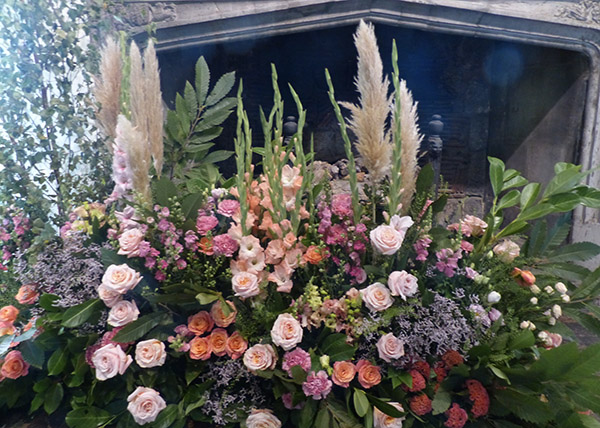
The Queen's Bedroom was designed to compliment the orange four-poster bed and green walls. The floral design allows the viewer to see the bed framed with a mixture of green branches, plants, and coral-coloured orchids and pale pink roses. The fireplace on the opposite side of the room is also broken up by a display of the same flowers. The design includes British blooms mixed with subtropical leaves. The photo frame makes a nice touch to take photographs framed of the bed and a secluded area with flowers around the foot of the bed. 
leeds-castle-flowers14.jpg

leeds-castle-flowers15.jpg

leeds-castle-flowers16.jpg

leeds-castle-flowers17.jpg

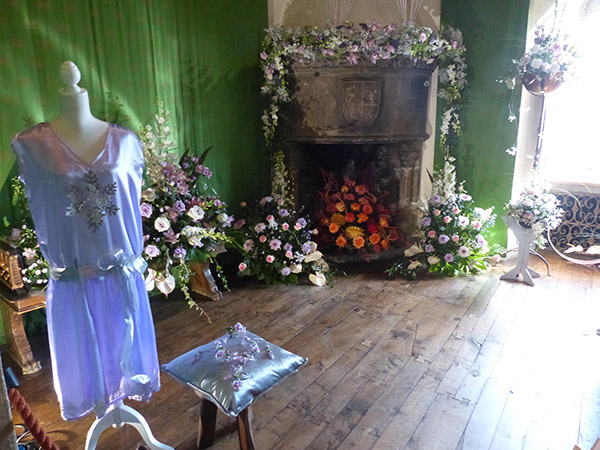
'Diamonds are a Girl's Best Friend' by Kent Area of NAFAS

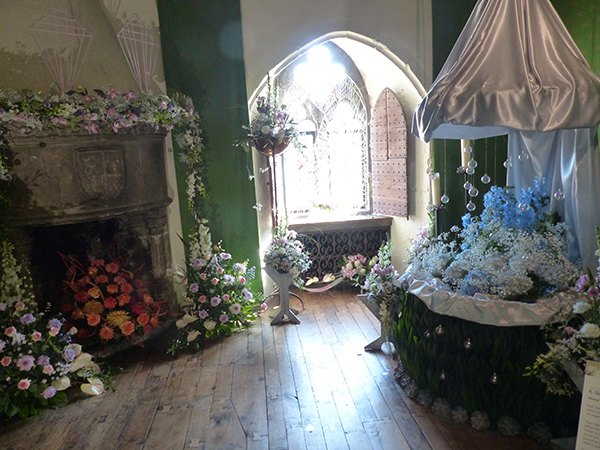
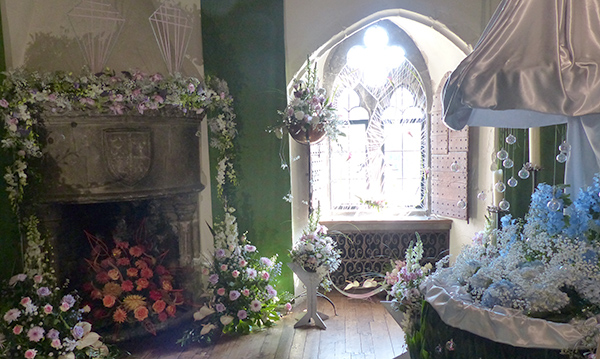
The Queen's bathroom, down the hallway from the bedroom, has a stunning display incorporating the bath and fireplace with blues, whites, oranges, glass balls and diamond-shaped angles of white cloth on top of the fireplace and the window. The colour incorporates the sky blue dress and pillow.
leeds-castle-flowers18.jpg

leeds-castle-flowers19.jpg

leeds-castle-flowers20.jpg

leeds-castle-flowers21.jpg

leeds-castle-flowers22.jpg

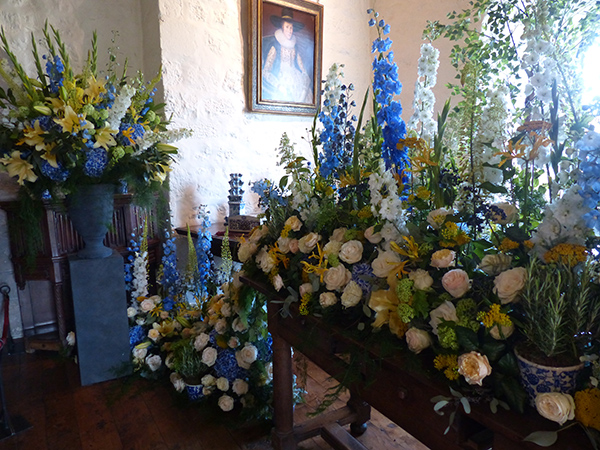
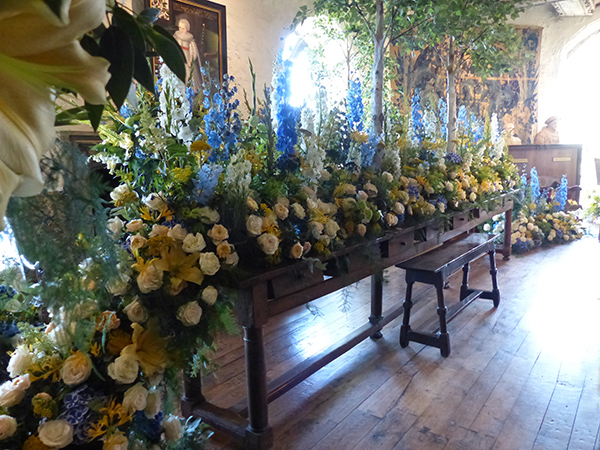
'Dancing through the Delphiniums' by Philip Hammond, The Dorchester

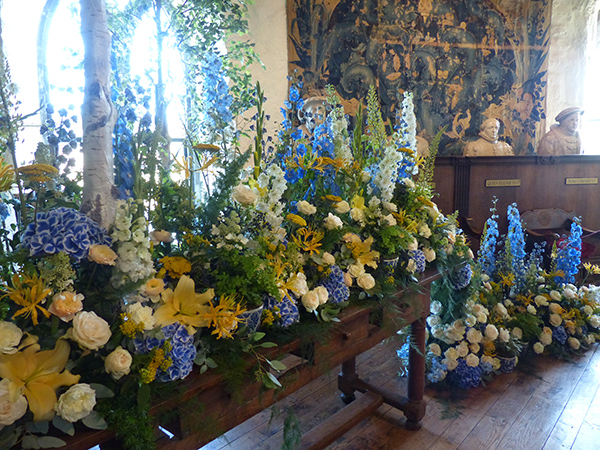
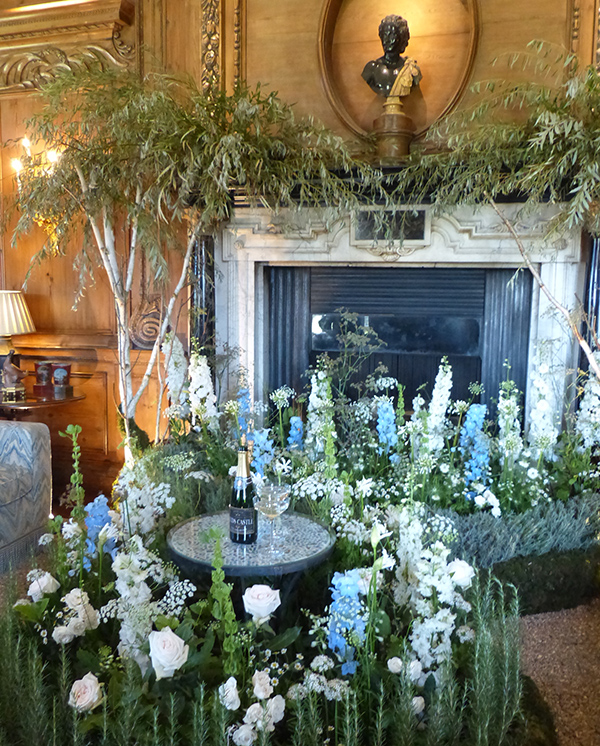
The Queen's Gallery Room contains busts of Elizabeth I, Henry VIII, and Queen Mary. The room contains a long table, and it has been covered with blue, yellow, and white flowers. These colours make a good use of the surroundings in the room with the tapestry and delft pottery. The designer of the flowers in this room is the florist at The Dorchester, responsible for creating the main displays in the lobby of the hotel, room displays and displays for other events.
leeds-castle-flowers27.jpg

leeds-castle-flowers23.jpg

leeds-castle-flowers24.jpg

leeds-castle-flowers25.jpg

leeds-castle-flowers26.jpg

leeds-castle-flowers28.jpg

leeds-castle-flowers29.jpg

leeds-castle-flowers30.jpg

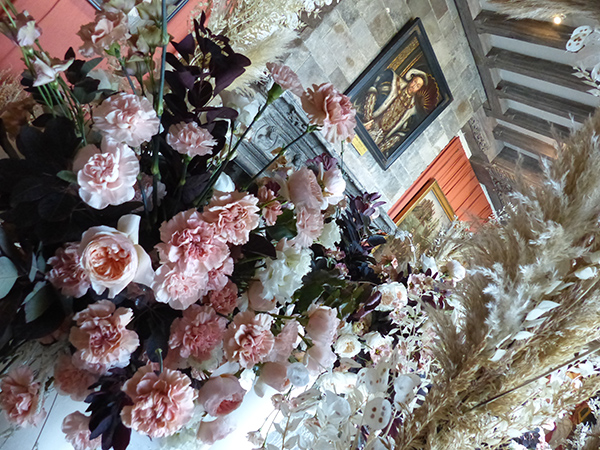
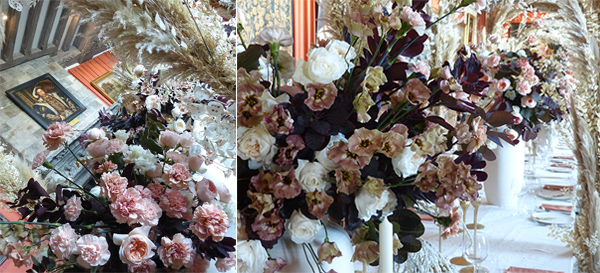
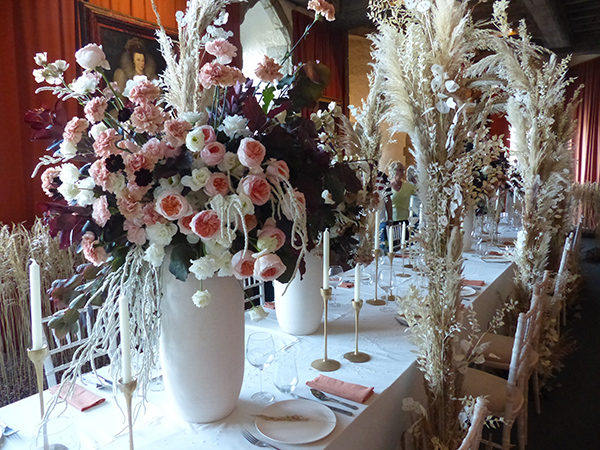
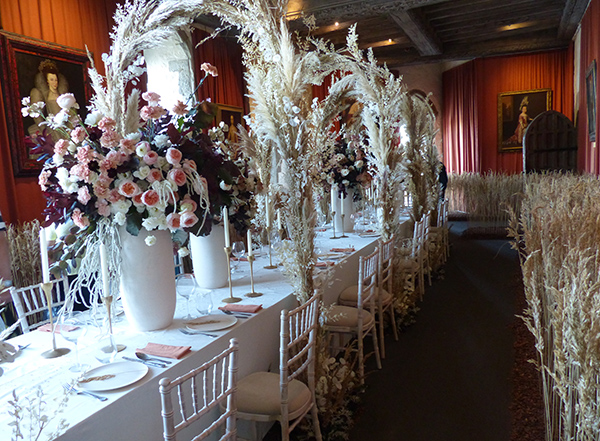
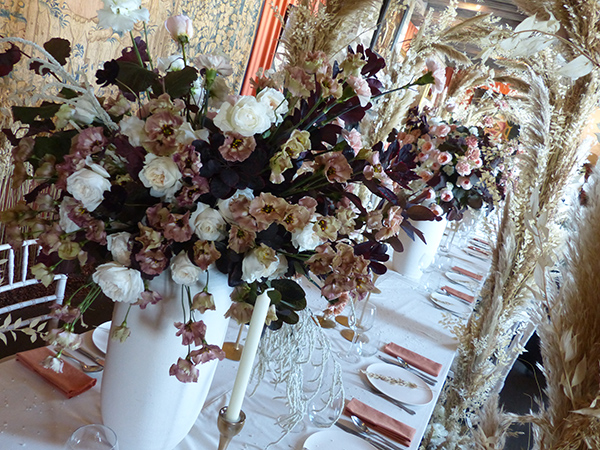
'Golden Times' by DK, Dennis Kneepkens

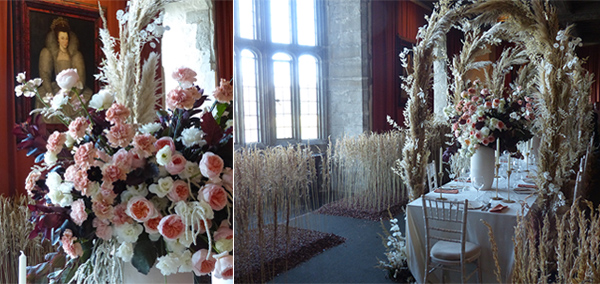
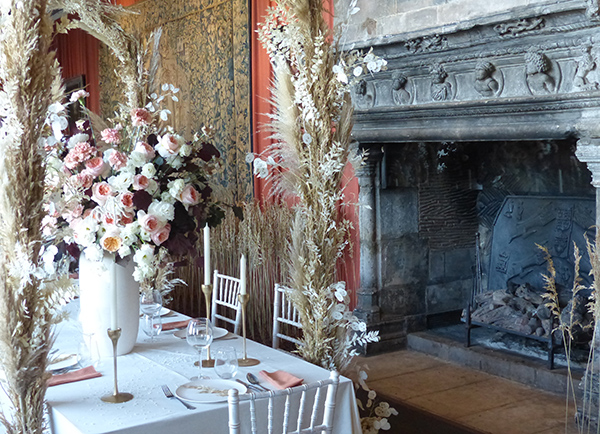
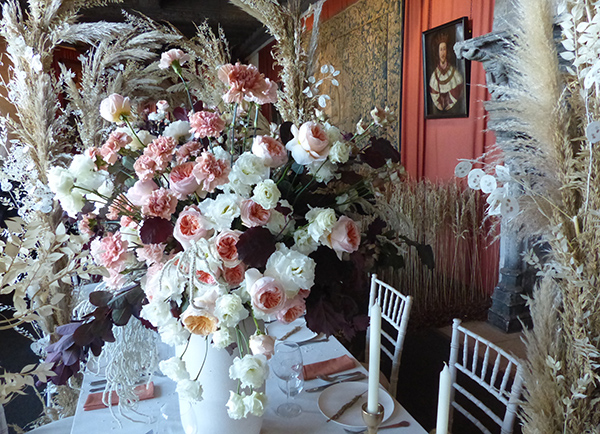
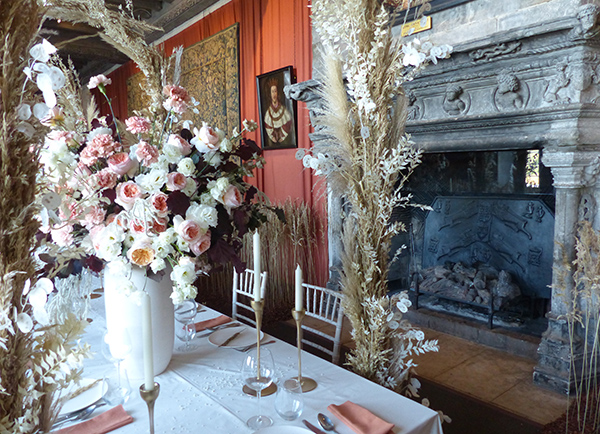
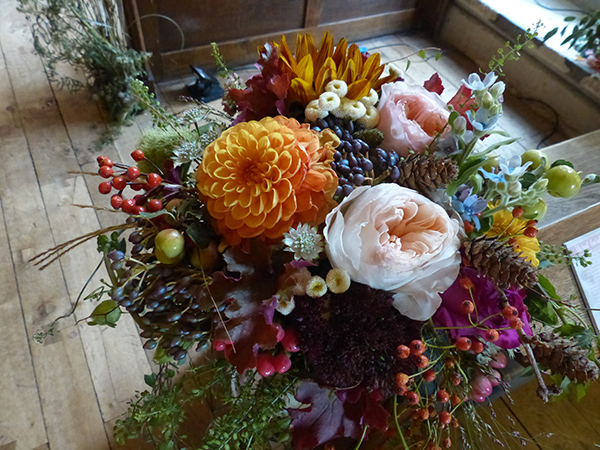
The King Henry VIII Banqueting Hall has been turned into a field of wheat, which smelled of wheat and brought a country theme to the room with mixtures of white, pink, and deep red roses and carnations. The sides of the room were 'planted' with strands of wheat, and the wheat was also used to create archways down the banqueting table. The table is set with large white vases of the flowers. These fit in with the red walls of the room and rustic floorboards and fireplace. This was my favourite display because it reminded me of the country.
leeds-castle-flowers32.jpg

leeds-castle-flowers33.jpg

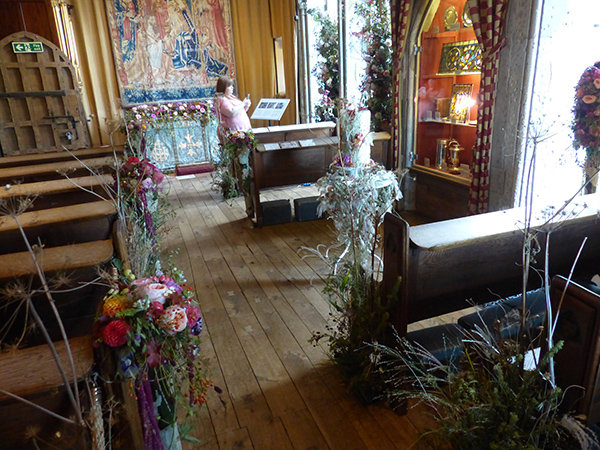
'Floral Garden Party' by Claire Cowling, Thrive Floristry

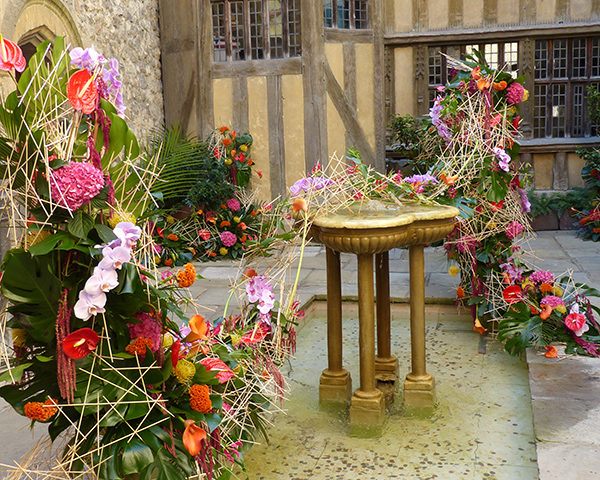
The chapel of Leeds Castle has been transformed into a floral party featuring roses and dahlia, ferns, and grass with other foliage. The colours are rich and bright, giving the essence of a garden party. I really liked the design of the flowers on the ends of the pews and the window arrangements, but it lacked a little bit of consistency and I would have liked to have seen larger pieces in this room. However, I loved the use of colour and shapes/textures of the displays.
leeds-castle-flowers34.jpg

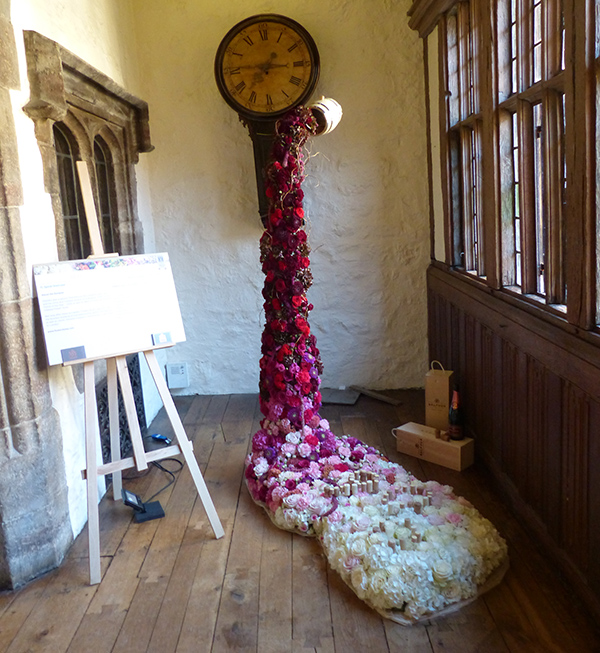
'Carnival in the Courtyard' by J & K Floral Designs

The courtyard in Leeds Castle was opened up to view the display inside, which included many tropical plants and bright colours, which gave the courtyard a carnival atmosphere.
leeds-castle-flowers35.jpg

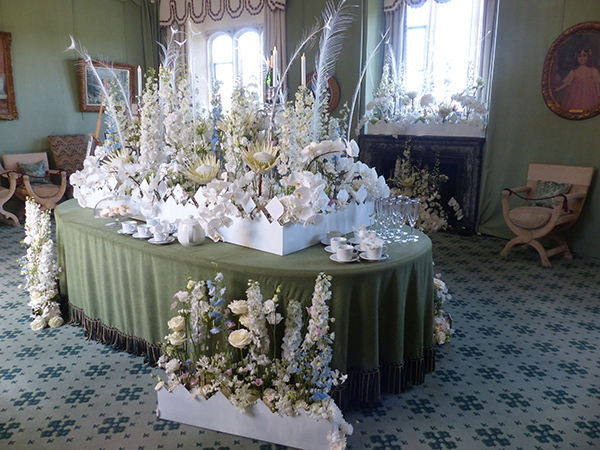
'Keep the Drinks Flowing' by Ellouise Hasler-Stott, Flowers by EG

In the hallway at the top of the staircase is a pattern of a wine bottle with corks and bright red, purple, and white flowers that create an ombre effect that appear to be spilling from a barrel. At the bottom of the staircase is another display featuring a glass of red wine and the same colour of flowers. The design with the wine pays homage to the wine stored in the castle. The corks are designed in the shape of "900" to celebrate the birthday of the castle.
leeds-castle-flowers36.jpg

leeds-castle-flowers37.jpg

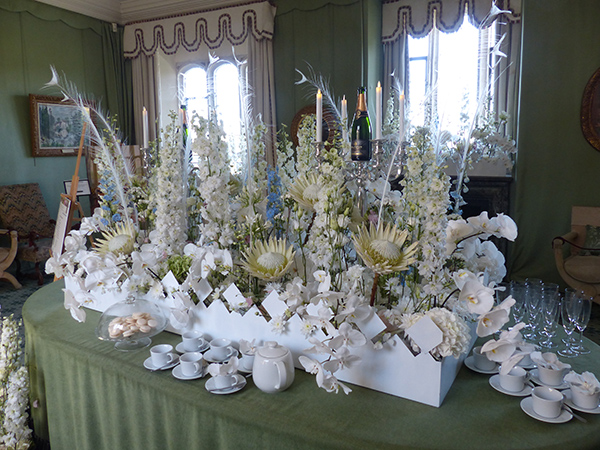
'A Modern Tea Party' by Jimmy Englund, Stilfloristerna

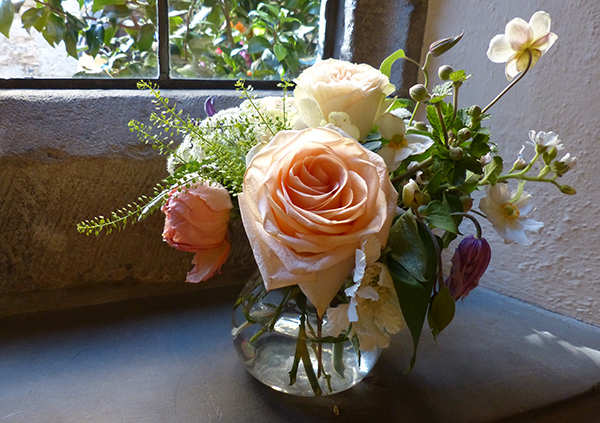
The Seminar Room in Leeds Castle was designed with a tea party theme in mind with teacups and cream macaroons and a garden of white flowers on the table, window ledge and in front of the fireplace. The green stems and hues in some of the plants help bring the green room together. 
leeds-castle-flowers38.jpg

leeds-castle-flowers39.jpg

leeds-castle-flowers40.jpg

leeds-castle-flowers41.jpg

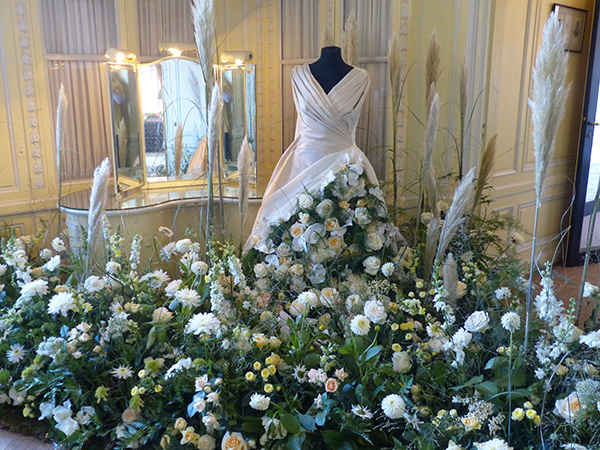
'1920s Hollywood Glamour' by Plumpton College

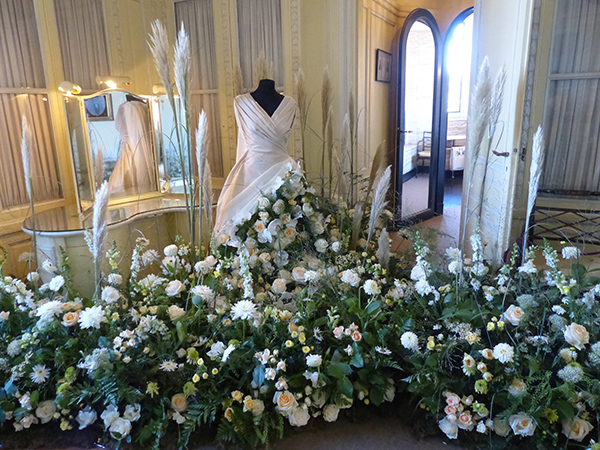
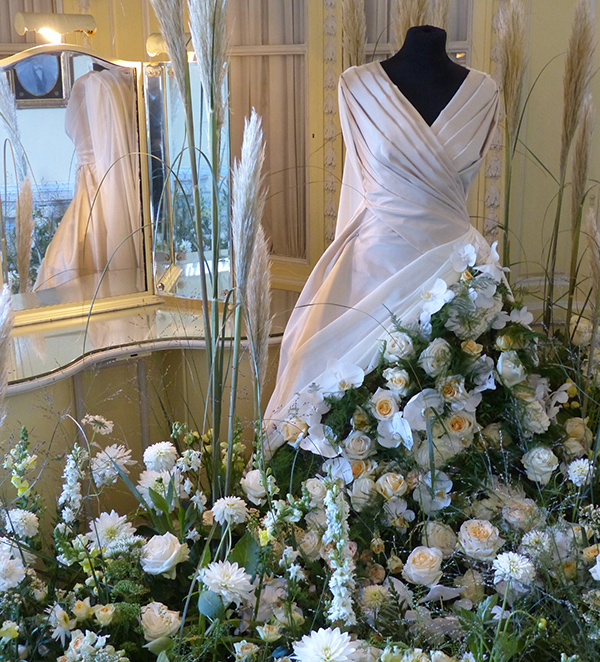
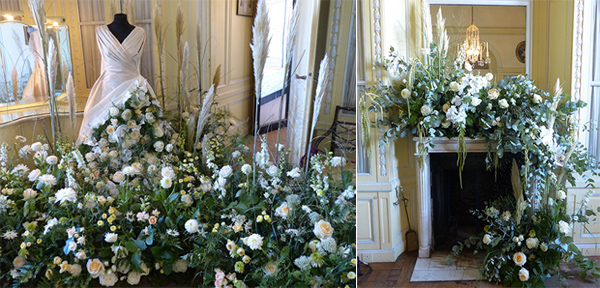
Lady Baillie's Dressing Room has been transformed with white and cream roses and other flowers. The makeover was completed by Plumpton College in East Sussex, and the feature-piece is a beautiful white dress, which has become part of the floral display. The theme is to mimic a meadow. 
leeds-castle-flowers42.jpg

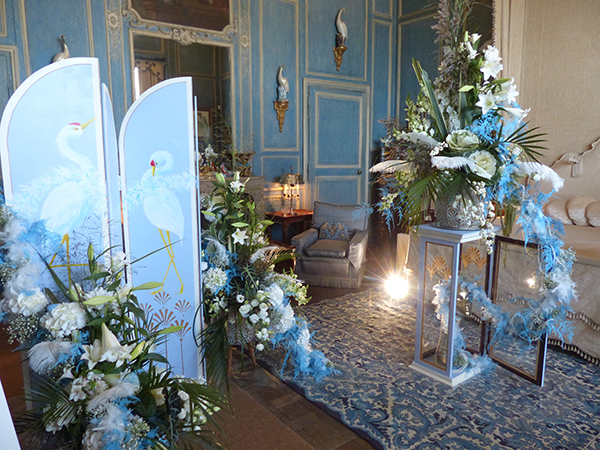
'The Interlude' by Helen Chambers, Evolve Flowers Ltd

Lady Baillie's Bedroom in Leeds Castle has been designed with the Art Deco theme in mind in keeping with the 1920s when she purchased the castle. The flowers are white and paired with sky blue feathers.
leeds-castle-flowers43.jpg

leeds-castle-flowers44.jpg

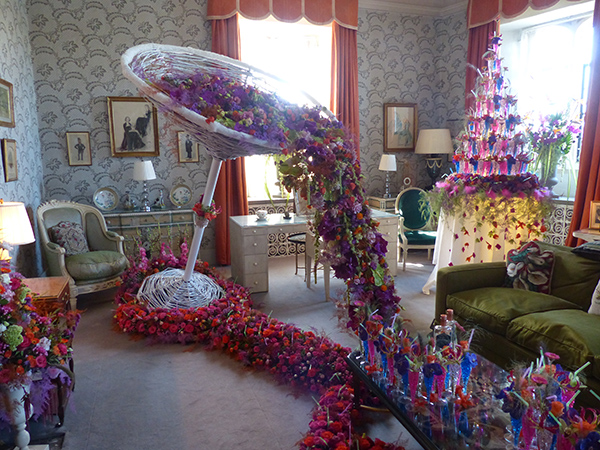
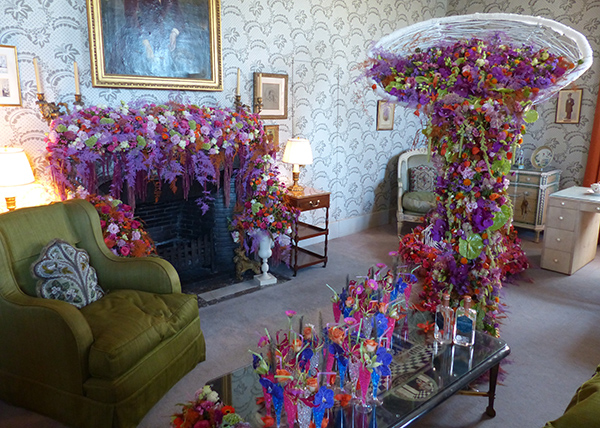
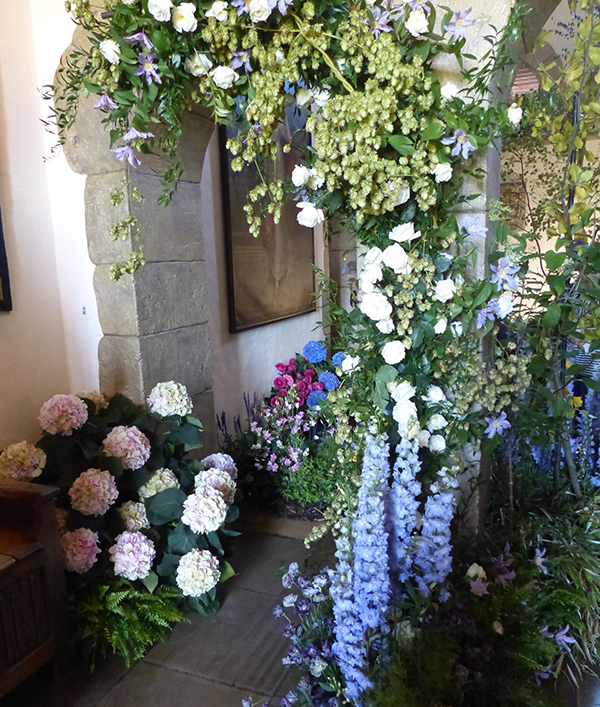
'Oh What a Night' by Morgan Douglas Nuth, Old Oak Floral Designers

One of the most unique floral designs this year is inspired by the love of a party. A centrepiece is created with 250 champagne glasses decorated with flowers, a "900" for the castle's birthday, a woven giant Martini glass with flowers pouring out, and a floral display around the fireplace. The floral displays contain straws and cocktail stirrers to add to the excitement.
leeds-castle-flowers45.jpg

leeds-castle-flowers53.jpg

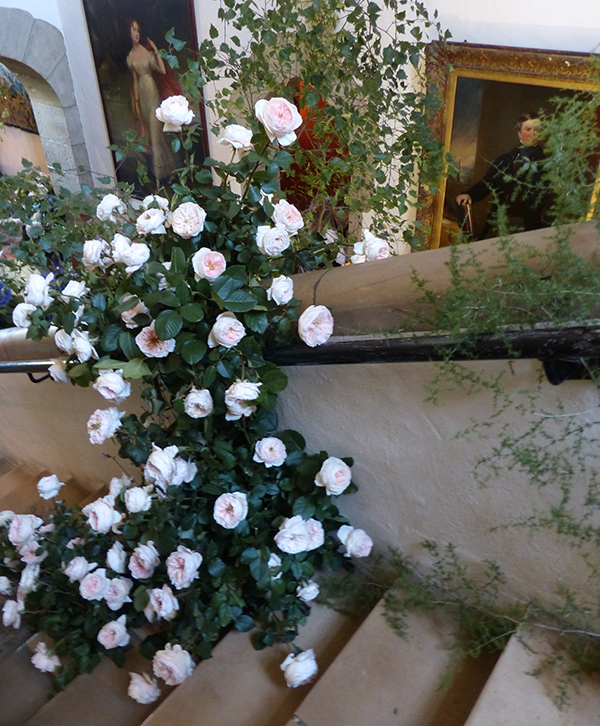
'The Great Dame' by DK, Dennis Kneepkens

The staircase in the castle was also transformed, but it was hard to get a photograph of it because of the visitors posing for selfies on the staircase. The designer of this piece had created the "Golden Times" piece in the Banqueting Hall. The idea here was an English garden with cream roses and greenery.
leeds-castle-flowers48.jpg

leeds-castle-flowers46.jpg

leeds-castle-flowers47.jpg

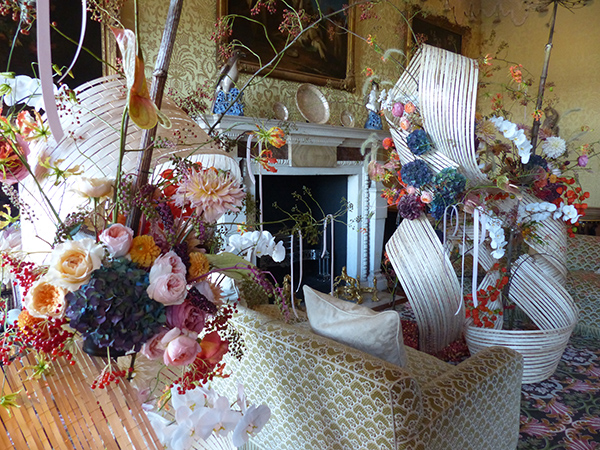
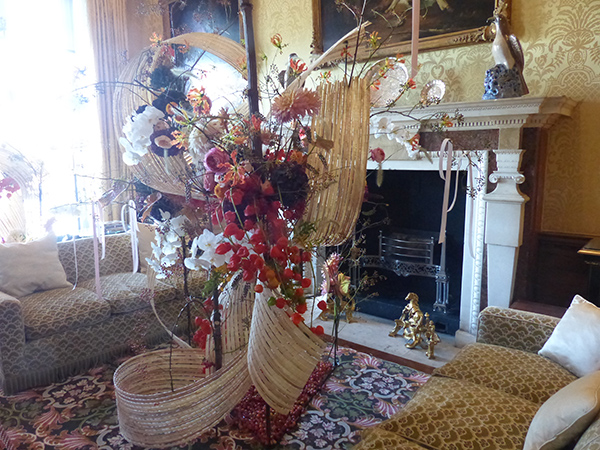
'The Floral State of Mind' by Dr. Solomon Leong, Solomon Bloemen

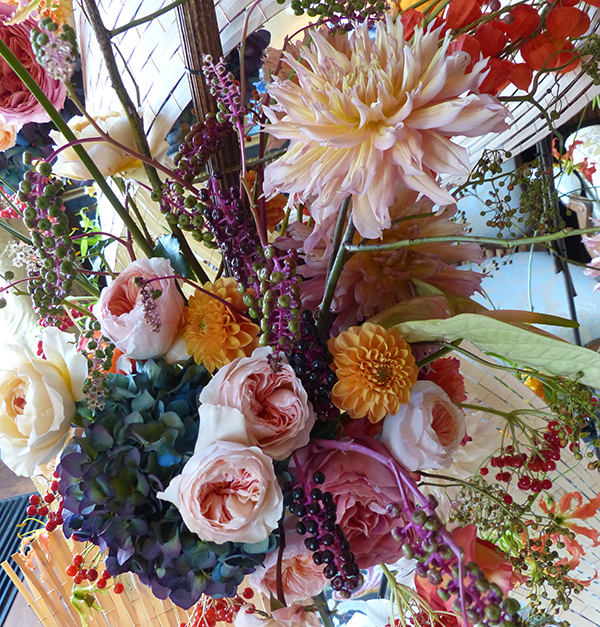
The design in the Yellow Drawing Room is inspired by the quote "perfumes are the feelings of flowers". The display contains sliced bamboo sculptures intertwined with bright flowers, primarily orange and yellows in colour. The roses are scented, and this is where the concept of the perfume comes into play. I love the use of colour here with orange, yellow and muted pink/purple colours.
leeds-castle-flowers49.jpg

leeds-castle-flowers50.jpg

leeds-castle-flowers51.jpg

leeds-castle-flowers52.jpg

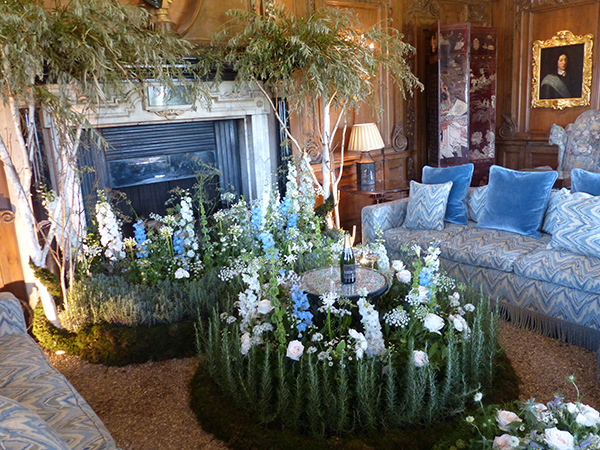
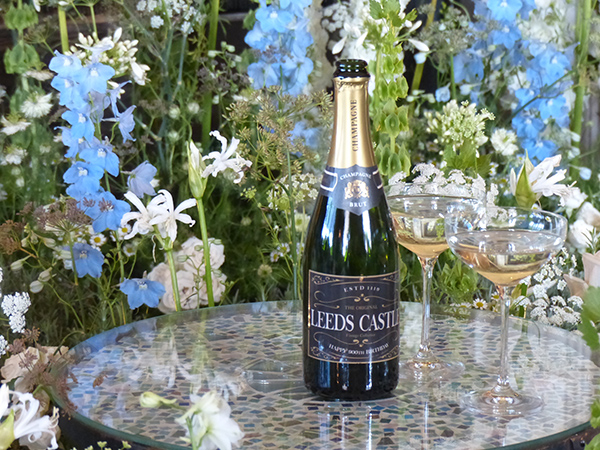
'Revels Through Thyme' by Trudie Easton Flowers

The design of Thorpe Room is an interpretation of the "English Knot Garden", inspired by the book "Herballor General Historie of Plantes" by John Gerrard; this was written inspired by the plants in his garden in 1956. The theme also is a focus on celebration and picnic with the castle's 900th birthday this year. Sky blue, green, and white are the colours used with the picnic area in the corner using mosses and wildflowers whereas the centre of the room uses more formal flowers.
leeds-castle-flowers54.jpg

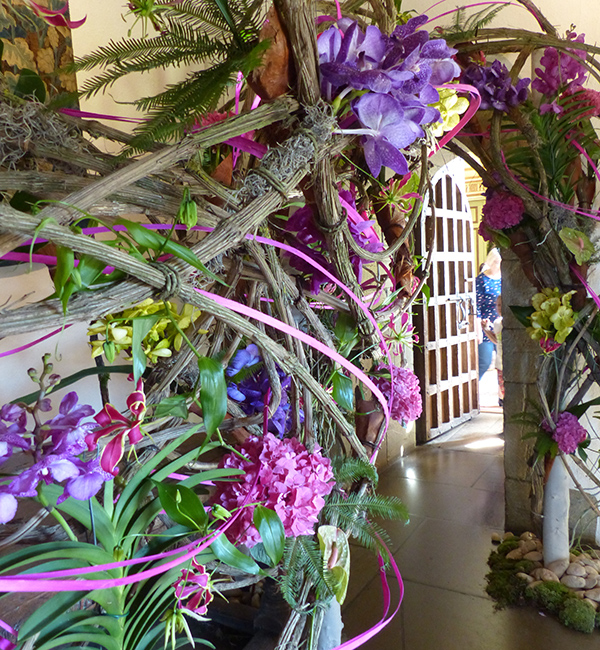
'Dancing with Nature' by Heidi Lawley, HeiDesigns

The design inside the front door of the castle mimics a musical sound wave with bright orchids and clematis vines.
leeds-castle-flowers55.jpg

leeds-castle-flowers56.jpg

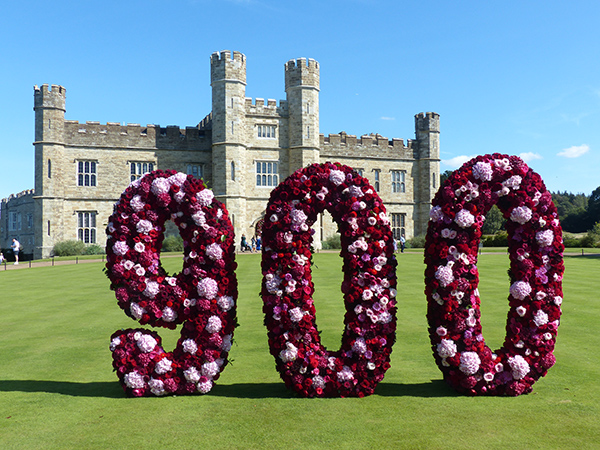
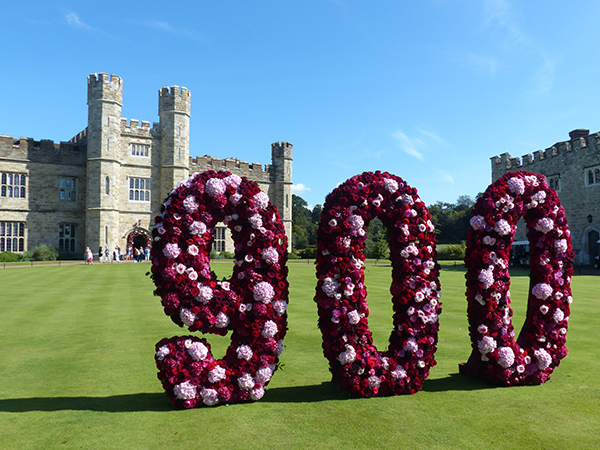
'The 900th Encore' by Louise Roots, Leeds Castle Floristry

The doorway around Leeds Castle and the "900" display in bright red and pink flowers was created to celebrate the 900th birthday of the castle. The flowers represent the glamour of the castle and the Hollywood film stars who stayed here in the 1930s.
leeds-castle-flowers57.jpg

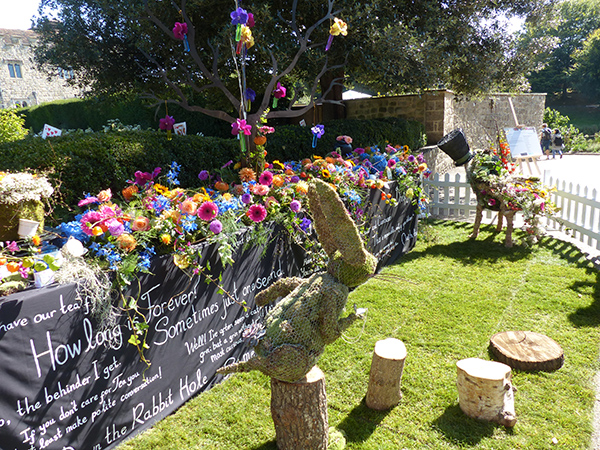
'The Tea Party' by Jill Smith, Passion Floral Design

The colours of this tea party is stunning and beautiful. I love multi-colour displays, and this one works. The inspiration here comes from 'Alice in Wonderland'.
leeds-castle-flowers58.jpg

leeds-castle-flowers59.jpg

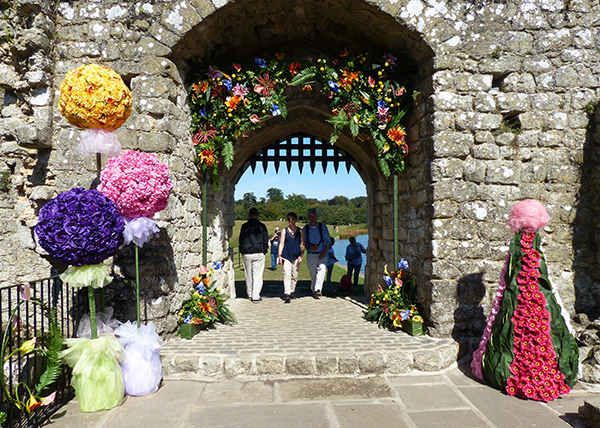
'Big, Bold and Botanical' by Country Baskets

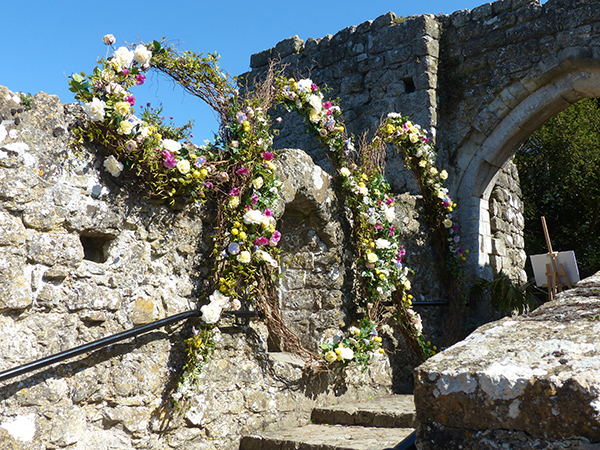
The Barbican of Leeds Castle has become a playful world with vibrant floral sculptures. 

If you do ever get the chance to, I'd recommend a visit to Leeds Castle for the Festival of Flowers. And, since the entrance ticket is valid for a year, you can go back and visit again.

Sculpture in the City, 2019

Sculpture in the City is a public sculpture trail that runs from May each year and is located in London's Square Mile, the City of London. Sculpture in the City is in its ninth year this year and has featured artists such as Damien Hirst, Antony Gormley, Ai Weiwei, and Tracey Emin and newer talent. I've been visiting the sculpture trail every year for the past few years, and I visited this year's trail a couple of weeks ago. Like previous years, a couple of the sculptures were shown the previous year so that visitors had a second chance to see the sculptures. 
sculpture-in-the-city-2019-01.jpg

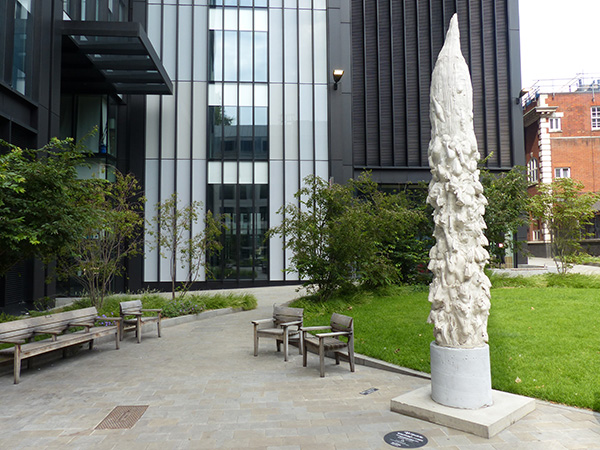
This sculpture was on display for last year's sculpture trail and was created from the inside out. The obeslisk was made inside a wooden column filled with wet clay, and the artist dug her way out to leave behind this tunnel. Inprints of hands, legs, and knees can be seen in the shape.

sculpture-in-the-city-2019-02.jpg
'Climb' by Juliana Cerquiera Leite

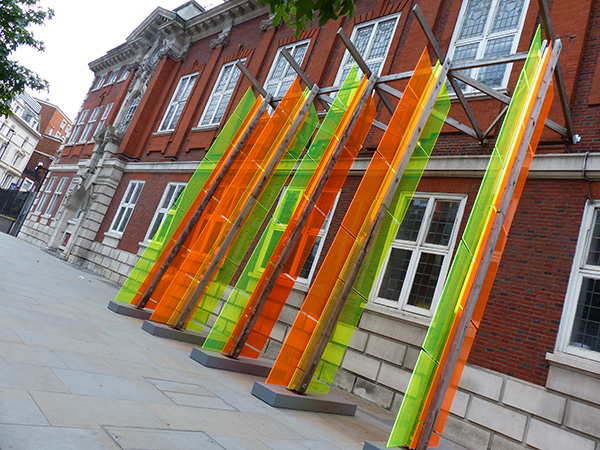
'Dutch/Light' was commisioned to mark 350 years of the Dutch raid on the river Medway in Kent, which ended the Anglo-Dutch wars. The sculpture is made of Plexiglass panels where light reflects through and changes depending on the day. The Dutch represents the orange colour, and green represents England in this artwork.   

Sculpture in the City 2019
'Dutch/Light' by Jyll Bradley

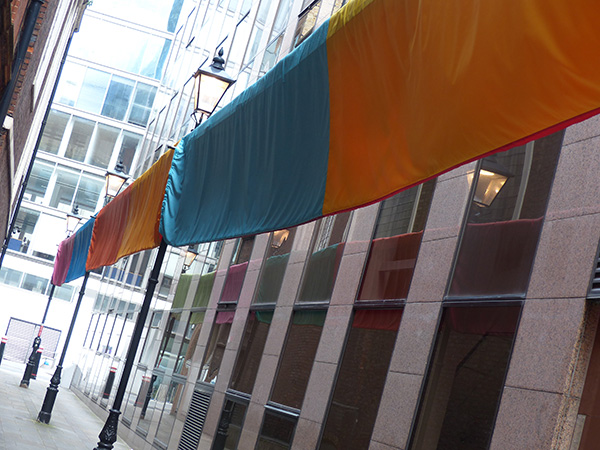
This sculpture 'Sari Garden' was on display last year. It shows a large piece of cloth strung out along the street between lamp posts. It represents women and domestic life. It mimics laundry hanging out to dry.

Sculpture in the City 2019
'Sari Garden' by Clare Jarrett

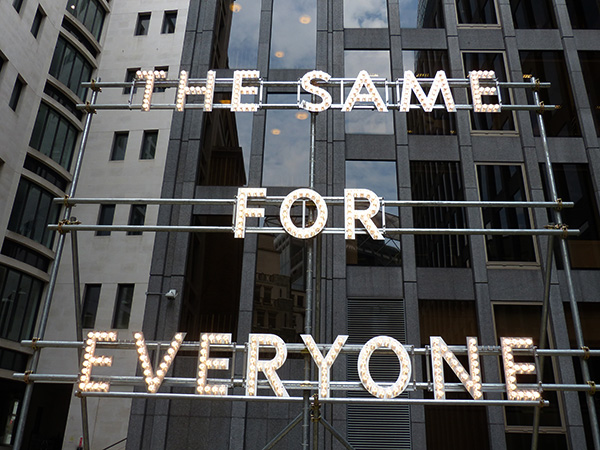
Coley's work enhances the architecture of the sculpture and gives it meaning. The illuminated text reads 'the same for everyone', which allows the user to come up with their own meaning on the words. Is it a question or a utopian ideal?

Sculpture in the City 2019
'The Same for Everyone' by Nathan Coley

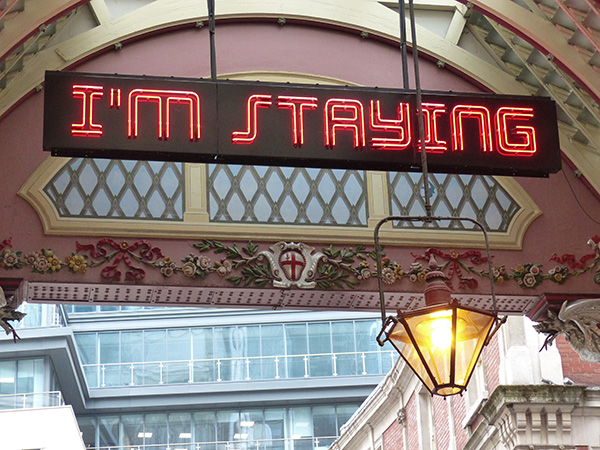
This neon sculpture was previously on display in Bristol and moved around the city to various locations picked by the public. It has also produced its own printed shirts, paintings, and fan base. The sculpture was also a part of the Sculpture in the City last year.

Sculpture in the City 2019
'I'm Staying' by Shaun C. Badham

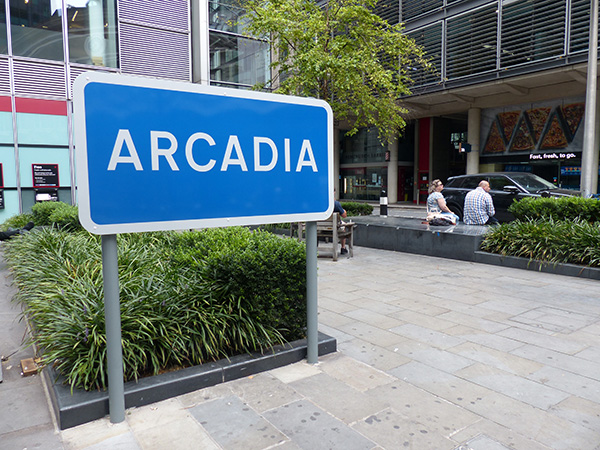
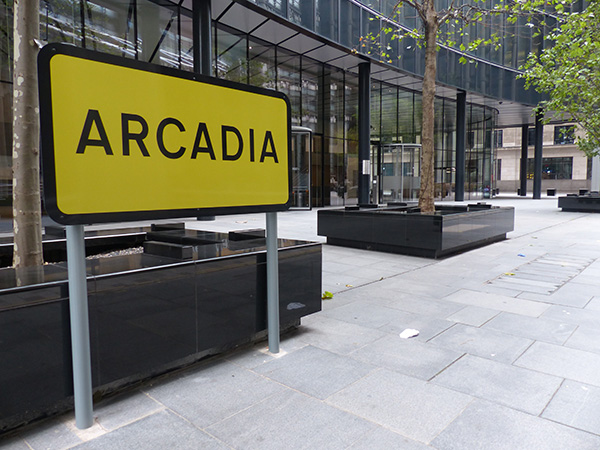
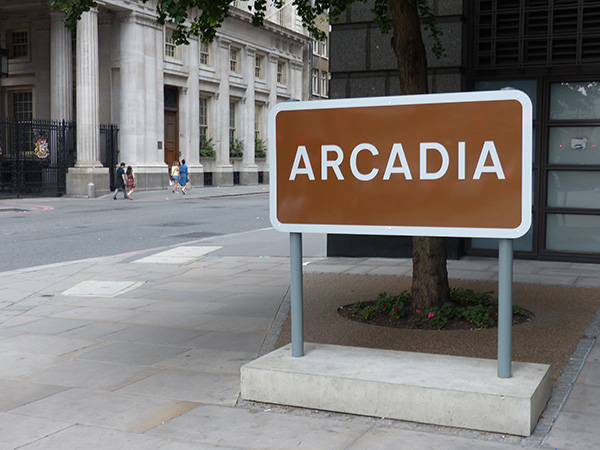
This artwork, known as 'Arcadia' is a multi-part sculpture based on public signs. The artist, Leo Fitzmaurice, wishes to see how the sculptures relate to the space around them. 

Sculpture in the City 2019

Sculpture in the City 2019

Sculpture in the City 2019
'Arcadia' by Leo Fitzmaurice

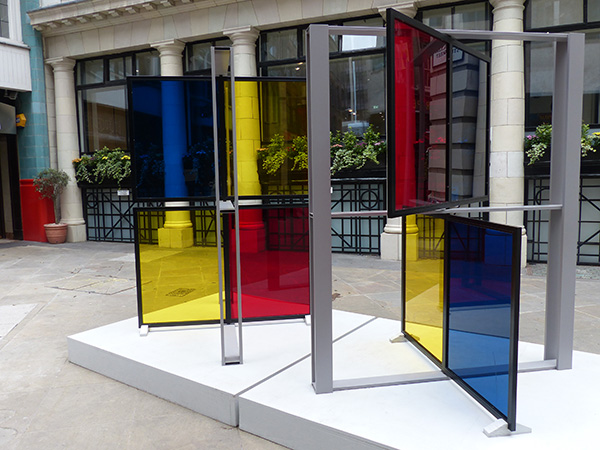
This artwork is a fragment of windows made of primary colour see-through material. The measurements of the windows are from the Sampaio Ferreira textile factory, which is located in northern Portugal. The piece is interactive as the window panes can move, and each placement provides a different set of colours and views to look through.

Sculpture in the City 2019
'Series Industrial Windows I' by Marisa Ferreira

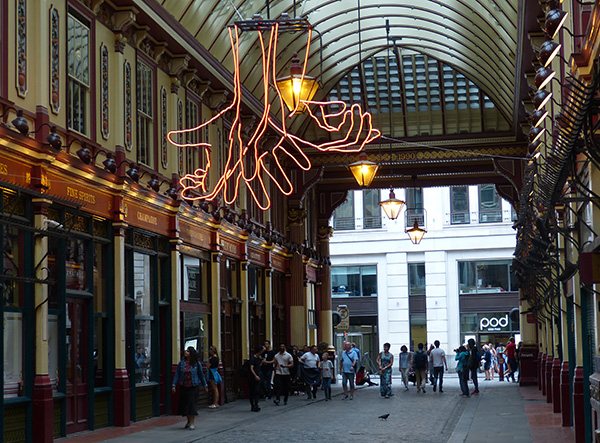
This neon sign sculpture shows hand gestures, giving it a social context in the placement in this public space above Leadenhall Market.

Sculpture in the City 2019
'The Source' by Patrick Tuttofuoco

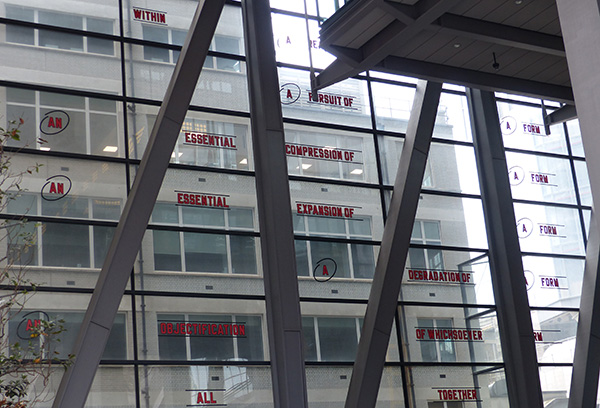
This sculpture appears to be a series of stickers stuck onto the glass windows of the Leadenhall Building. These read: WITHIN A REALM OF RELATIVE FORM, A PURSUIT OF A FORM, AN ESSENTIAL COMPRESSION OF A FORM, AN ESSENTIAL EXPANSION OF A FORM, A DEGRADATION OF A FORM, AN OBJECTIFICATION OF WHICHSOEVER FORM, ALL TOGETHER NOW.

Sculpture in the City 2019
'Within a Realm of Relative Form' by Lawrence Weiner

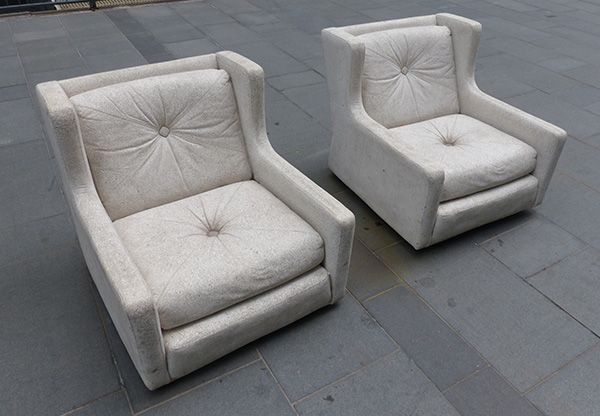
Nina Saunders creates sculptures of everyday domestic objects. 'Abstract Mass' is a sculpture of chairs made of concrete. The chair appears to be comfortable upholstery, but this is actually just an illusion and is easy to see up close that it is cold and hard concrete. Saunders pushes the boundaries of private and public space and uses the material to help convey this sense of loneliness and placement.

Sculpture in the City 2019
'Abstract Mass' by Nina Saunders

This is a colourful sculpture inspired by the lava trees of Lava Trees State Park in Hawaii. The sculptures appear to be coming out of boulders on the ground.

Sculpture in the City 2019
'It Was Only a Matter of Time Before We Found the Pyramid and Forced it Open' by Salvatore Arancio

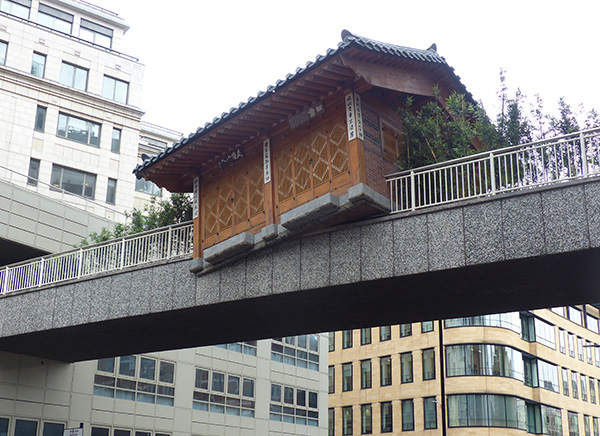
'Bridging Home, London' is an scupture commissioned in 2018 and was a part of last year's Sculpture in the City. The Korean house with bamboo garden was constructed by Do Ho Suh and represents a sense of displacement and integration. The little house appears to have fallen onto the footbridge on which it is placed. The theme of the work is migration to the City of London and East London, and the traditional building contrasts to the modern London architecture.
Sculpture in the City 2019
'Bridging Home London' by Do Ho Suh

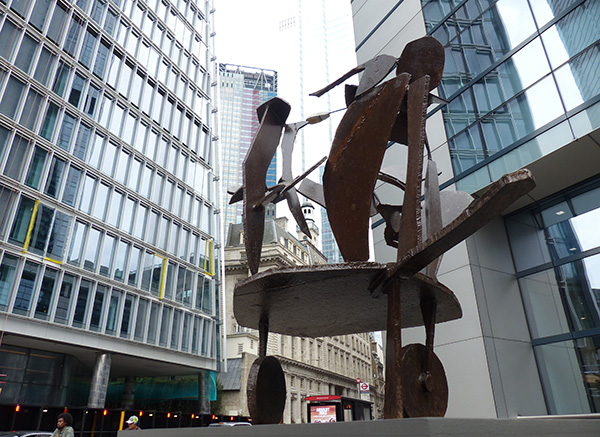
This sculpture, 'Stagnight', was developed from drawings that that artist made while in Grizedale Forest in Cumbria in 1984. It was inspired by the drawings of trees and the shadows/silhouettes produced by light and shade of the trees. The 'stag' refers to a stag watching the artist but can also mean a 'stag night'. The sculpture presents the trees on top of a transport cart.

Sculpture in the City 2019
'Stagnight' by Michael Lyons

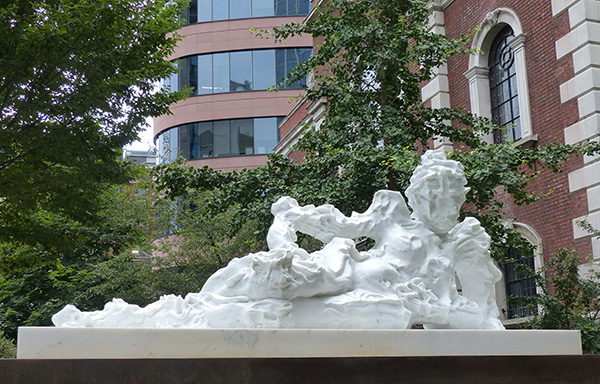
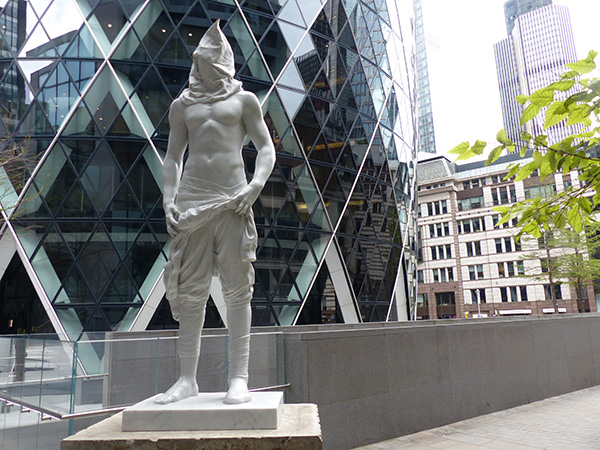
'Reclining Nude I' is an abstract and heavily-stylised reclining woman carved out of white marble. It is located off Bishopsgate in a churchyard.

Sculpture in the City 2019
'Reclining Nude I' by Kevin Francis Gray

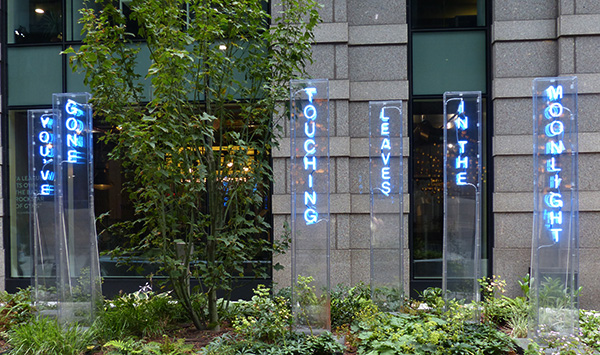
This artwork is a neon poem made of neon blue letters, which appear to float in mid-air. The context changes in the night where the lights float more, and in the day, the garden becomes part of the artwork. It reads: "you've gone touching leaves in the moonlight".

Sculpture in the City 2019
'The Garden of Floating Words' by Elisa Artesero

This is one of twelve sculptures in a study of the Renaissance sculpture. It was also influenced by the Vietnam war where images came from and then recreated for the artwork.

Sculpture in the City 2019
'Site of the Fall - Study of a Renaissance Garden' by Reza Aramesh

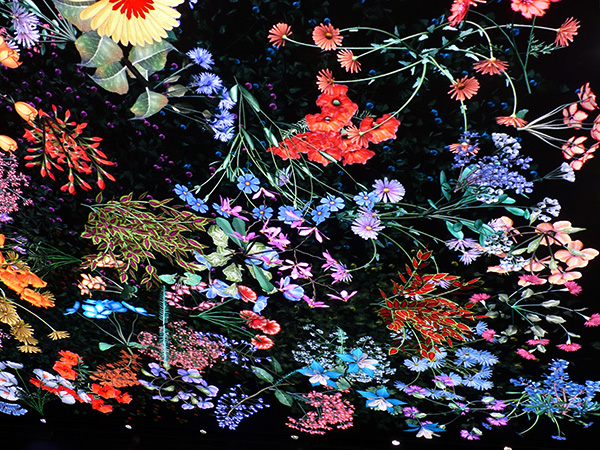
Projected onto the ceiling of 120 Fenchurch Street courtyard is this beautiful botanic garden. It was inspired by the garden plans of the Stanford Wildflower Seeding Project and garden at Stanford Hospital. The flowers are animated, colliding with each other and breaking apart. This artwork was on display in July only.

Sculpture in the City 2019
'Botanic' by Jennifer Steinkamp

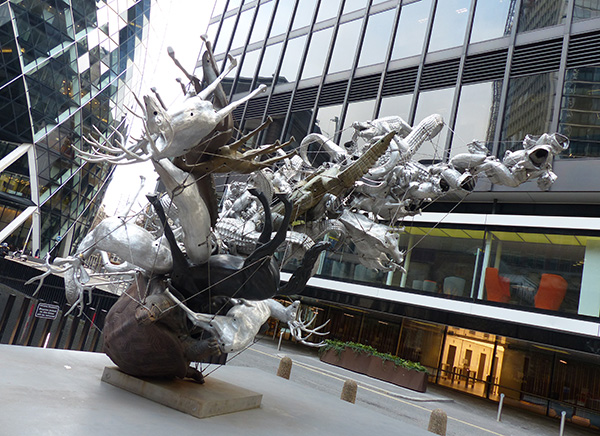
'Crocodylius Philodendrus' is a cluster of animal forms (deer, crocodiles, pigs, tortoises, zebras) that appear to be floating in air or life-size shapes of a child's toy animals. This sculpture was a part of last year's sculpture trail.

sculpture-in-the-city-2019-21.jpg
'Crocodylius Philodendrus' by Nancy Rubins

There is one more sculpture that will only be on display in the autumn. Much like the 'Botanic' sculpture, a couple of the sculptures only appear for a limited time.

Previous years of London's Sculpture in the City are included below:

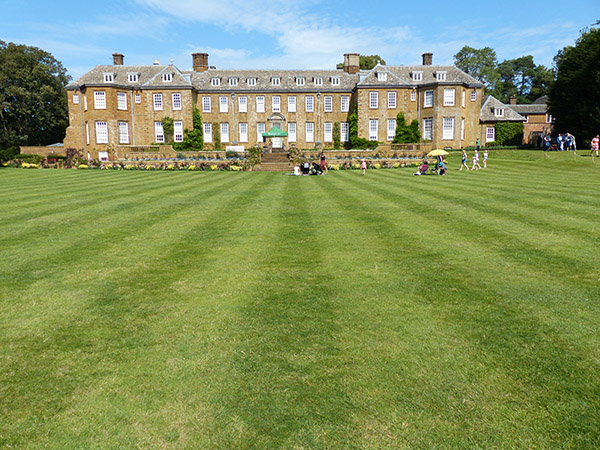
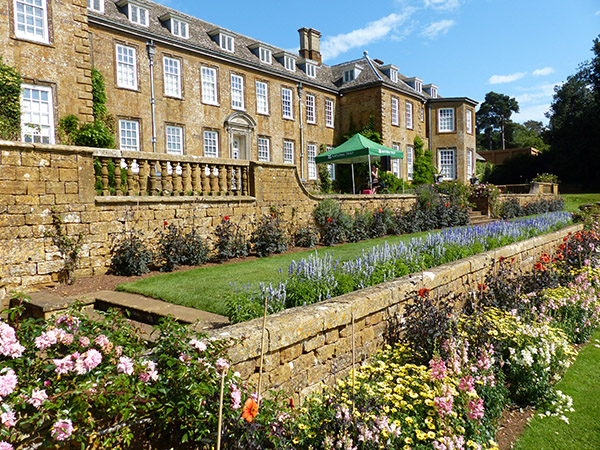
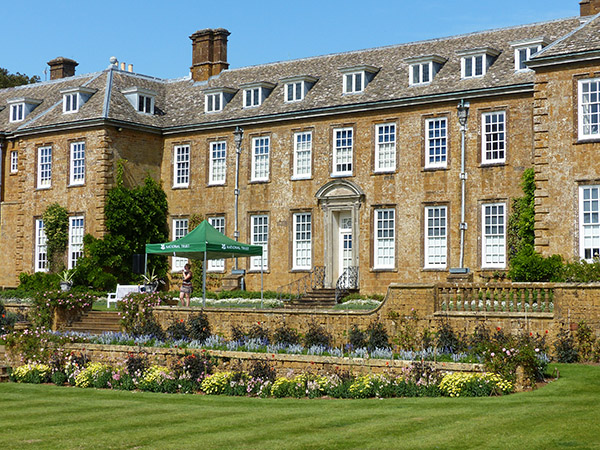
Upton House is located in Warwickshire, and the house dates from the end of the 1600s and was passed down through several owners. In the 1920s, the most famous owner who also updated the house and gardens to what we can see today was the Samuel family (also known as Lord and Lady Bearsted), who founded the oil company Shell. The house was donated to National Trust in 1948 and maintained by them, and the furniture and furnishings were donated by the family later on condition that they remain on show to the public. 

Upton House

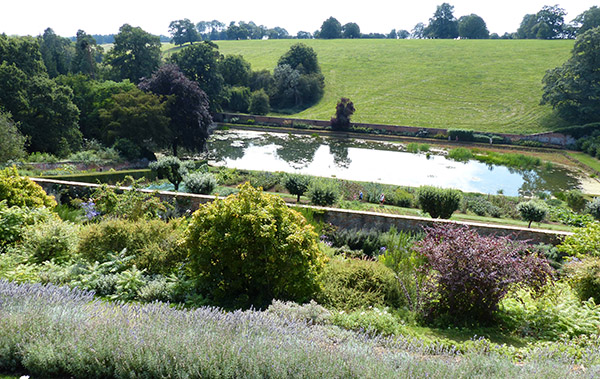
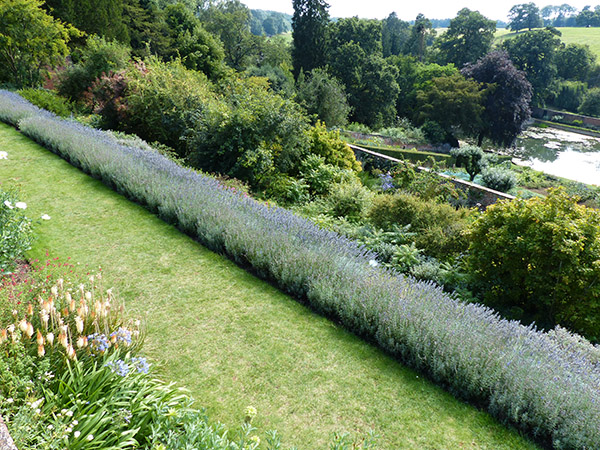
Before visiting the house, I visited the gardens. During my visit last month, a singer was singing live music in the gardens at the back. The gardens were re-developed in the 1930s as they had changed little before then. The garden designer was Kitty Lloyd Jones, who became a close friend of Lady Bearsted during the re-design. She was responsible for the borders, rose gardens, orchard, and the pond.

Upton House

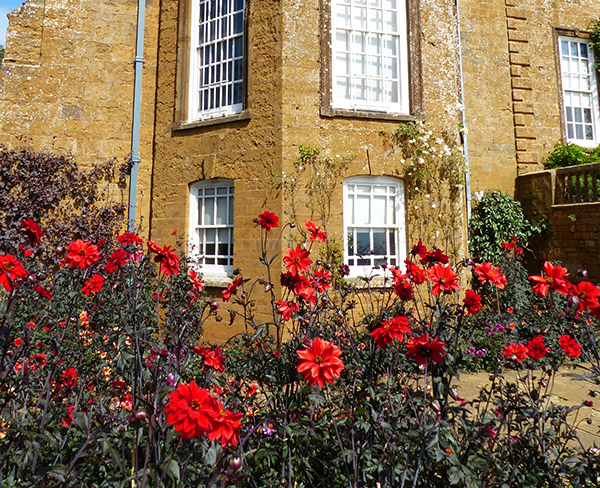
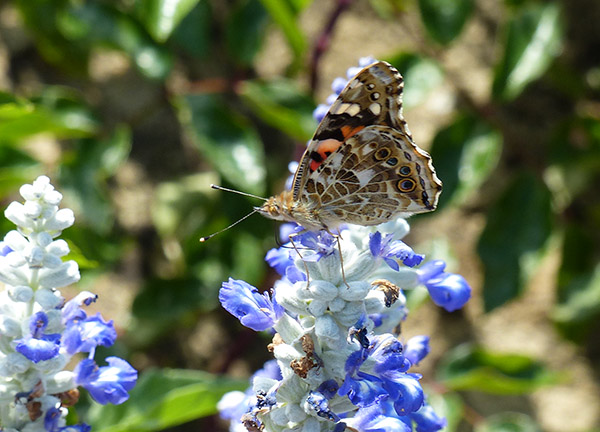
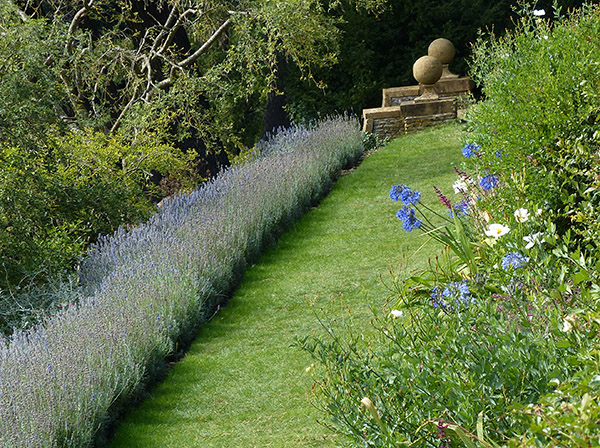
The flowers were in full and beautiful bloom during my visit. 

Upton House

Upton House

Upton House

Upton House

The walled garden dips down at the end of the main garden from the house, and below this (in the valley), is the pond and more borders and trees.

Upton House

Upton House

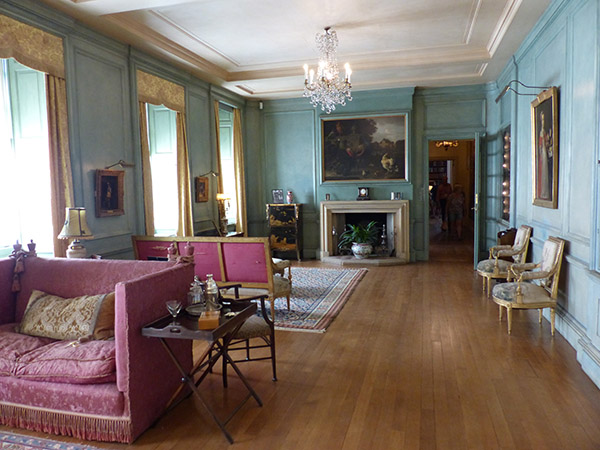
Upton House can be visited to timed entry, so it's worth arriving early in the day. One of the first rooms was the Long Gallery, pictured below. The room was filled with paintings from Dutch Masters and peasants working in the fields, which were conversation-starters. The room is very long and L-shaped with a piano used for entertaining and plenty of seating dividing sections for guests to mingle.

Upton House

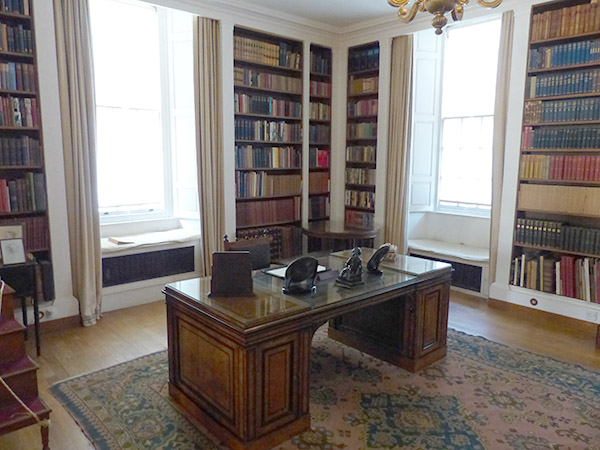
The library was where Lord Bearsted completed his work for his company Shell when he was not in London at the Shell building on the Thames (known as Mex House) in the 1930s. The family had become wealthy after importing/exporting luxury goods, and one of the items that they were known for was creating painted shell boxes; this is how the company ultimately got its name 'Shell'. The library room has an open balcony to view the gallery room on the floor below. Below this room are the art galleries with important paintings and a sports room with pool table. There is also a large doll's house being constructed of Upton House at present, which is due to be completed at the end of the year for a grand Christmas reveal.

Upton House

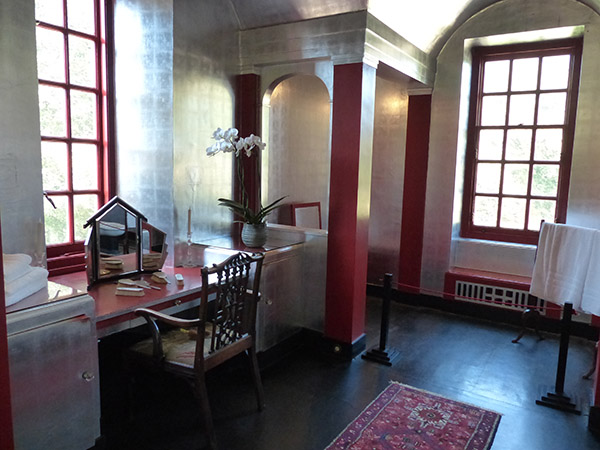
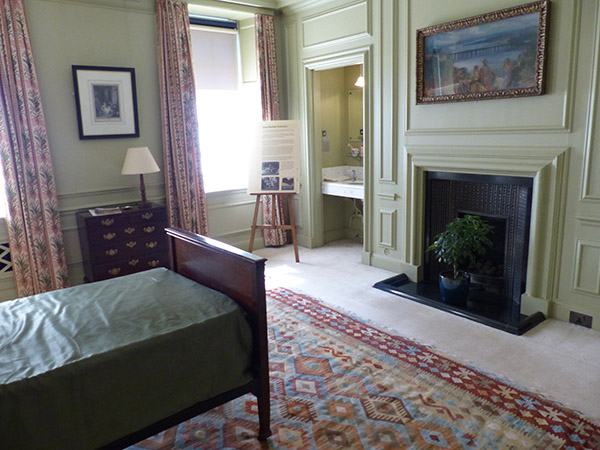
The most interesting room in the house is probably the very unusual Art Deco bathroom suite. This unique design came from America and was short-lived because of the resources then used for World War II, and few of these examples survive. The style was preferred by the wealthy, and it was created using aluminum leaf. It was later covered over, but drawings of the design and clippings of similar examples of the design existed in magazines, so it was re-instated (repaired) in 2001, but the aluminum needed re-plating as it had been tarnished.

Upton House

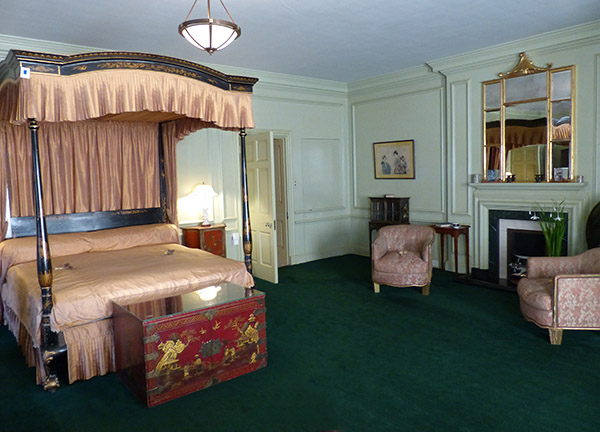
The bedroom below adjoins onto the Art Deco bathroom suite, and this was Lady Bearsted's room. It has many items from Asia. Her room is next to the maid's room, which was also quite comfortable and required her to be there at a moment's notice.

Upton House

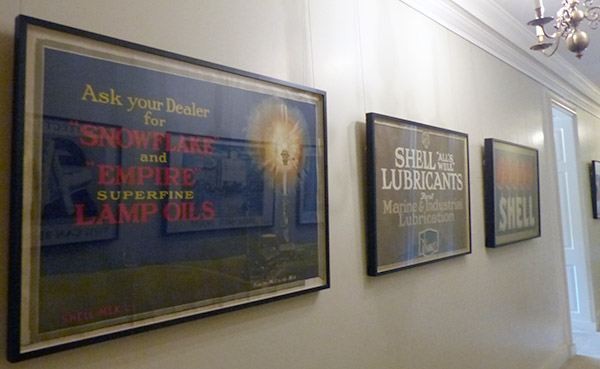
The advertising of Shell in the hallways is also significant as some of these illustrations are the originals.

Upton House

Visitors who were invited to the house could stay the night as Upton is considered a country house and a fair distance from a town in those days. For this reason, some rooms exist with basic elements for visitors to stay.

Upton House

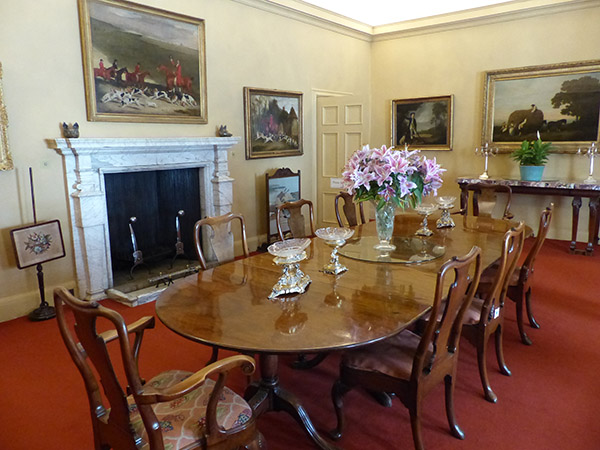
The dining room is located in a more private part of the house and contains some of the paintings of farm workers, peasants, and country scenes. 

Upton House

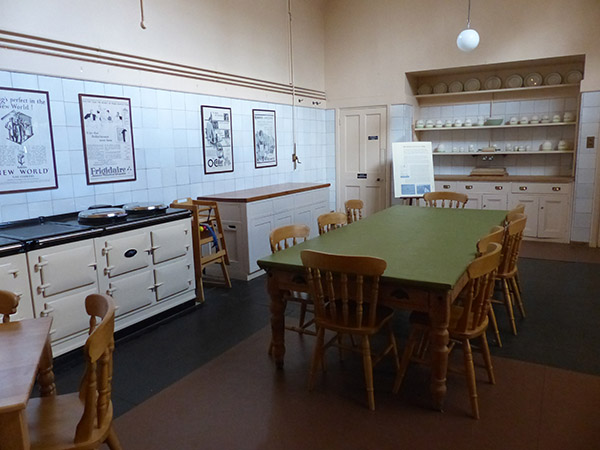
The kitchen is located down the hall.

Upton House

Have you ever visited Upton House? Although the house itself is nice to visit, I think that the gardens here are more attractive and require a visit, so this property is probably best to visit in the summer months.

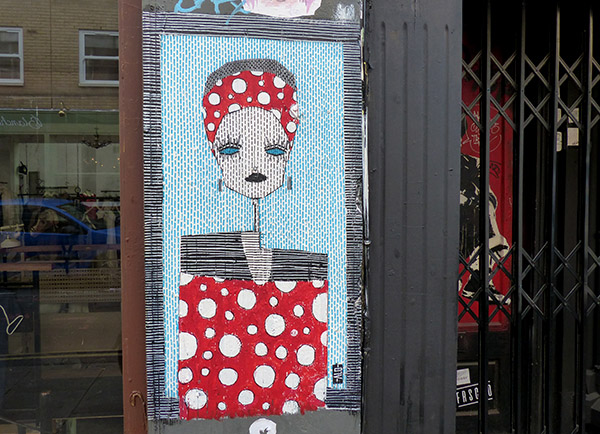
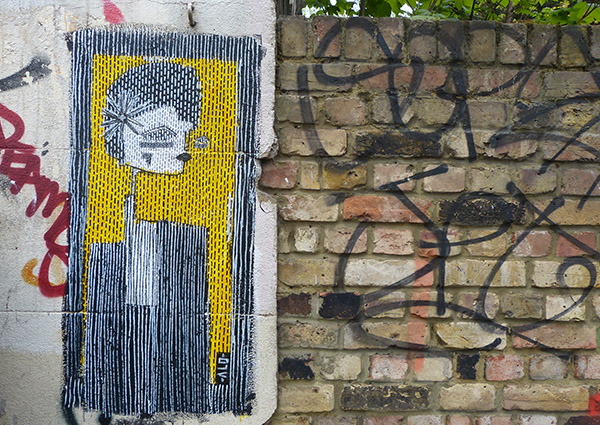
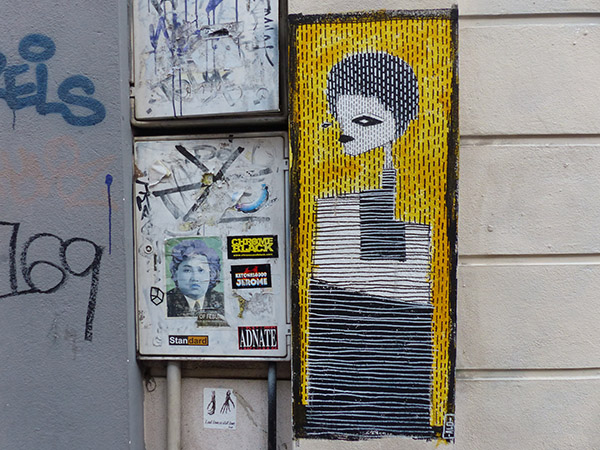
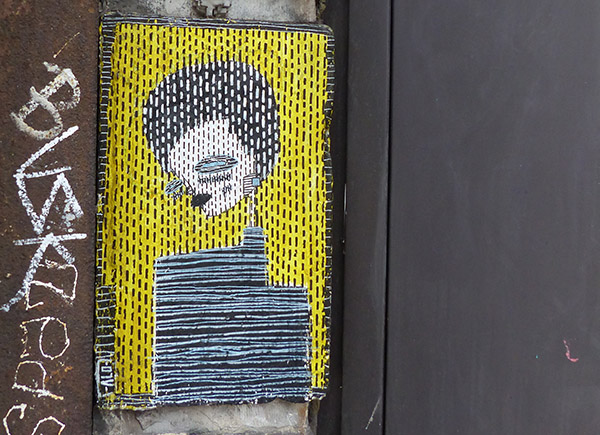
New Street Art by ALO in London, Part 4

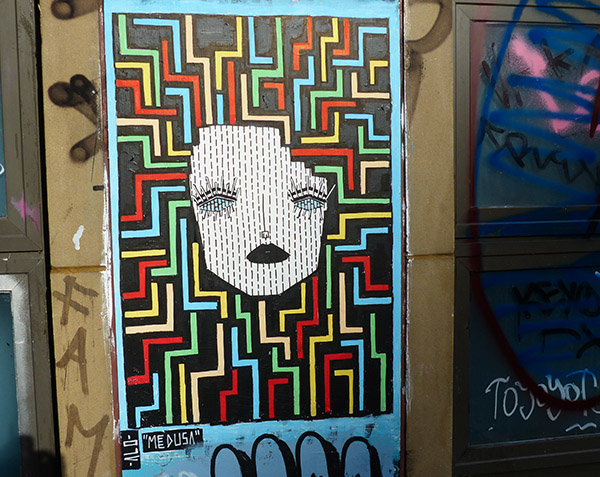
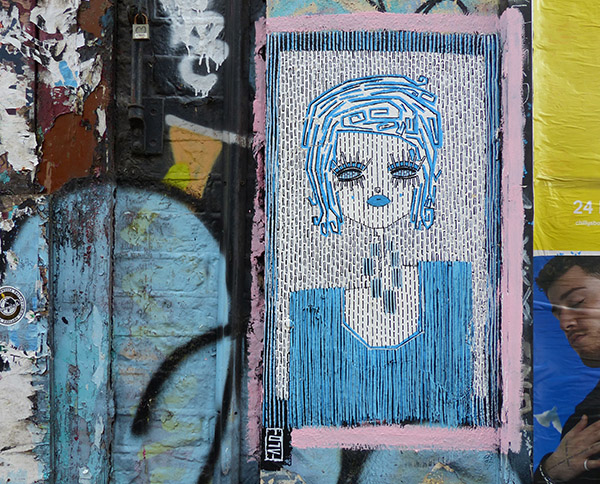
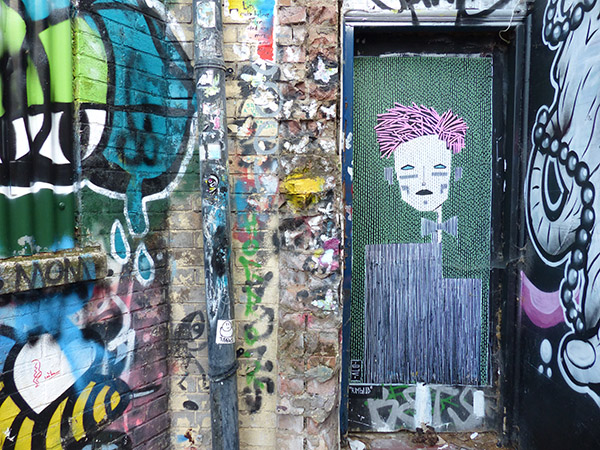
Since I discovered his first street art murals in London at the beginning of 2013, Italian-born street artist ALO has become one of my favourites. For the past couple of years, I have been photographing his new work, but I had not actually uploaded any of it. This post contains the new paintings and ones that I have discovered last year and others that I discovered previously but have not posted before.

ALO

ALO's work is always evolving slightly. His newest work uses pastel colours.

ALO

ALO

Some of his work in the past couple of years was painted with blue and red with black lines on white background.

ALO

ALO

ALO

ALO

ALO

ALO

ALO

And here's some of his older work that I photographed. In some cases, his work did not last long before it had disappeared or been stolen from the streets.

ALO

ALO

ALO

ALO

ALO

ALO

ALO

Additional work by ALO featured on this blog:

ALO paints new street art near Brick Lane
ALO returns to London and paints abstract portraits (2015)
ALO: 2013
'ALO Part 2'
'ALO part 3'
'
ALO Part 4'

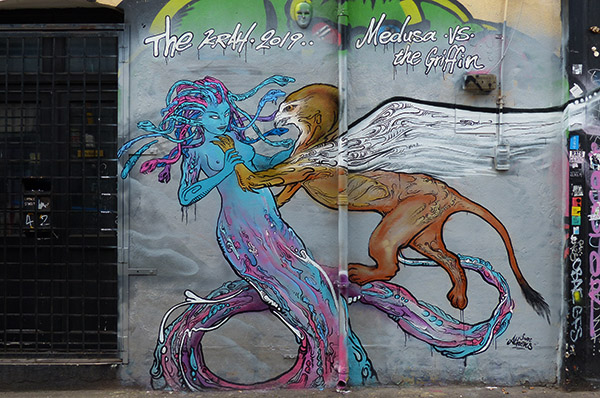
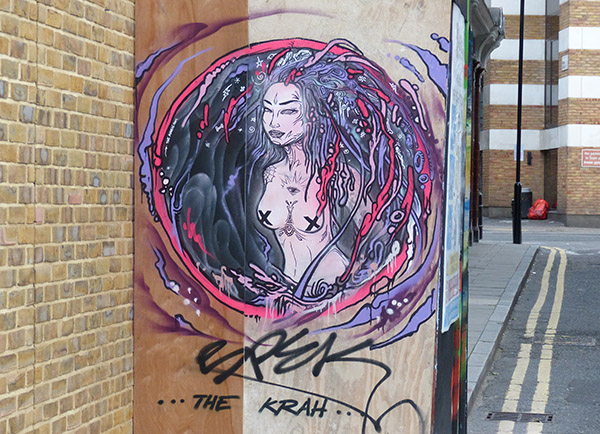
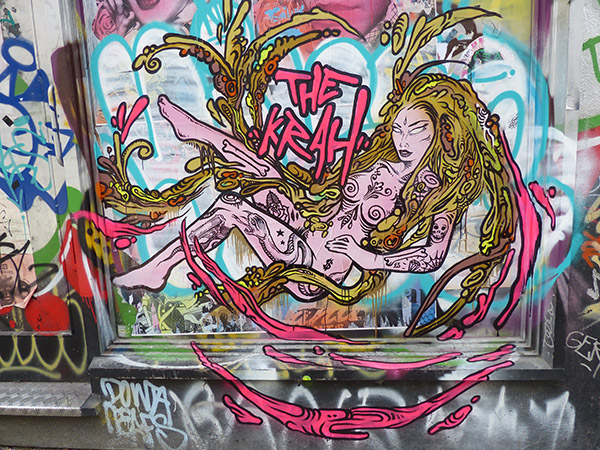
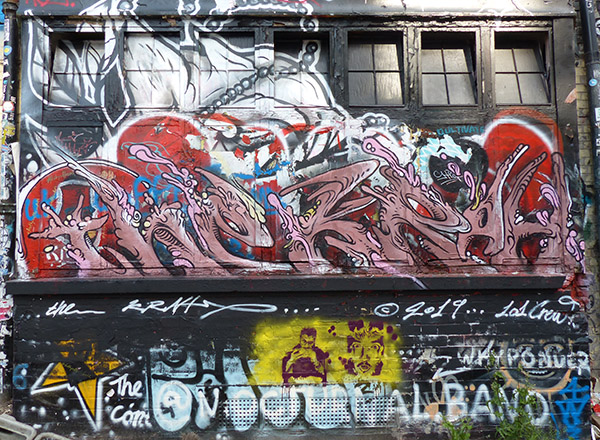
The KRAH Paints in East London

The KRAH is an Athens-based street artist who started on the graffiti scene in the 1990s, and he's now living in London. I've added some of his street art in previous posts but never saw much of his work at one time around London until this summer. This year, he's painted several walls around east London, which I have managed to photograph.

thekrah-2019-01.jpg

The KRAH are inspired by disorder and paint a grafitti style with colour and the use of illustration with some grafitti-tagging styles.

thekrah-2019-02.jpg

thekrah-2019-03.jpg

thekrah-2019-05.jpg

thekrah-2019-04.jpg

The below mural was one of their older pieces that I've not show-cased on this blog until now.

thekrah-2019-06.jpg

Let me know if you are aware of any additional pieces from them this summer. The above is what I could find, and it's mainly concentrated in Shoreditch and Spitalfields.

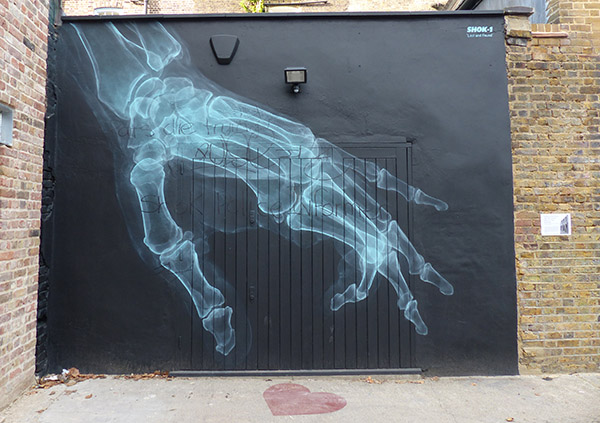
Shok-1 Paints "Lost and Found" in Star Yard

Shok-1 is a London-based street artist who uses spray paint applied thinly in order to build up stencils; I've watched him paint before when I worked on Brick Lane. In more recent years, he has procuded street art that appears to be a series of x-ray photographs. It has been over a year since we saw him produce anything on London's streets, but he was back this summer to create his most recent piece in Star Yard off Brick Lane. The most recent piece is named "Lost and Found" and features an x-ray image of a hand reaching down to a red heart (now looking a little faded) on the pavement below.

shok1-2019-1.jpg

Previous work by Shok-1 on this blog:

Shok-1 Paints "Broken Heart" on Ely's Yard Gate
Shok-1 Paints "Masterpeace for Rememberance Day and "The Future is Rubbish"
'Elvis' by Shok-1
Shok-1 'MasterPeace' Street Art
Street Art: Shok-1
Street Art Round-up: Spring & Summer 2015
Street Art Round-up in Early Spring 2014

Fentimans Secret Spritz Garden

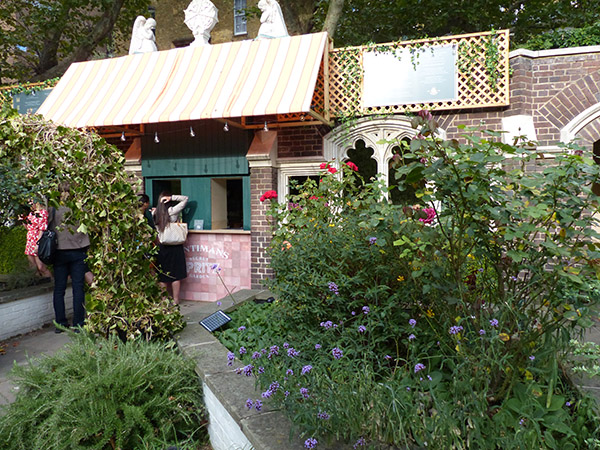
Last week after a busy work day, I popped along to the Secret Spritz Garden hosted by beverage company Fentimans in order to try some cocktails. Fentimans sells old-fashioned cola, rose lemonade, and other sparkling drinks with traditional flavours, and I've been a fan of the rose lemonade for awhile. They have recently started to get into the tonic and flavoured gin/alcoholic beverage market with some of their traditional flavours and created new flavours. The Secret Spritz Garden was set up to market these new flavours and their use in cocktails.

fentimans-01.jpg

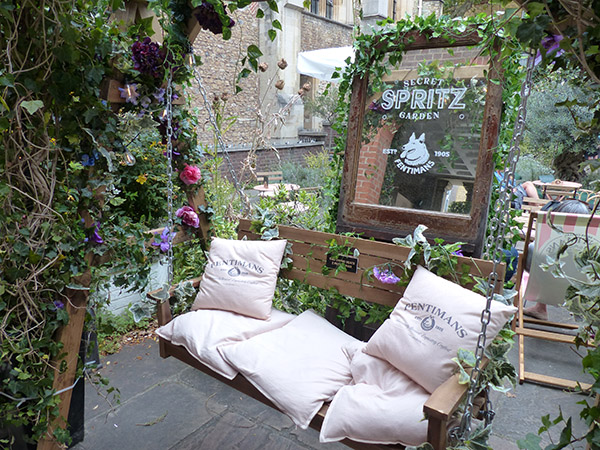
The Secret Spritz Garden was located in Clerkenwell for nearly the whole month of August, set up in between beautiful herbs and wildflowers in St. John's Church square. In addition to the cocktail experience, visitors could take different workshops in working with the flavours and ingredients, take a painting class, and listen to live music.

fentimans-02.jpg

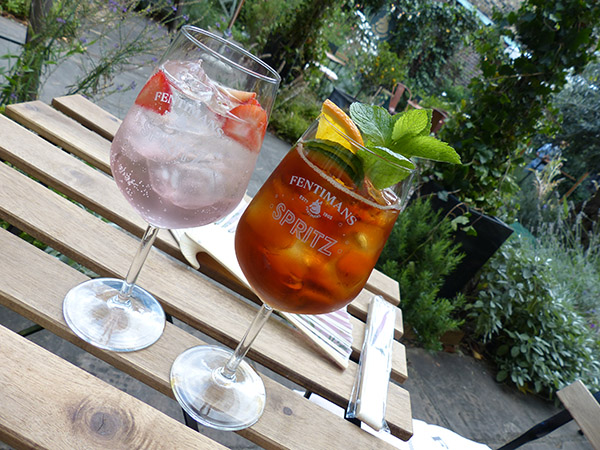
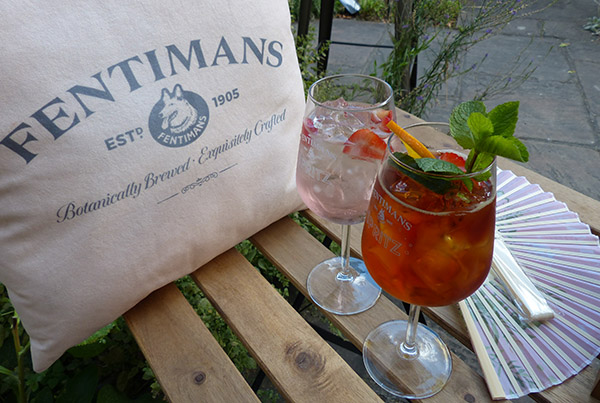
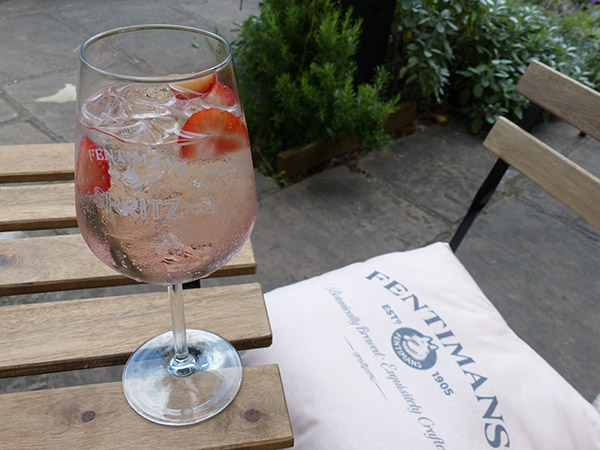
I had Rose Spritz, created with their rose lemonade drink and topped up with Prosecco. I also tried the English Country Cup, which was their take on a summer drink with Pimm's and their elderflower and rose tonic. Both cocktails were refreshing.

fentimans-03.jpg

fentimans-04.jpg

fentimans-05.jpg

Fentimans Secret Spritz Garden pop-up is now sadly over. It was only open from 8th to 29th of August. However, their receipes for the cocktails can be found online, or you can buy their beverages or pre-mixed gin and tonic drinks.

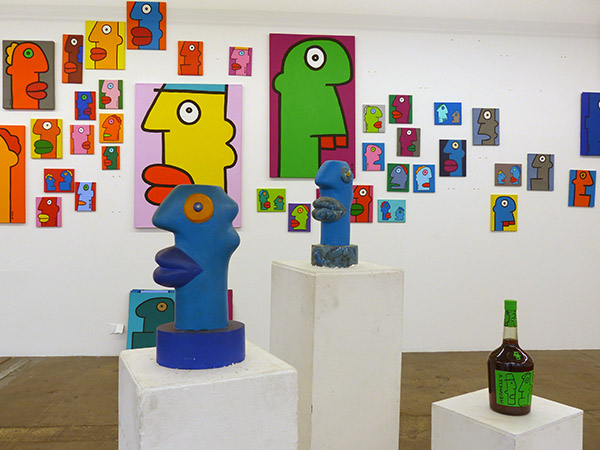
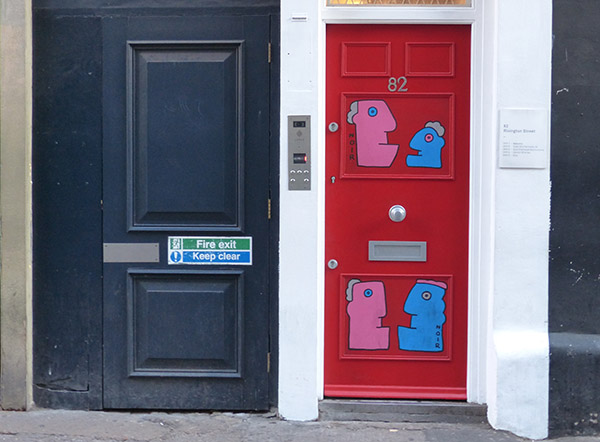
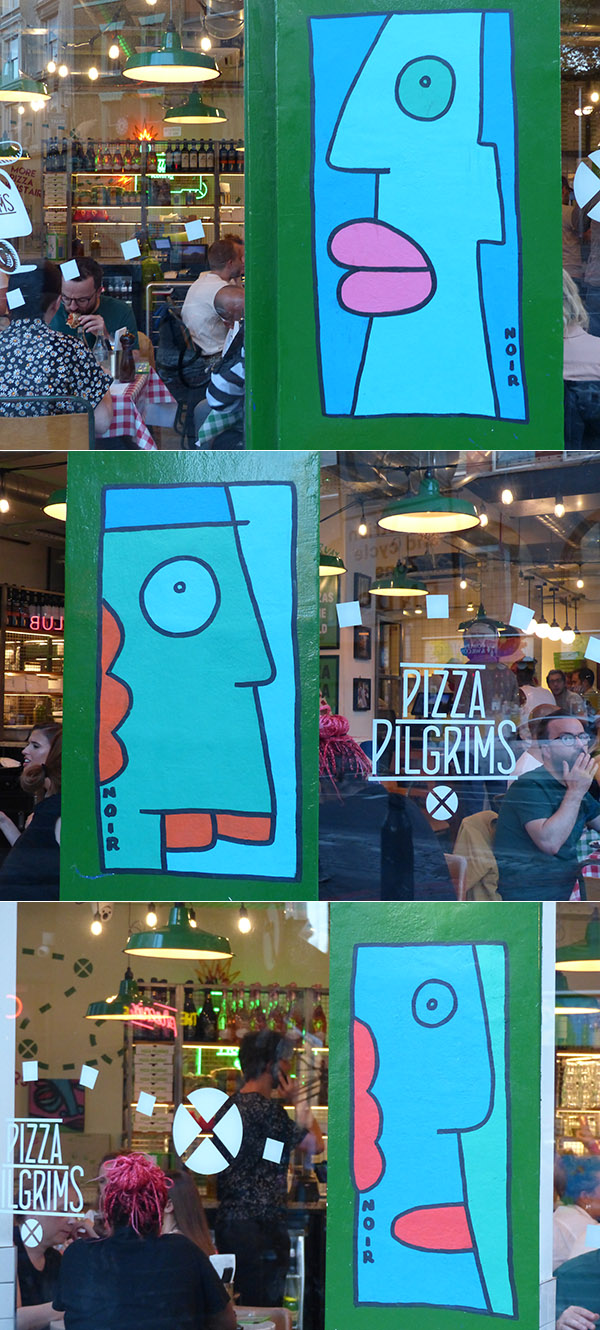
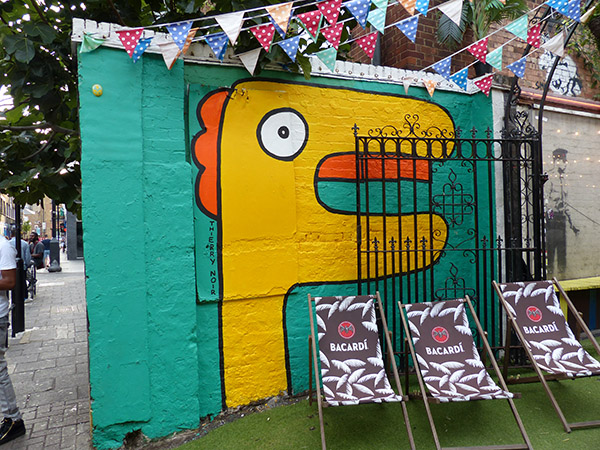
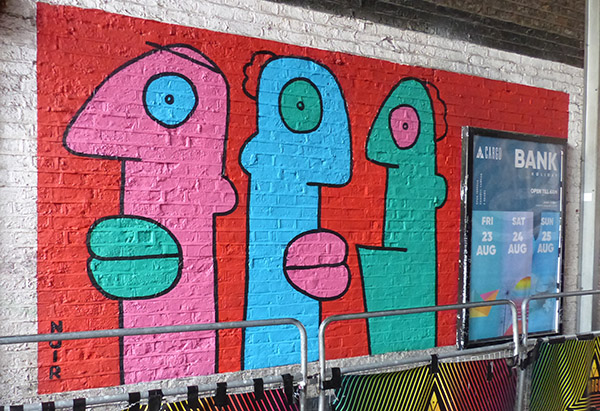
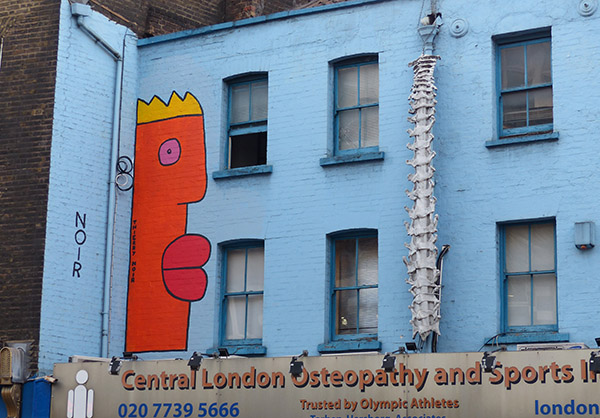
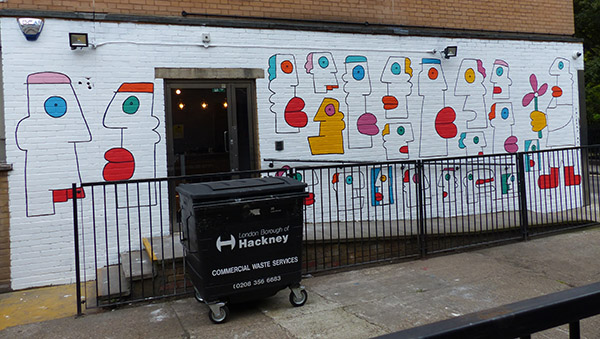
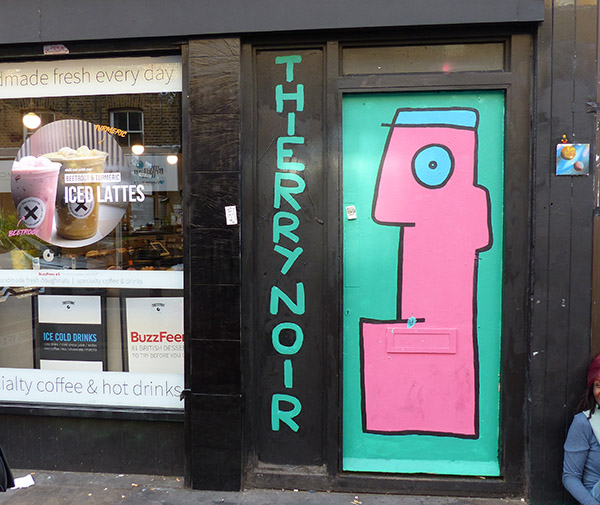
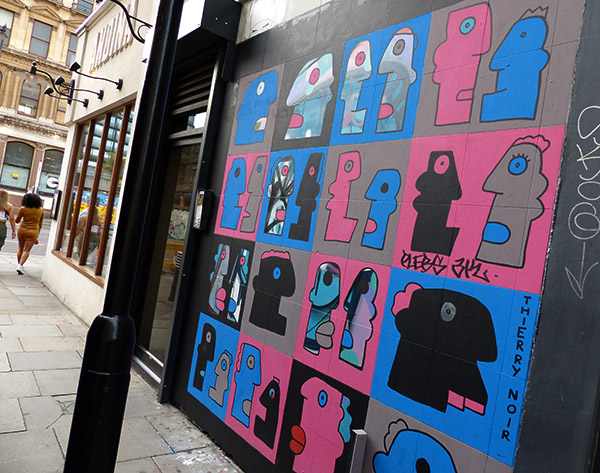
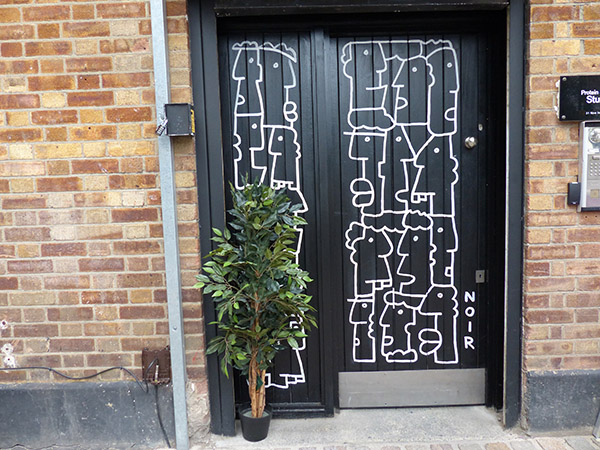
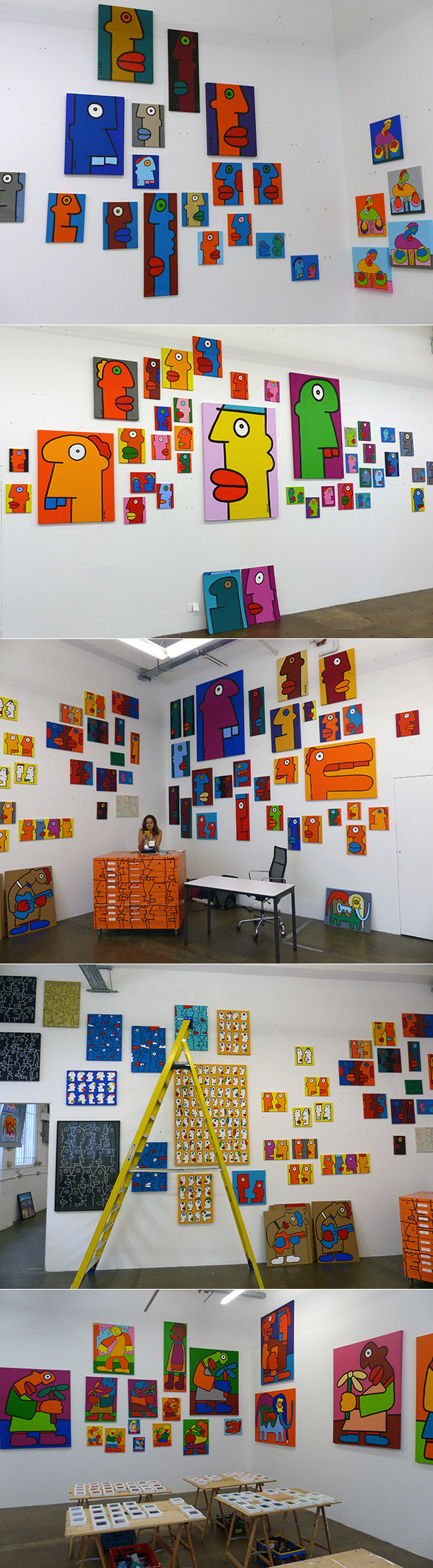
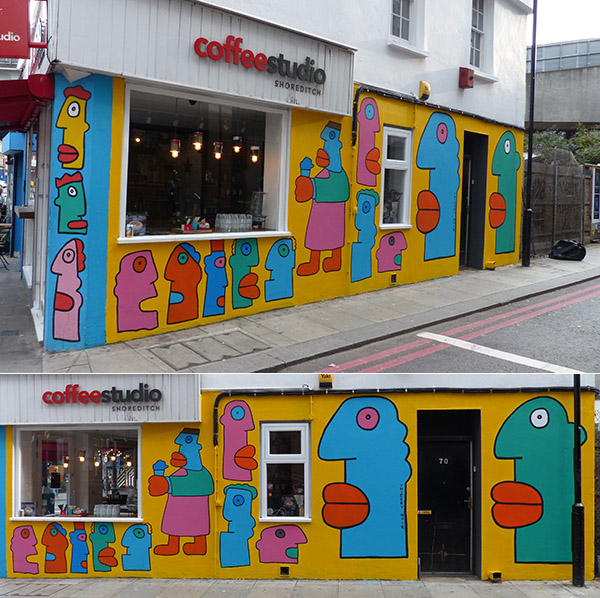
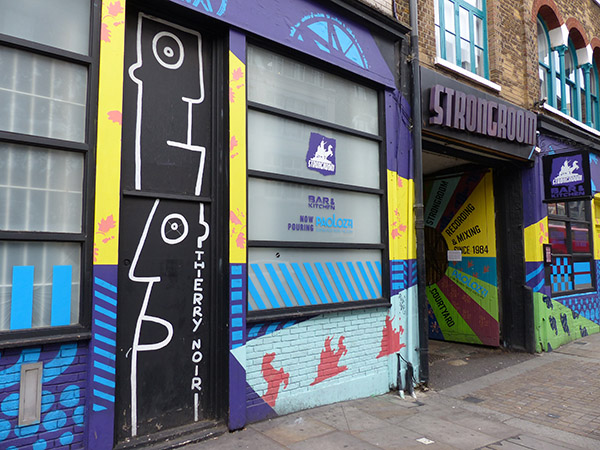
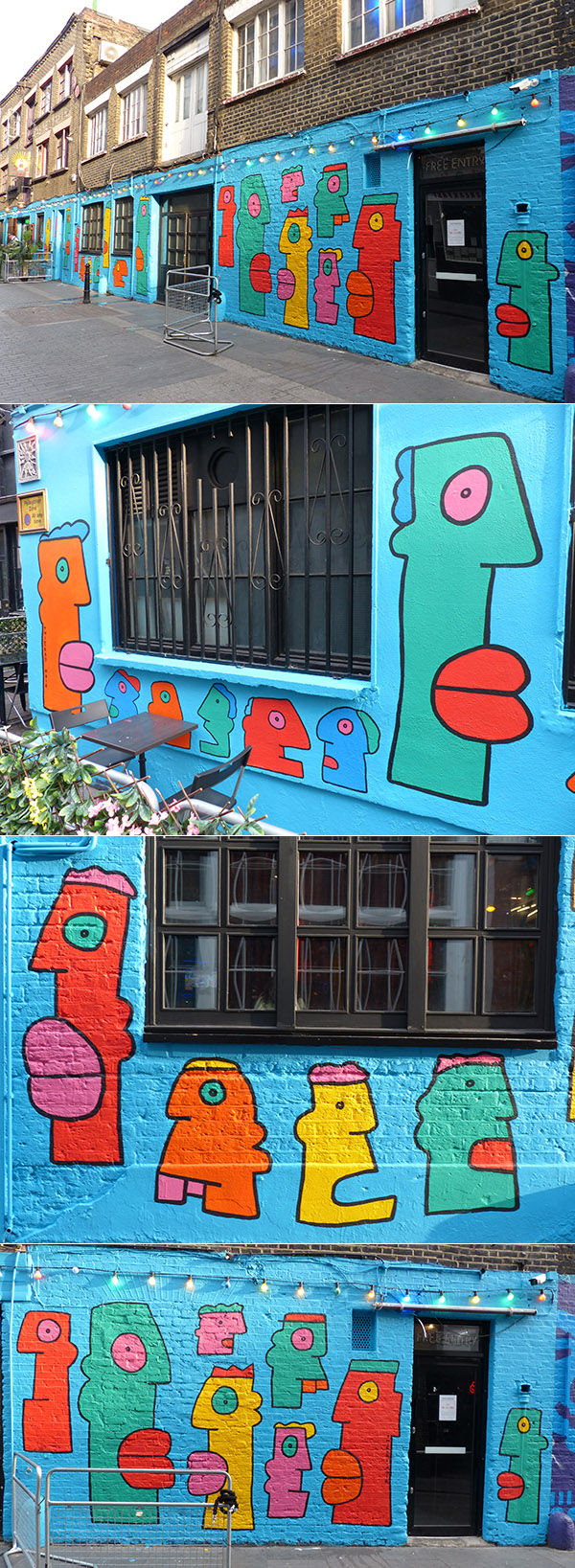
Berlin-based street artist Thierry Noir is credited as being one of the first street artists with his colourful faces appearing on the Berlin Wall in 1984. The Academy Of Art Summer Show at Protein Studios in east London recently hosted Thierry Noir's artwork, and east London has recently become an outdoor gallery with some new walls being painted with Noir's colourful faces and other walls being refreshed with his previous work. 

Thierry Noir

Protein Studios had a lot of his work for sale, and I visited it after opening night; on opening night, there was quite a crowd.

Thierry Noir

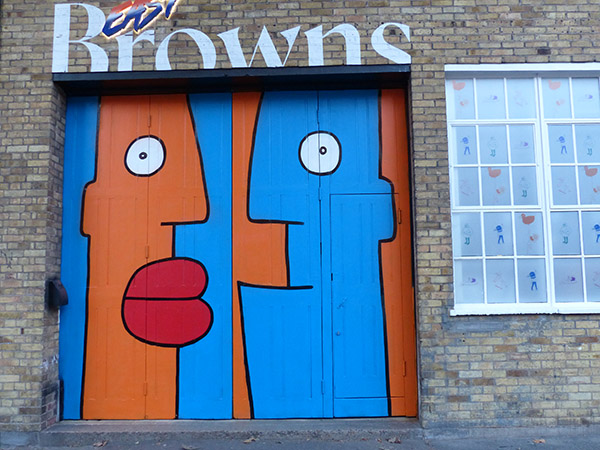
One of the buildings painted was near the old Boundary Estate at Browns; the back side of this wall contains a paste-up from a year or two ago.

Thierry Noir

Rivington Street had this piece on a door and also some on Pizza Pilgrims at the corner of the street.

Thierry Noir

Thierry Noir

I believe that these two murals were freshened up as they had been there for a few years now. Both of these are on Rivington Street.

Thierry Noir

Thierry Noir

Further along and near Hoxton is another face.

Thierry Noir

This wall was painted on Luke Street in Shoreditch.

Thierry Noir

This face made an appearance on Brick Lane.

Thierry Noir

This one appeared at the end of Redchurch Street, replacing an older mural. It's hard to photograph this one as there's road work plus someone always parks out the front of it.

Thierry Noir

Outside Protein Studios is this piece.

Thierry Noir

Here are some more shots from inside Protein Studios.

Thierry Noir

Just a couple blocks away, you will find this on Holywell Street.

Thierry Noir

And this on (I believe) Curtain Road.

Thierry Noir

And, going back to Rivington Street, this building was repainted with Thierry Noir's faces. It was nice to see new work on this building, and an older Noir piece is opposite it.

Thierry Noir

I beleive that these are all of the new new pieces painted by Thierry Noir on his visit, and he's got plans to come back to London in November, so we will be seeing more of his work then. Keep checking back for updates.

More street art by Thierry Noir on this blog is located in the following posts:

Thierry Noir Paints New Murals in London
Thierry Noir and Street Art at Shoreditch Food Village
Street Art in Soho by Paul 'Don' Smith, Broken Fingaz, Amara por Dios, Thierry Noir, and others
Thierry Noir's Shop Front on Shoreditch High Street
Thierry Noir's New Murals on Rivington Street
Thierry Noir, RUN, and John Dolan Murals at the Museum of London
Street Art: Thierry Noir

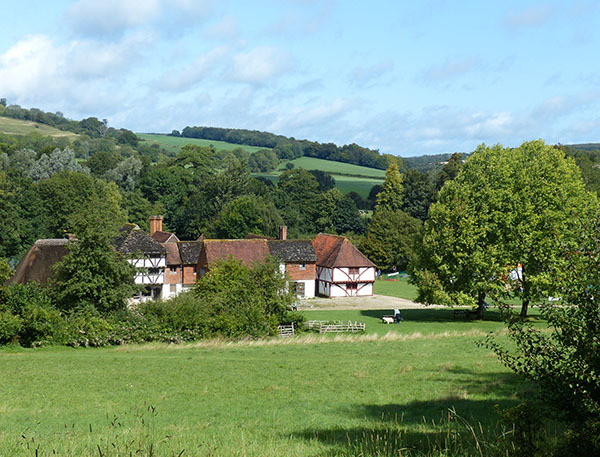
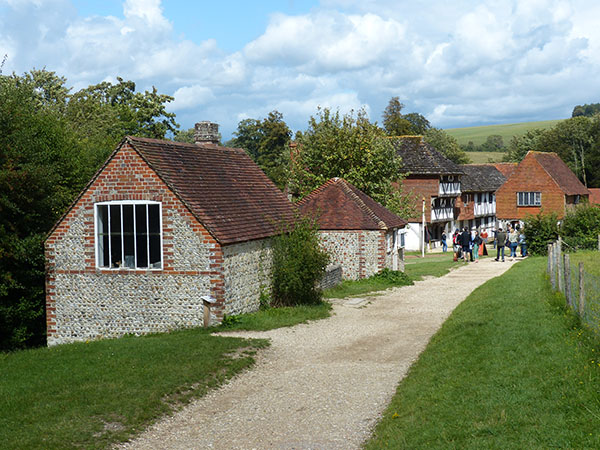
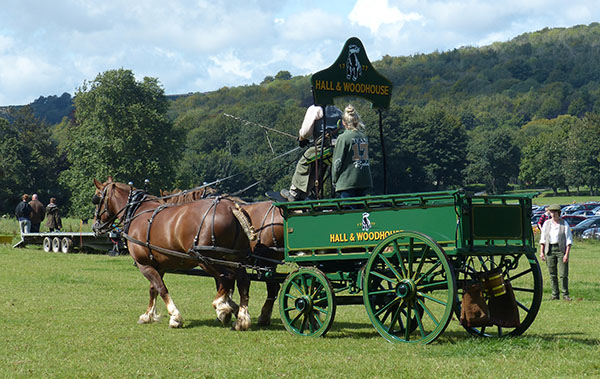
I visited the Weald and Download Museum earlier this month, and the day brightened up into a warm and sunny day. The weekend that I visited was also the weekend of the "Saddles and Steam" annual show, which features horses and steam engines (with some classic cars, World War, and toy collections in the mix). I always enjoy visiting a living museum or living history museum such as this to go inside the houses and buildings to imagine how people lived in different ages.

weald-downland-22.jpg

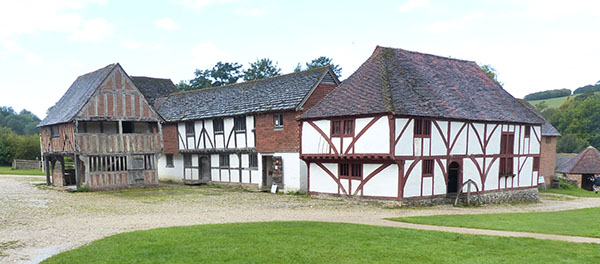
I loved the above view over some of the houses in the museum from the hillside.

weald-downland-01.jpg

I've detailed many of the buildings below. Some of the buildings housed other collections too. Railway and model boat enthusiasts would be happy visiting here because there is a lot of that here to see.

weald-downland-02.jpg
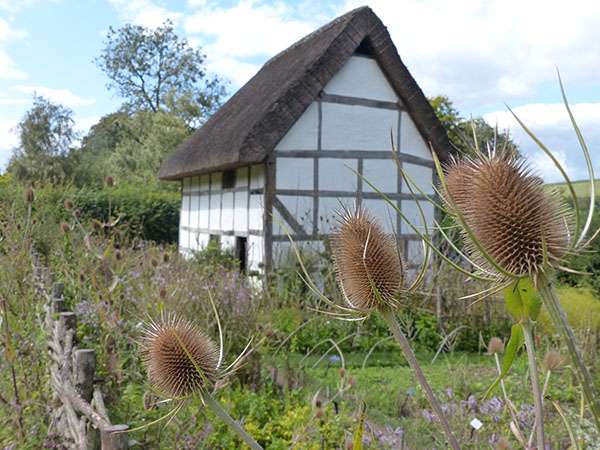
Home from Walderton, Sussex

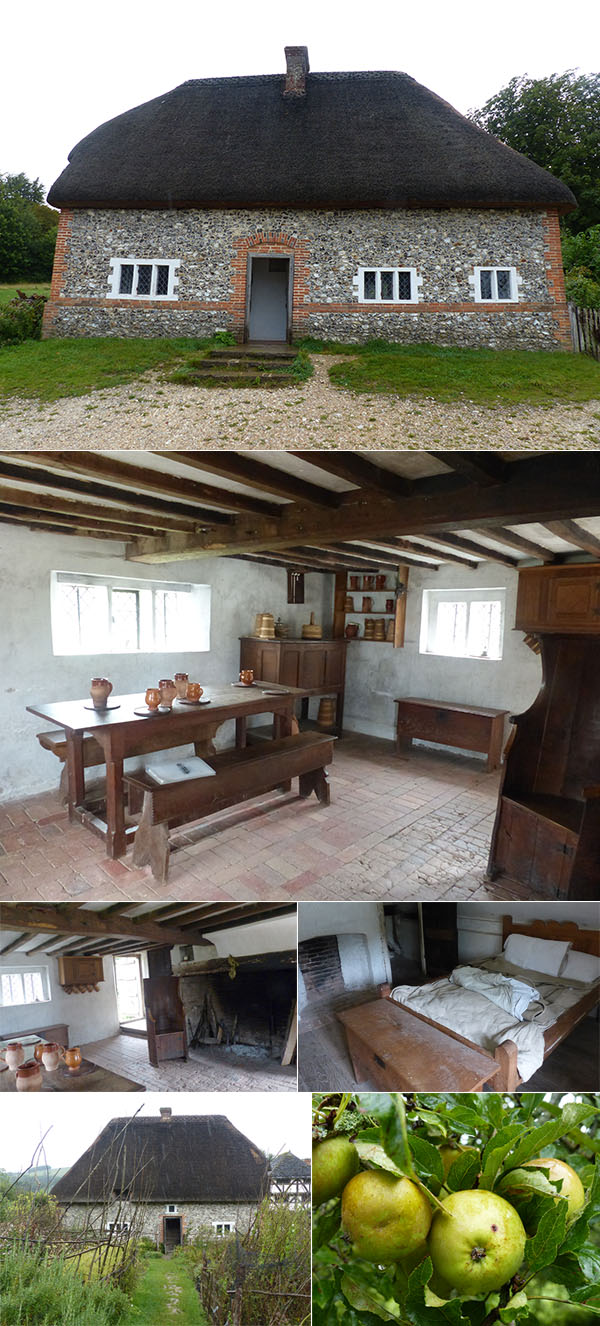
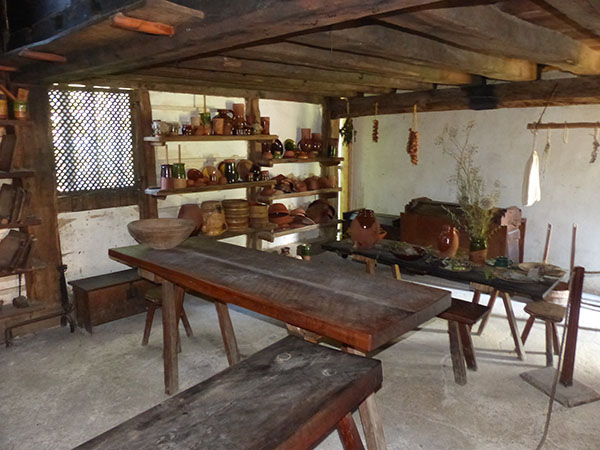
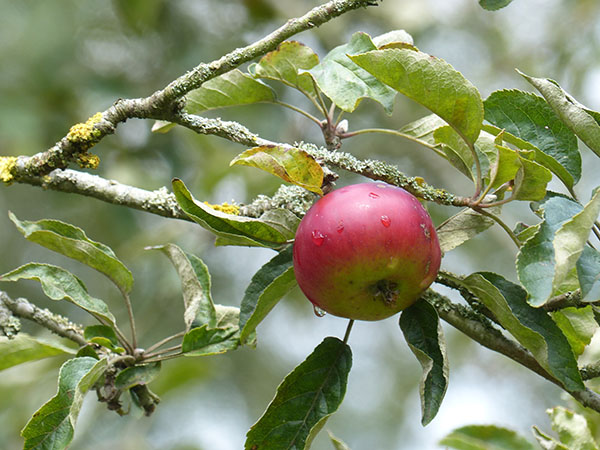
This house from Walderton, Sussex, dates from the 15th-17th centuries. The inside is older and contains an open hall, but the home's purpose was changed for living in the 17th century, and the interior has information about the transformation. At the back is a garden dating from the 17th century with some edible weeds but notably more effort spent on growing vegetables, herbs, and roots (for food and medicine) with a few aesthetic plants grown and fruit trees at the back. The house is broken up into a kitchen on the left (as entering the door), and a larger room for dining on the right. Upstairs are a couple of bedrooms with closet. The fruit trees include quince (similar to a pear), Rosemary Russet apple, Black Worcester pear, Harvey apple, and Warner's King apple. Herbs were grown such as rosemary, lavender, fennel, mint, sage, wormwood. Vegetables and plants included pumpkins, broad beans, leek, cardoons, parsley, onions, asparagus, peas, salad leaves, garlic, beets, and other root vegetables.

weald-downland-03.jpg
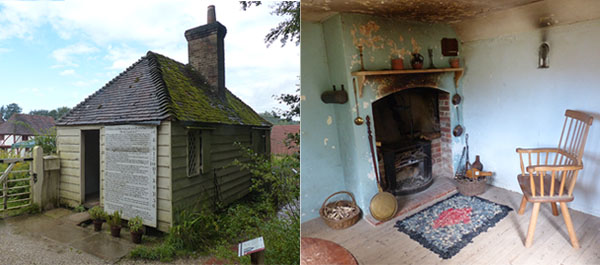
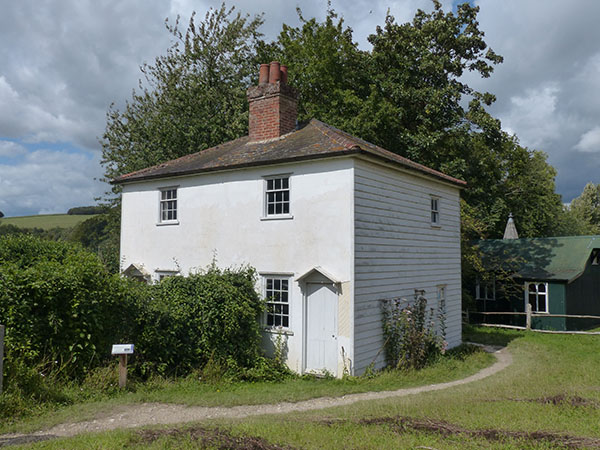
Toll House from Beeding, Sussex

This toll house dates from the early 1800s, but the toll board in front comes from a different toll house. These cottages were set up along stretches of road in order to maintain the road from road users. The little cottage has a small sitting room inside the front door and a small bedroom at the back. 

weald-downland-04.jpg
Pugmill from Redford, Sussex

This building was a horse-powered pugmill used for making bricks. It dates from the 19th century.

weald-downland-05.jpg
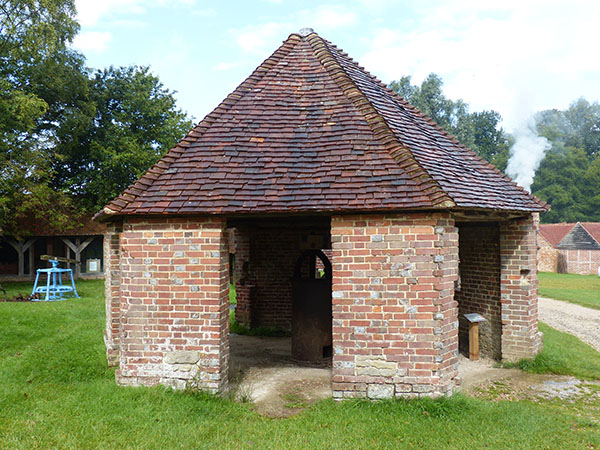
Brick-drying shed from Petersfield, Hampshire

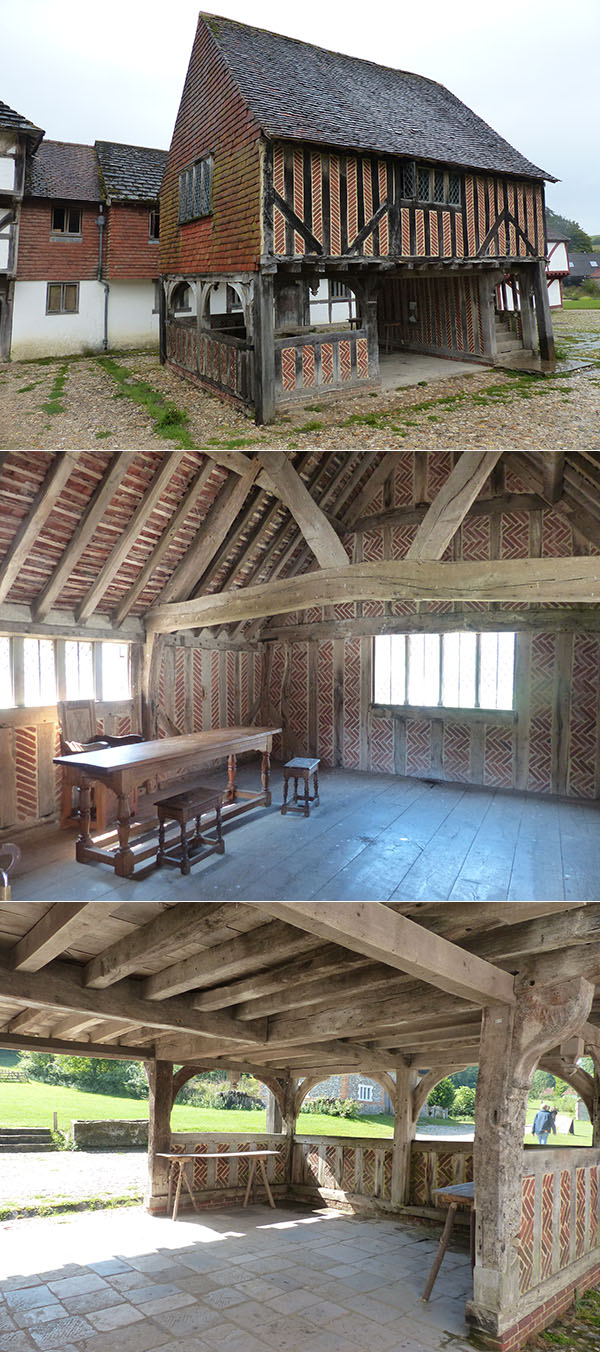
This shed dates from 1733 and was used for drying bricks. Inside the shed is an exhibition about how bricks are made, how they are laid, and how the unique patterns are created. This is next to a similar-looking shed dating from the early 19th century used as a sawpit shed, which came from Sussex and was also a typical building seen in villages in that age.

weald-downland-06.jpg
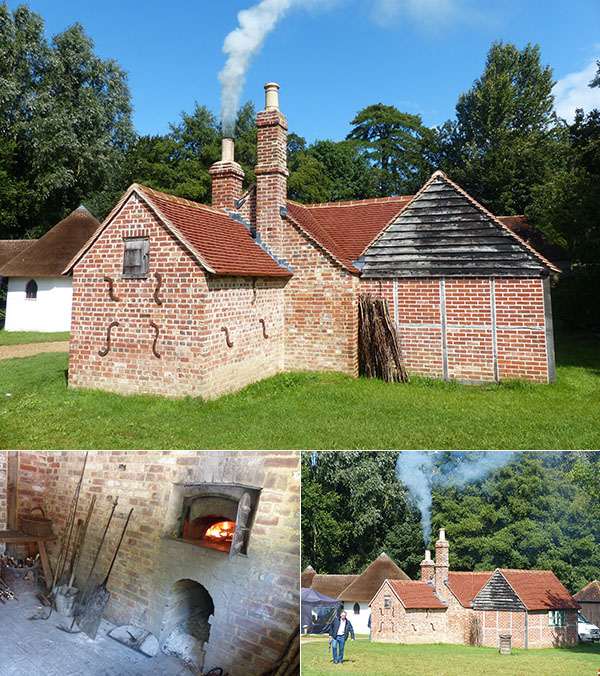
Bakehouse from Newdegate, Surrey

The buildings at the front of the site relate to milling and baking. The bakehouse actually sells items cooked on site with some ingredients made on site. It dates from the 17th century and was a large Victorian bakehouse in its heyday. It ceased to be used in the 1930s. There are three rooms: a preparation room, a stove/oven room, and a room at the back where the shop would have been.

weald-downland-07.jpg

weald-downland-08.jpg
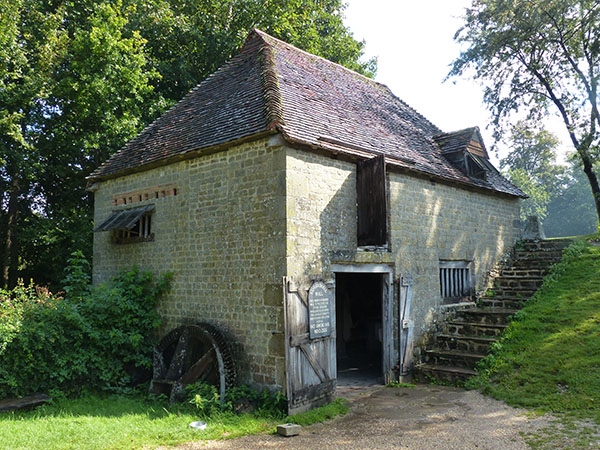
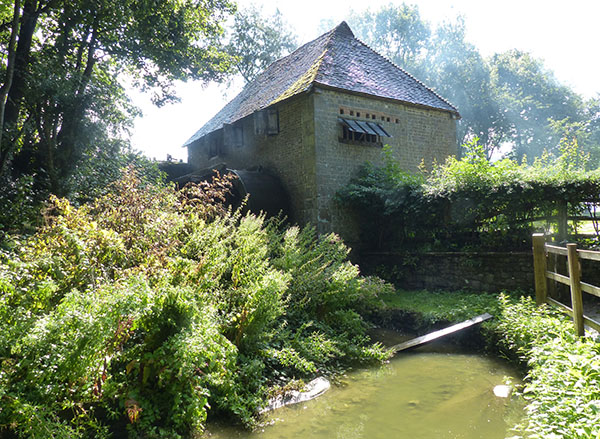
Watermill from Lurgashall, Surrey

This watermill dates from the 17th century and is a working watermill used for grinding wheat into flour. Flour made here can be purchased, and biscuits and other items are also for sale inside the mill. Visitors can see the mill in action. The mill was used until the 1930s before being moved to its present location.

weald-downland-09.jpg
Dairy from Eastwick Park, Surrey

This octangonal building was a dairy dating from the early 1800s. It is currently not open to the public. It is only a recent acquisition, and it was in a ruined state previously.

weald-downland-10.jpg
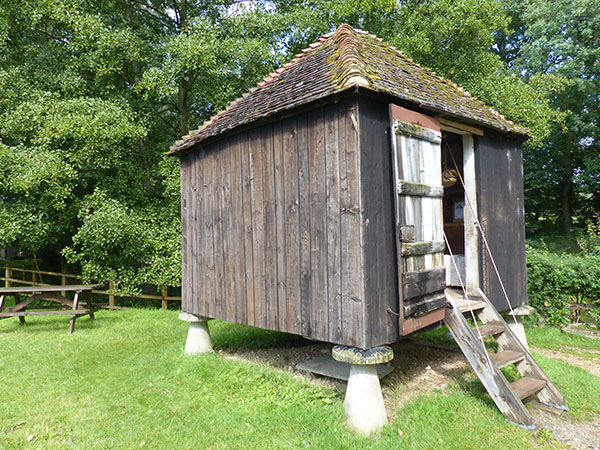
Storage (unknown)

The above shed is a type of storage for a granary or something similar, raised off the ground to prevent moisture from entering. It includes shelving with bagged-up flour and appears to be used by the water mill. I would expect that it dates from the 1800s or early 1900s.

weald-downland-11.jpg
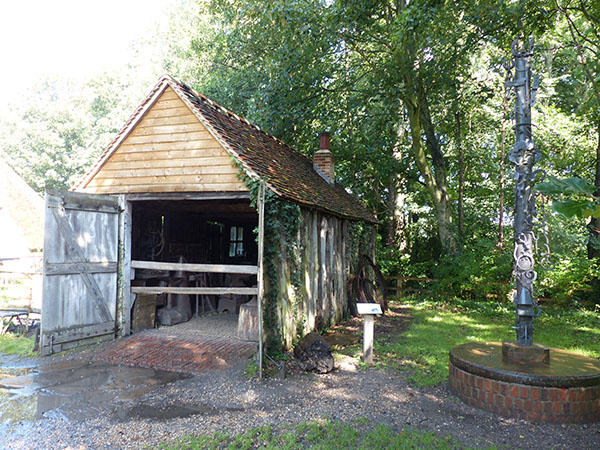
Smithy, 1800s

This blacksmith shed contains equipment to demonstrate blacksmith working with metal, anvils, and fire. It was not working when I visited it, but it looks like it is working for demonstrations.

weald-downland-12.jpg
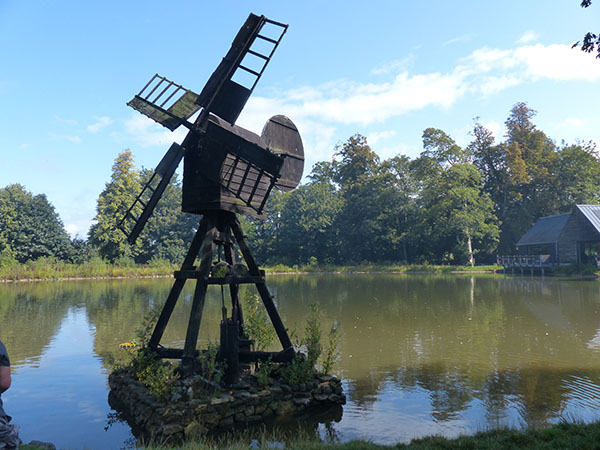
Windpump from Pevensey, Sussex 

This windpump is a rare working example of a working structure that was a common sight.

weald-downland-13.jpg

weald-downland-14.jpg
Plumber workshop

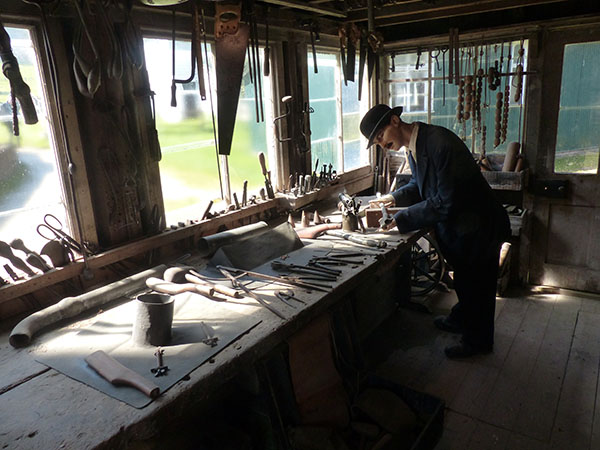
The plumber workshop dates from the 1800s. It had the plumber workshop on the ground floor and window workshop on the first floor. Inside is an exhibition on some of the tools used in the shop at the time.

weald-downland-15.jpg
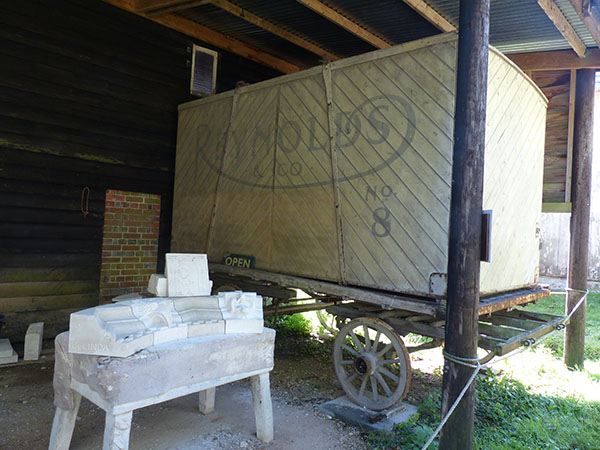
Container Wagon, beginning of 1900s

This container wagon was donated by Reynold's furniture company and is one of the earliest examples of this method of transport of goods. The whole container is shipped, and this prevented the goods from being unpacked and then packed again during various transport methods. This method is still used today.

weald-downland-16.jpg
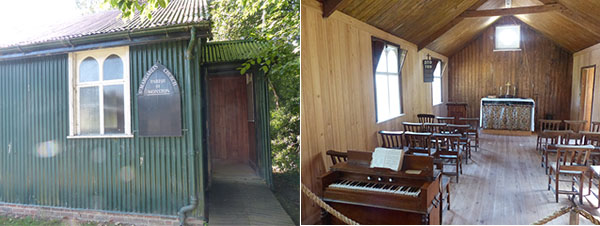
'Tin tabernacle' from Hampshire

The "tin tabernacle" is a name for this method of building of church, which dates from 1908. The church is made from metal.

weald-downland-17.jpg
building from medieval ages

weald-downland-18.jpg

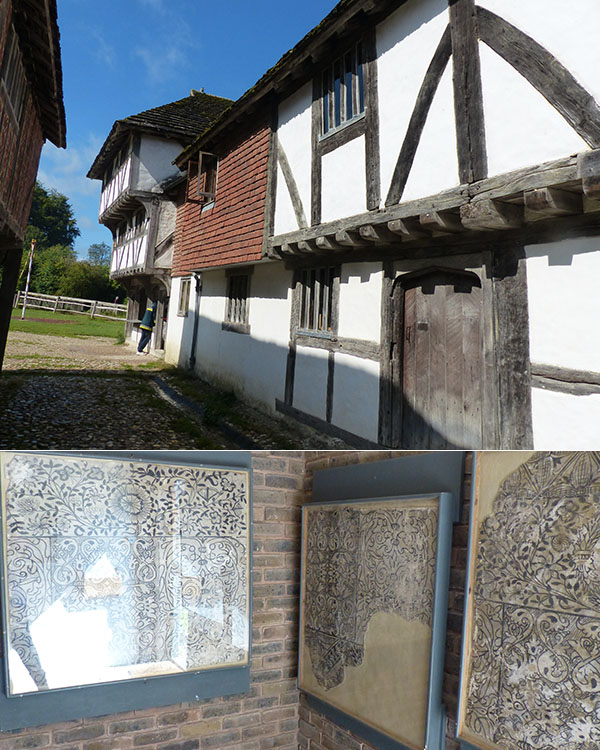
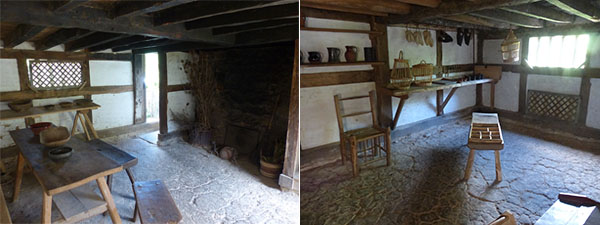
This building in a cluster of public buildings here, which are currently used as craft buildings with model railways and boats, dates from the middle ages. The design painted on the walls was uncovered and shown in the segment below.

weald-downland-19.jpg
Market from Titchfield, Hampshire

This market hall dates from 1620 and is a common example of a market place that every village would have had. 

weald-downland-20.jpg
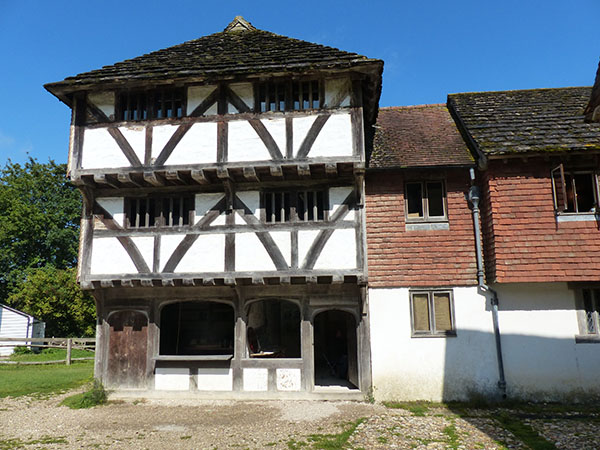
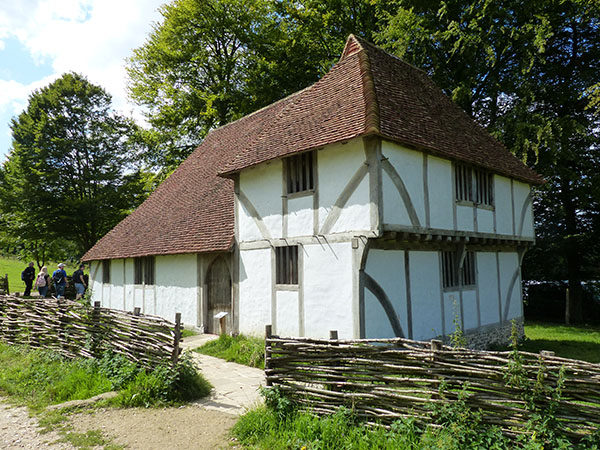
Medieval shop from Horsham

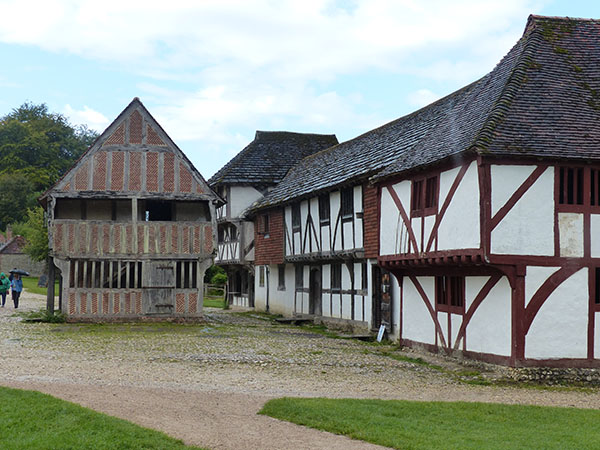
This is an example of a timber-framed medieval shop (1600s). Shop fronts were used to sell goods with the families living upstairs. The staggered timber frame going out onto the street level is an example of how buildings were constructed in that day.

weald-downland-21.jpg
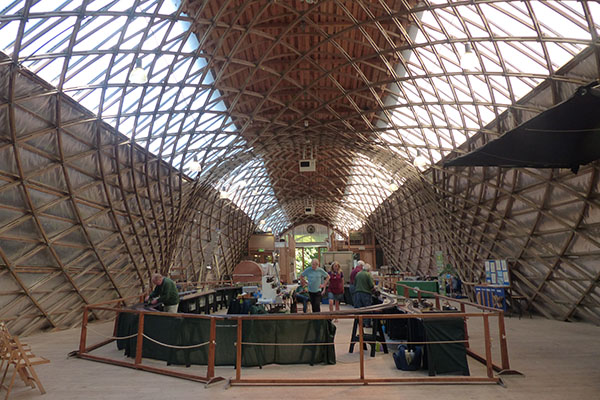
Downland Gridshell, 2002

This is an award-winning building created in 2002. It is home to some collections and is currently housing a model railway set.

weald-downland-24.jpg
Treadwell from Catherington, Hampshire

This 17th century Treadwell was used to pump water from a well 300 feet down. It is smaller than the donkey-operated wheels, and this one was probably operated by a man.

weald-downland-23.jpg
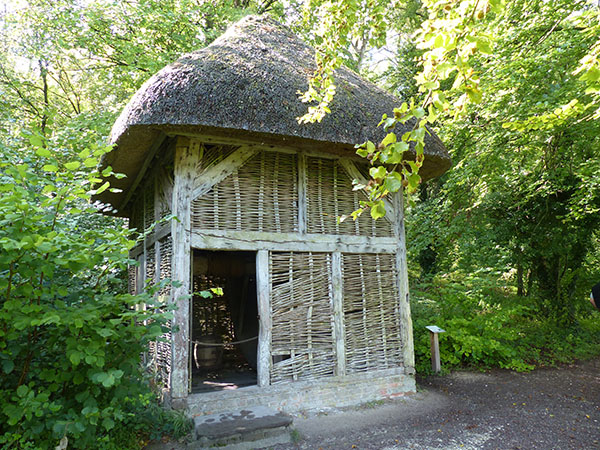
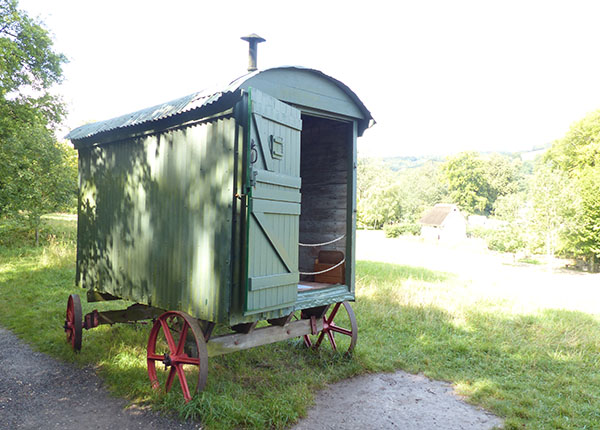
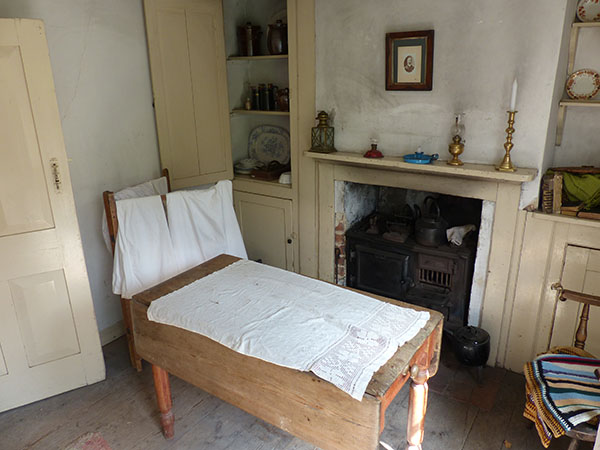
Farmer's Hut, 1800s

This hut contains a stove and a bed and would have been lived in by a farm laborour. An excerpt of such a hut is detailed in a book by Thomas Hardy, "Far from the Maddening Crowd".

weald-downland-25.jpg
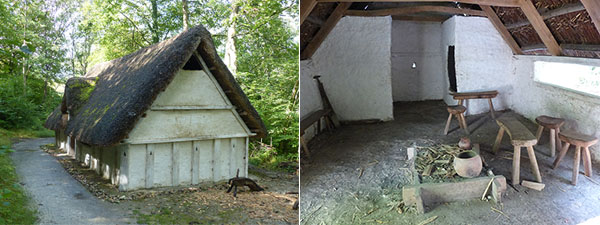
Anglo-Saxon Hall from Stayning, West Sussex

This 10th century hall is modelled after a site that was used as a hall around 950AD. It is a reconstruction of what the hall would have looked like in the site. The hall would have been dark inside.

weald-downland-26.jpg
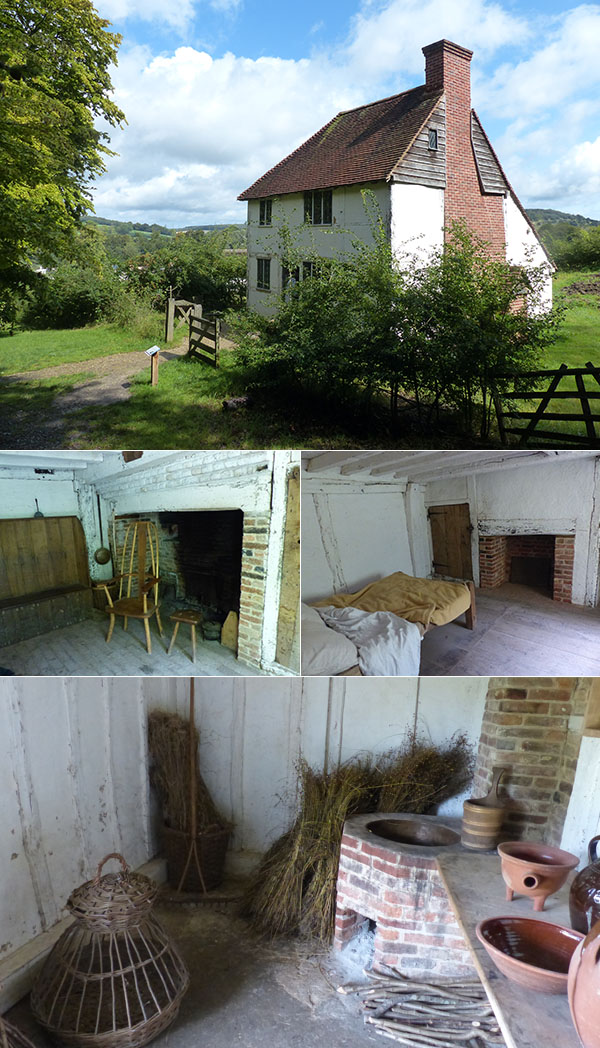
Tindall's Cottage from Ticehurst, Sussex

This cottage dates from the early 1700s, and the timber in it dates from an earlier building. The design is known as 'Poplar Cottage', and it reminds me of my grandmother's farmhouse, which was actually an older building with probably only one or two rooms before it was extended. Upstairs are two bedrooms, accessed via the one bedroom to another room at the back.

weald-downland-27.jpg
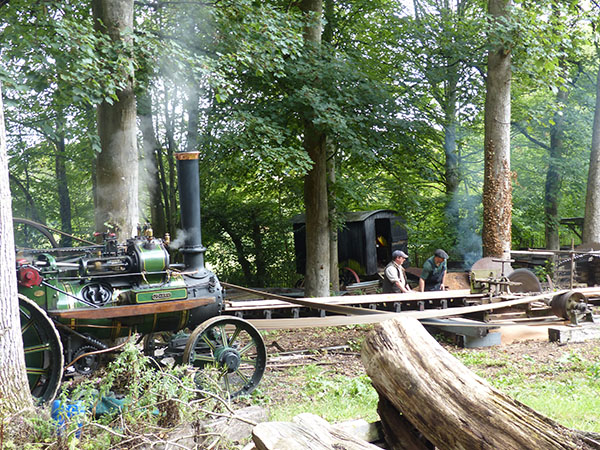
Steam-powered saw

In the forest is a sawmill, and it was in operation with a steam engine when I arrived. There was also information on charcoal and its uses and importance in this area.

weald-downland-28.jpg
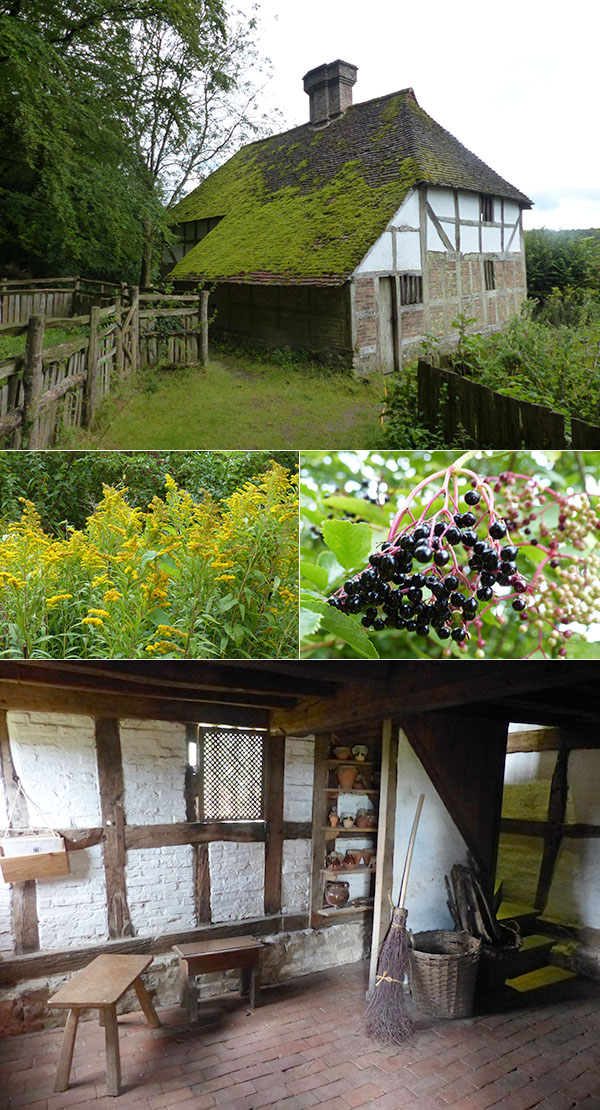
Pendean farmhouse, early 17th century

This farmhouse dates from the early 17th century, and it also has an example of a garden from that time containing plants for medicine, food, ale-flavouring as well as plants to keep away insects and others to add aesthetic (roses, irises, golden rod). A large area in front of the house contains elderberries. The upstairs had a small room with a toilet in it, and in order to get between the rooms, visits have to crouch through a small doorway.

weald-downland-29.jpg
14th century hall from Boarhunt, Hampshire

This hall dates from the 14th century and has two large rooms inside.

weald-downland-30.jpg
Medieval cottage from Surrey

This 13th century medieval cottage from Hangleton in Surrey was built based on an archeological find. The cottage was probably abandoned in the 14th century but built in the 13th century.

weald-downland-31.jpg
Barns

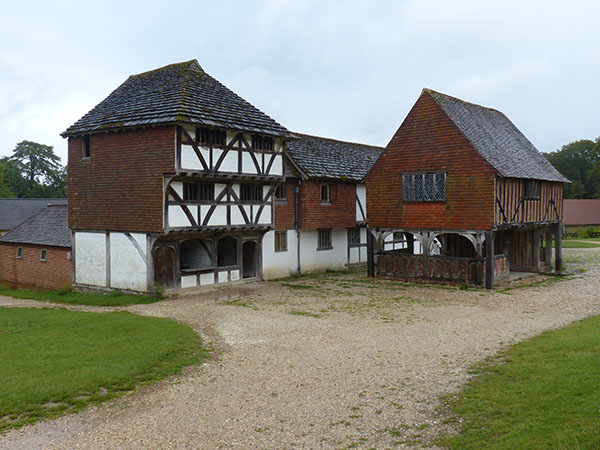
The first building is an old barn dating from the 1530s in Sussex. The second building is a farm shed with equipment and a shepher's room with information about sheep and about the sheep fair and breed of sheep. The third photograph shows threshers' shed used by a team that would go around the farms and do work during harvesting, and hot meals would be cooked here; it is not dated, but I assume it is the 1800s. The fourth is a barn and stable from the 18/19th centuries from Tonbridge in Kent. 

weald-downland-32.jpg
Winkhurst Tudor Kitchen

Winkhurst Tudor Kitchen is an example of a kitchen used in Tudor times with an area for cooking and a separate area for dining and an area for storage/preparation. The exterior of the building was not easy to photograph.

weald-downland-33.jpg
Bayleaf farmhouse from Chiddingstone, Kent

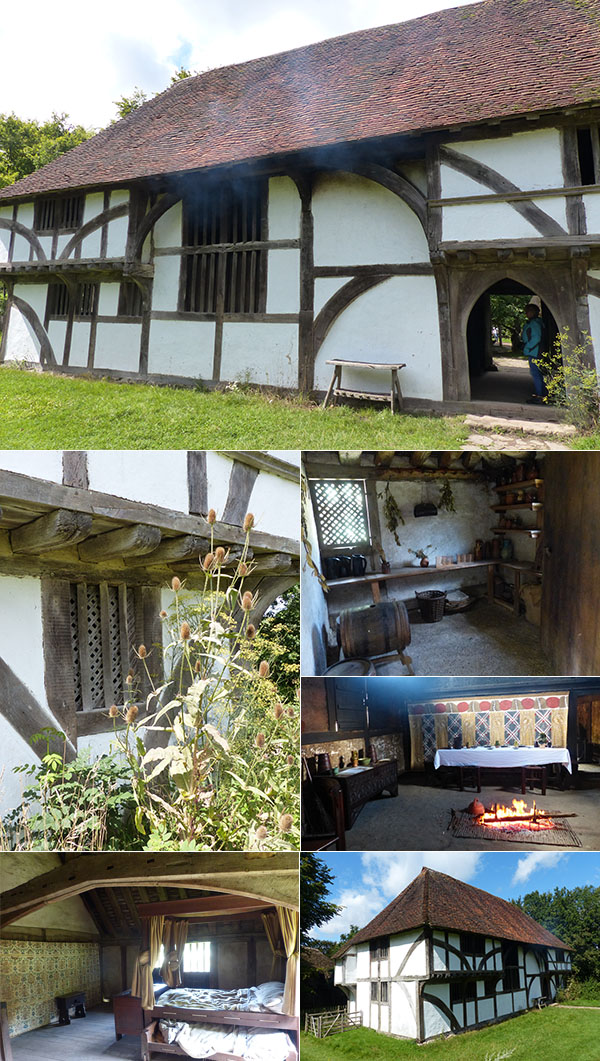
This old farmhouse is a smokehouse and does not contain chimney. The fire was lit on the floor and aired out through the side of the windows, as shown in the above photographs. It is an example of a Tudor-framed house from the 13th century. Upstairs shows a wall of how it would have been decorated at the time.

weald-downland-34.jpg
Schoolhouse from West Wittering, Sussex

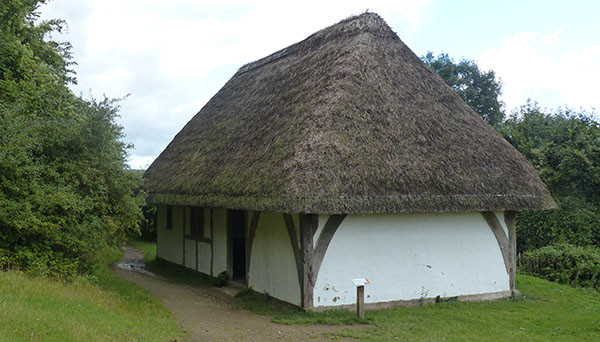
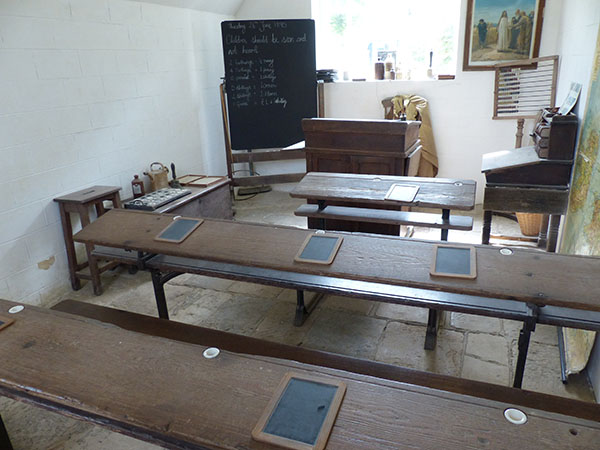
Dating from the mid-1800s, this schoolhouse is an example of where children were taught and what they had in the classroom.

weald-downland-36.jpg

weald-downland-35.jpg
Whittaker's Cottage, 1860s in Surrey

Whittaker's Cottage was a cottage complex of railway workers, and it contains a garden. 

weald-downland-37.jpg
Medieval cottage from Kent

This medieval house is from Kent. It dates from the 15th century.

weald-downland-38.jpg

weald-downland-39.jpg
Poplar Cottage from Sussex

This cottage probably dates from the 1500s.

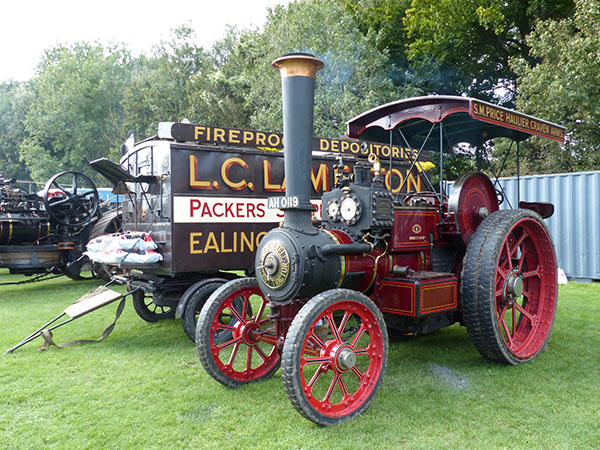
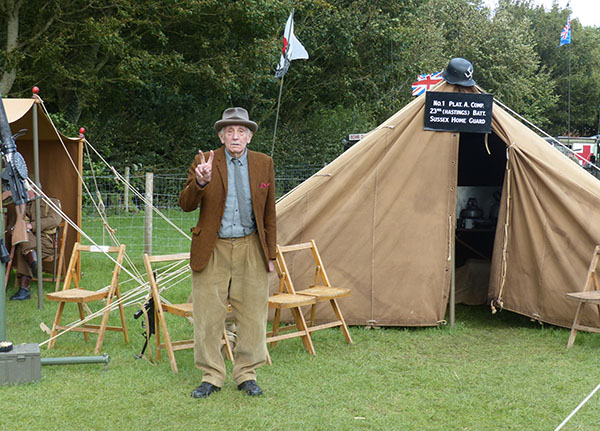
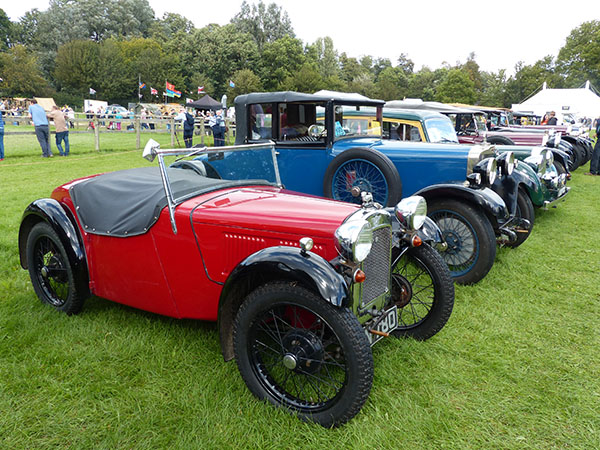
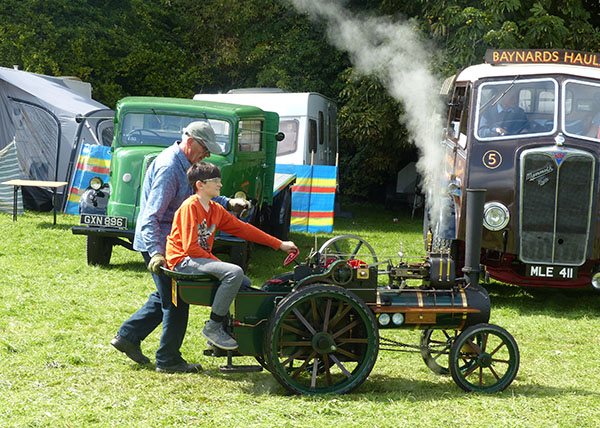
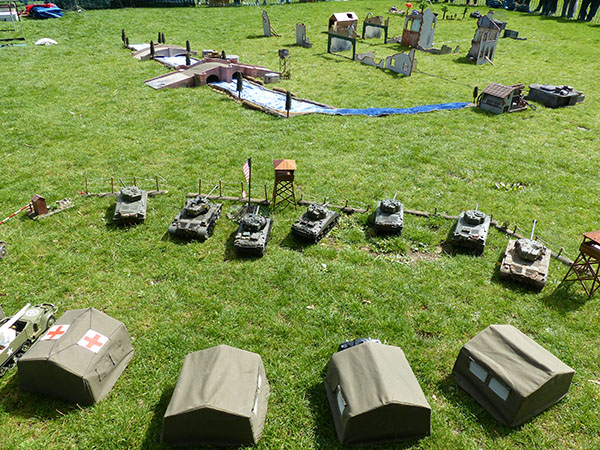
I visited on the weekend of the annual "Saddles and Steam" show, which is a day filled with horses pulling wagons and doing demonstrations, steam-powered cars and equipment and vintage cars. There were also mini steam engines on display, a food and craft market, portable music machines, and collections of toys and other items. There was also a D-Day display in the pond and on the land with motorised boats and tanks and World War vehicles.

Have you ever visited the Weald and Download museum? It is located near Chichester near Portsmouth in Hampshire.

A Day at Mottisfont Abbey (Hampshire, England)

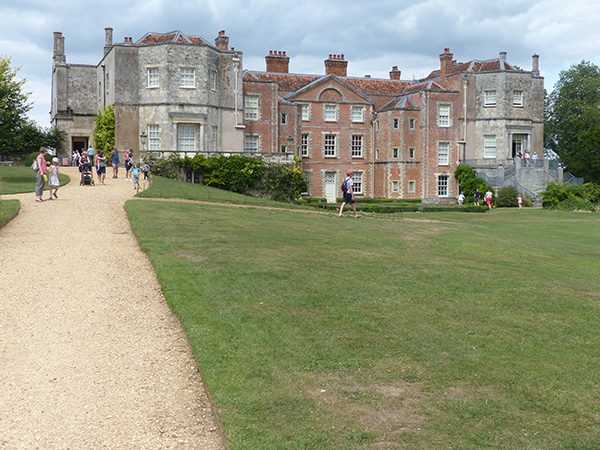
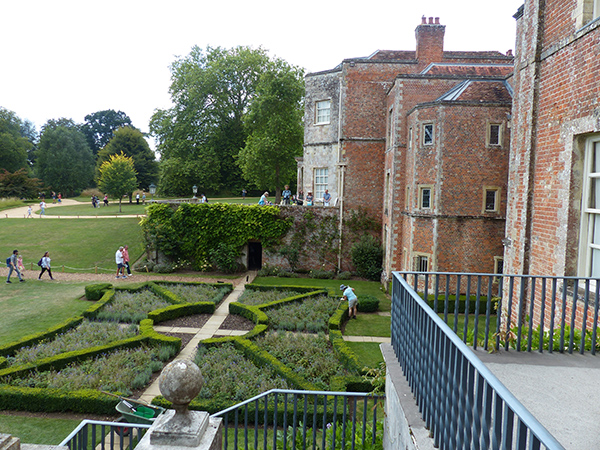
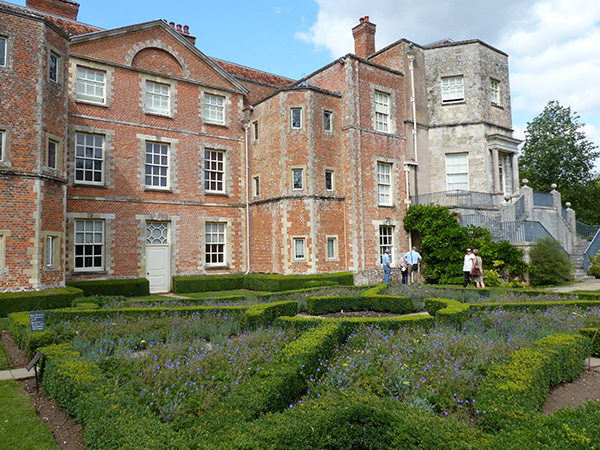
I visited Mottisfont Abbey in Hampshire at the end of July. The house iteself is set up as a period home with furnishings mainly from the early 20th century, but it was actually the monastary that was built in 1200. However, the current building is only about a third of the original size. The monastary was the Augustinian order and was called "The Priory of the Holy Trinity". 

Mottisfont Abbey

After the monastaries were dissolved, it was turned into a residence and then bought by the Russell family in the 1930s. I explored the house, garden/grounds, and checked out the gallery, which was exhibiting "The Beano" comics at the time of my visit.

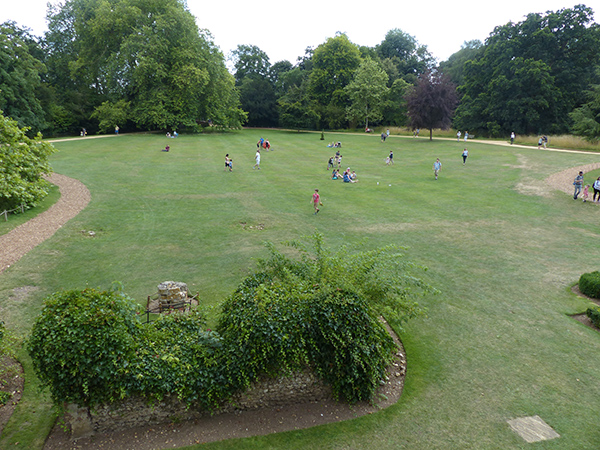
As mentioned, the house is only a third of the size of what it was when it was a monastary. In the image below, the building extended into the foreground by 2/3rds.

Mottisfont Abbey

The Russell family enjoyed artwork, so some fine pieces are shown throughout the house.

Mottisfont Abbey

Mottisfont Abbey

Only very few pieces remain of that original building, and a corner of the room (Red Bedroom) was left exposed to show some carving. A religious mosaic has been inset into this room to pay tribute to its past.

Mottisfont Abbey

Mottisfont Abbey

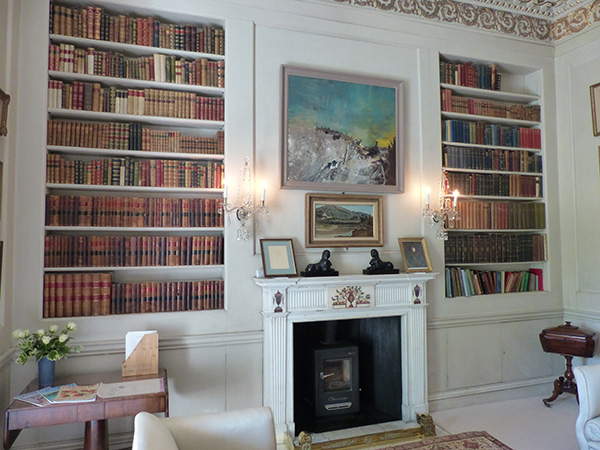
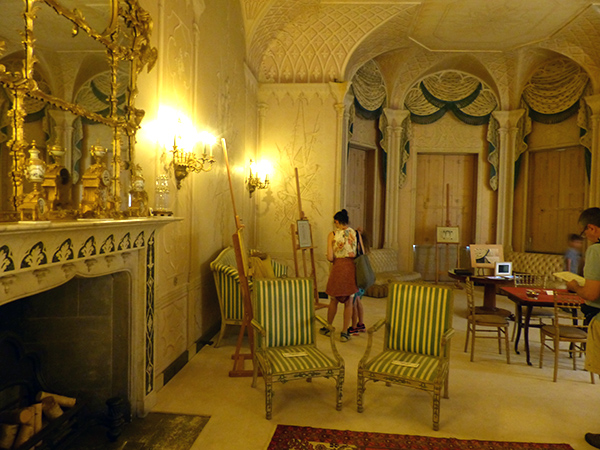
This was my favourite room, the Morning Room; it is a very bright room with a library. It faces the front of the building, and the owners would relax here with some of their friends, which included artists and writers famous in the day.

Mottisfont Abbey

This is the view from the doors in the Morning Room.

Mottisfont Abbey

Mottisfont Abbey

Mottisfont Abbey

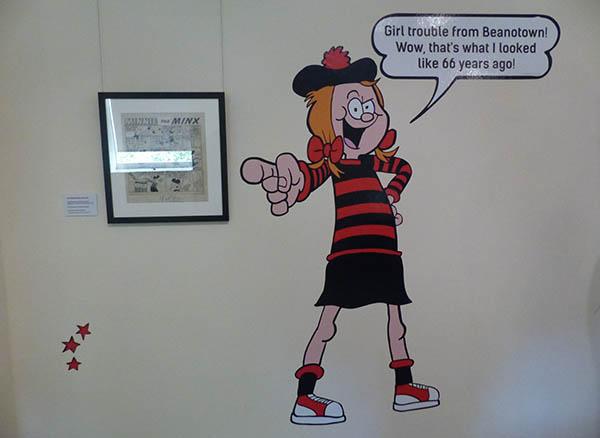
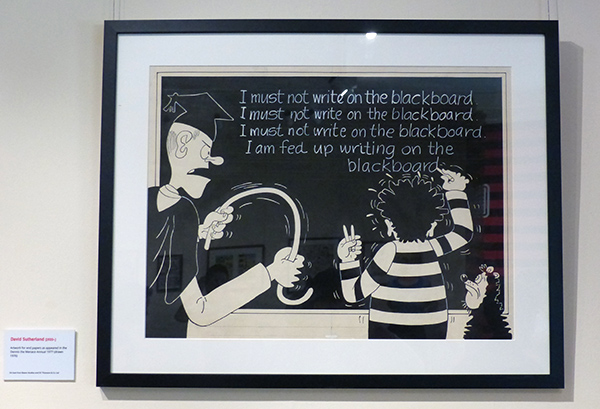
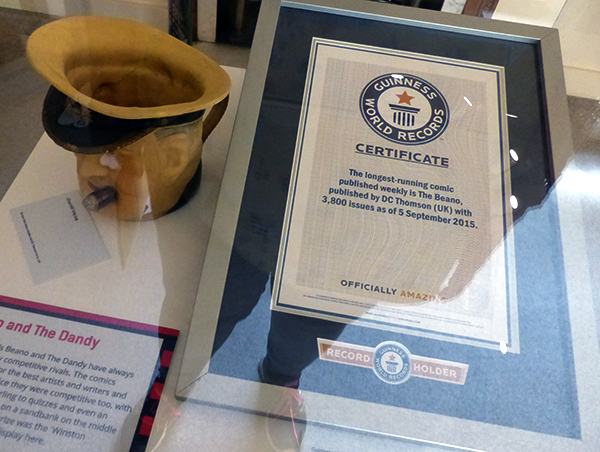
Up the stairs near here is the gallery, which was used to showcase artwork that the Russell family enjoyed. Today, the gallery hosts several major exhibitions each year. When I visited, it was exhibiting "The Beano" comics, which is the longest-running comic of all time.

Mottisfont Abbey

Mottisfont Abbey

Mottisfont Abbey

The main living room, or Whistler Room, is currently under preservation. The owners commissioned artist Whistler to create a realistic (trompe l'oeil) painting over the walls to make the room appear medieval and three-dimensional.

Mottisfont Abbey

Mottisfont Abbey

Outside the house, visitors can visit the cellar. One of the cafes is also located here. This area was the undercroft of the original priory building. It functioned as a cellar and office for the person responsible for the goods used here. A couple of the rooms running off of here showcase some examples of mosaic floor and pottery/glass shards and other findings. In one of those rooms, nine skeletons were uncovered.

Mottisfont Abbey

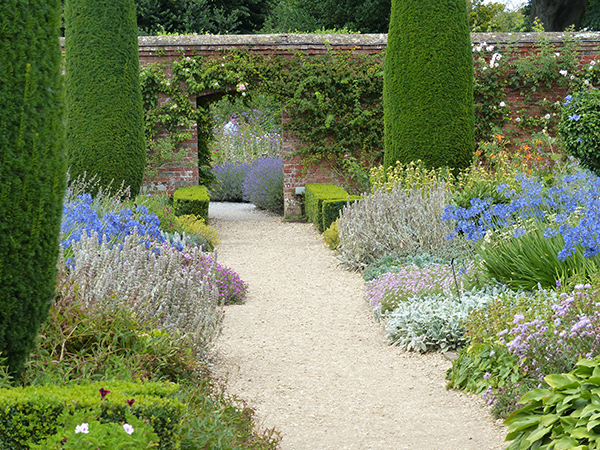
The part I enjoyed most about Mottisfont was actually the gardens, which are beautiful. About twenty years after the National Trust was given the property, old rose bushes were brought to the rose garden here and planted. I just missed the roses as they bloom in mid-late June, but when I visited, the garden was beautiful and smelled of lavender.

Mottisfont Abbey

Mottisfont Abbey

Mottisfont Abbey

Mottisfont Abbey

Mottisfont Abbey

Mottisfont Abbey

Mottisfont Abbey

Mottisfont Abbey

Mottisfont Abbey

Mottisfont Abbey

This was my second visit to Mottisfont Abbey; my first visit was nearly 20 years ago and in March. In March, there isn't much to see at Mottisfont, and the gardens were not in bloom. This National Trust property is best visited in the summer months.

  1 2 3 4 5 6 7 8 9 10 11 12 13 14 15 16 17 18 19 20 21 22 23 24 25 26 27 28 29 30 31 32 33 34 35 36 37 38 39 40 41 42 43 44 45 46 47 48 49 50 51 52 53 54 55 56 57 58 59 60 61 62 63 64 65 66 67 68 69 70 71 72 73 74 75 76 77 78 79 80 81 82 83 84 85 86 87 88 89 90 91 92 93 94 95 96 97 98 99 100 101 102 103 104 105 106 107 108  

Archives

Recent Comments

  • jenn: Thank you. read more
  • Murge: Amazing post. read more
  • Herbert: good post. site read more
  • Frank Quake: Hey, This is great when you said that I had read more
  • Chappy: You mention peptides here? I have had first hand experience read more
  • jenn: Thanks! I love the work. I have got more recent read more
  • Fanakapan: Thanks for the write up. This was some of my read more
  • jenn: Yes.... but that's only for the islands. Mostar and Montenegro read more
  • jenn: Hello, the code is not mine to hand out. I'll read more
  • pantich: More info about the best day trips from Dubrovnik can read more
OpenID accepted here Learn more about OpenID