Results matching “paint”

Street Art: Borondo

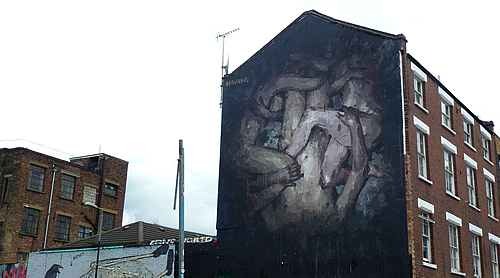
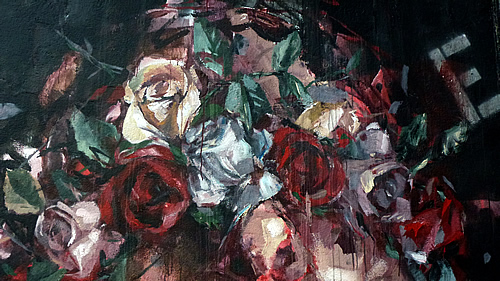
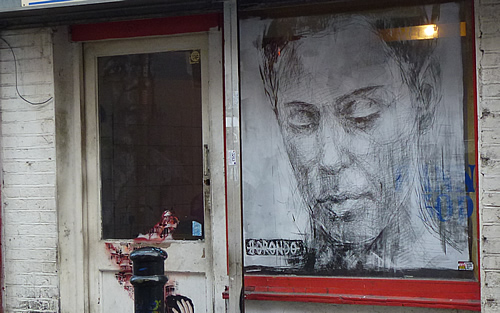
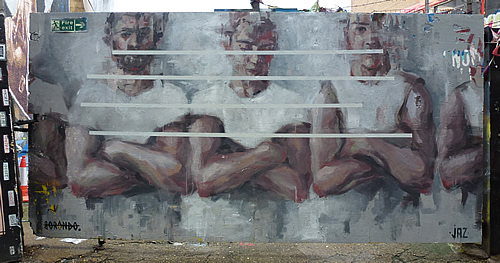
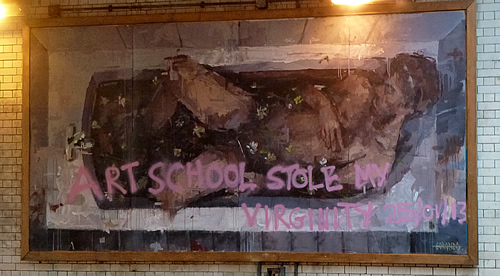
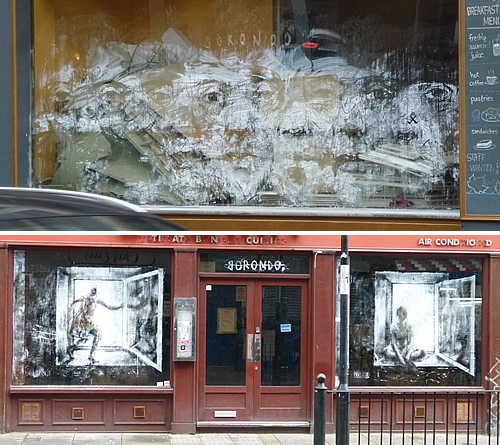
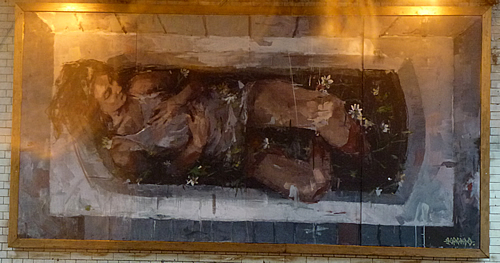
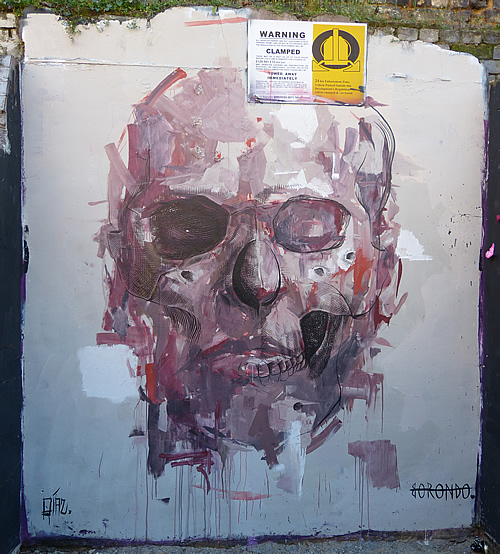
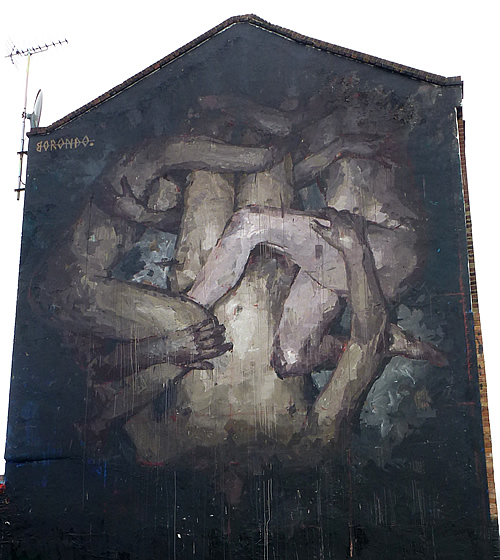
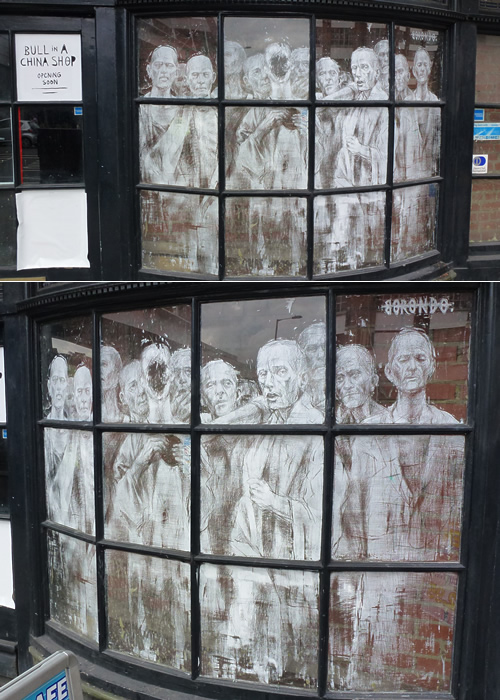
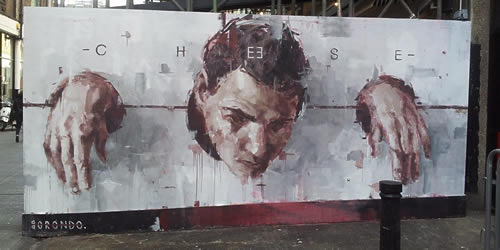
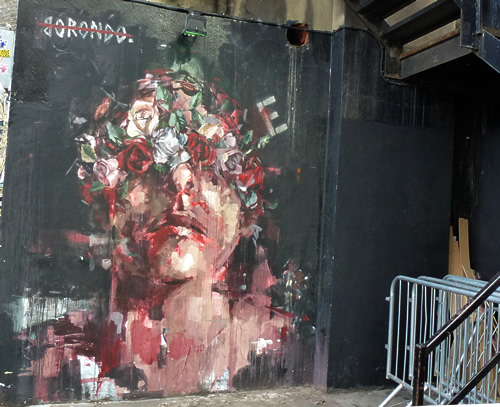
Spanish artist Borondo (Borondo Narcissus) had been painting the streets regularly in London early last year and the autumn of the previous year. His work, classical in style, often depicts portraits or figures. One of his common styles is to paint windows white and then etch his work into them, creating faces in the scratched-off paint. I like discovering work by this artist as it always looks fresh on the streets, yet it reminds me of classical paintings often seen in museums.

The large mural is painted off of Sclater Street and shows three entwined bodies.
borondo12.jpg

borondo11.jpg

The white etching style is located on Shoreditch High Street in a bricked-up shop window.
borondo10.jpg

Other artwork has come and gone, and there were some real gems! Sadly, the work below has since disappeared.
borondo01.jpg

borondo02.jpg

borondo13.jpg

borondo03.jpg

borondo05.jpg

borondo06.jpg

borondo07.jpg

borondo08.jpg

borondo09.jpg

borondo-canal.jpg

I've had this post waiting to be published for a few months but wanted to capture a couple of additional pieces by the artists, but I have so far been unable to.

One of my favourite pieces (a collaboration) for awhile was watching the evolution of a row of faces in a lot behind Brick Lane. These faces evolved and other artists contributed. At one point, the whole wall displayed a different style of face!
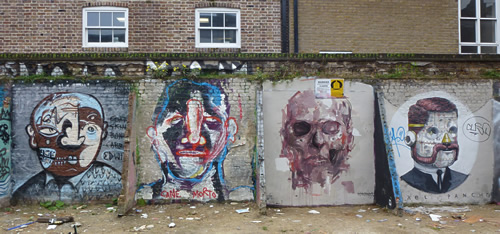
borondo-and-others.jpg

I would like to see Borondo come back to visit the UK and paint some more on London's streets.
Street: Ghost Bikes

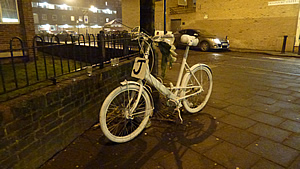
Ghost Bikes are memorials for cyclists who have been hit on the street. These memorials feature a bicycle painted white, and these bicycles are located near the spot where the person was hit. The memorials were first created in St. Louis, Missouri in 2003. Now, they can be spotted all over the world.

Some of the ghost bikes have other information about the person who was hit, and some contain flowers and messages left by friends and families.

I've recently spotted one of these ghost bikes in London on Commercial Road. I also read about them before, as I discovered several paste-ups of a portrait in Shoreditch. The portrait was named "Andrew", and I discovered many of these around. After doing some research, I discovered that Andrew was a reference to one man (Andrew Hull) who had been killed in an accident while riding his bicycle. More about this and the paste-ups can be read here: http://ghostbikes.org/london/andrew-hull

ghostbikes.jpg
Ghost bike

The above ghost bike was discovered on Commercial Road near a flat I stayed in for a week in early 2013. It is a memorial for a sandwich worker, Javad Sumbal, who was hit at the end of 2012 on his way from Stepney to Shadwell to the deli. His work colleagues painted the bicycle white and placed it at the junction where he was hit. 

#JeSuisCharlie (Je Suis Charlie) Street Art

A couple of weeks ago, the world watched as a group of radical terrorists murdered a group of employees (cartoonists) at a Paris publication, known as Charlie Hebdo. Those murdered were at their desk and doing their jobs - creating and drawing publications to sell to pay off their mortgages and create a living doing what they enjoy. The controversial drawing outraged a group in society, and I am not going to judge that what they did was right or wrong. However, a disagreement (about beliefs or something that someone is passionate about) is still not a reason to commit murder. Worldwide, this terrible ordeal touched many. A lot of love went out in understanding that the killers are trying to oppress the freedom of speech and instill fear in society. 

jesuischarlie01.jpg
Pure Evil

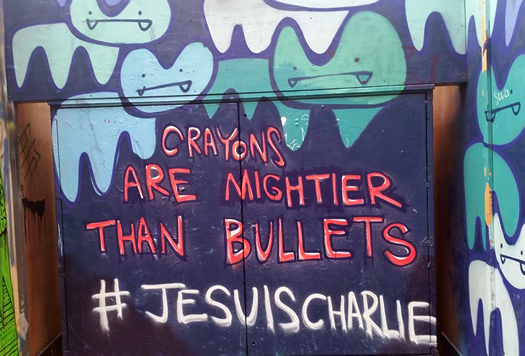
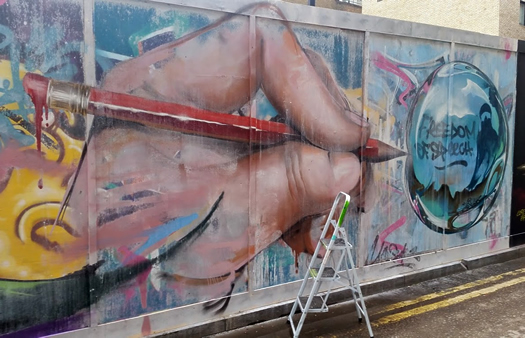
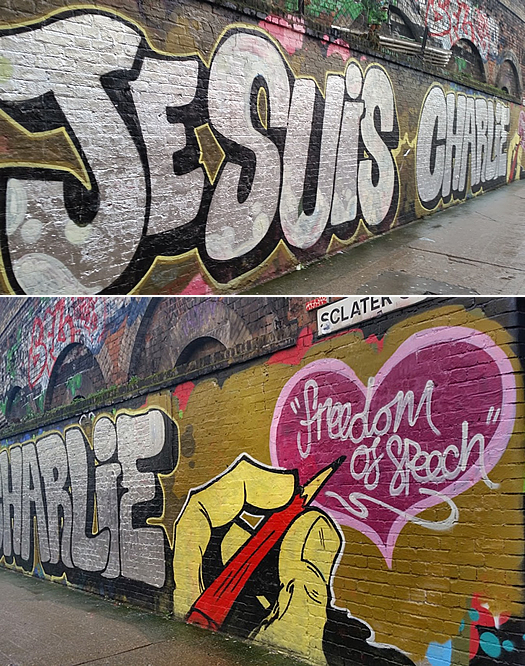
In the days following this tragedy, London's street artists took to the streets to show their support for "freedom of speech". The words "Je Suis Charlie" (translated to "I am Charlie") were seen everywhere. Popular London artist Pure Evil updated his mural on scaffolding across the street from his shop on Leonard Street to read "Crayons are mightier than bullets #JeSuisCharlie".

freedom-of-speech01.jpg

Other works were in progress...

iamcharlie01.jpg

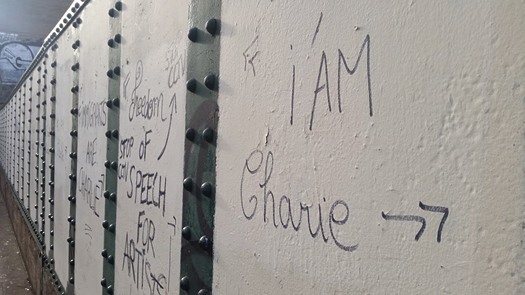
Meanwhile, well-wishers wrote various words of encouragement on the steel hoardings in the middle of Brick Lane.

jesuischarlie02.jpg
Grafitti Life

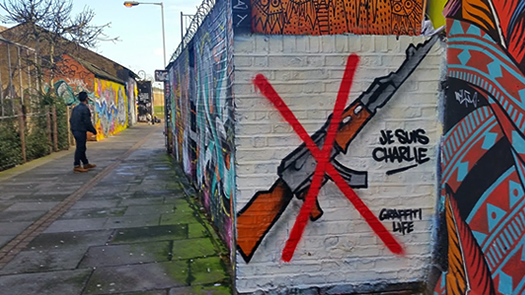
'Grafitti Life' added a mural with a gun, encouraging a stop to violence and killing. 

jesuischarlie03.jpg
Furia

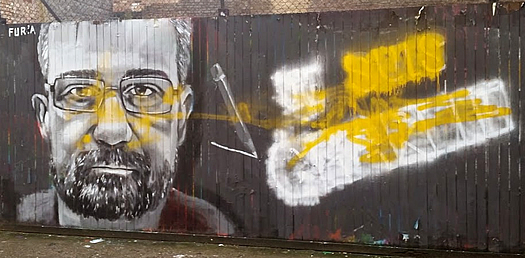
However, not all locals in the diverse area of Brick Lane were happy with this 'campaign'. Furia painted one of his popular portraits on a wooden wall near Brick Street with the phrase "Je Suis Charlie", but this was promptly and crudely painted over within a day or two.

jesuischarlie04.jpg
Je Suis Charlie

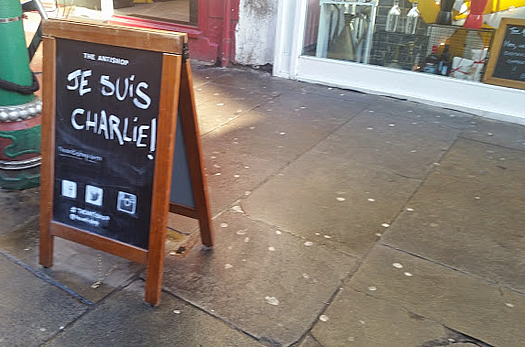
Also, the nice bakery on Brick Lane that I wrote about a few months ago that sells the delicious brownies and pastries (The Antishop) was in the press because the owner claimed that he was threatened by a local. I am surprised because this is London and this area of London is the most diverse in Europe, if not the most diverse in the world.

jesuischarlie05.jpg
Freedom of Speech

jesuischarlie-8.jpg
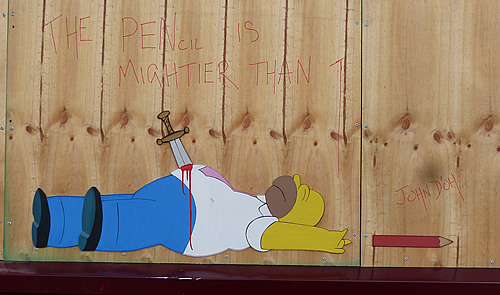
The pencil is mightier than t...  John D'oh

While I cannot judge the publication on their choice of media to print and ridicule, murder is not acceptable. The world is already a horrible enough place without instilling fear and murdering those that you do not agree with. The purpose of this post is simply to show the response of this tragedy through the eyes of street art.

Giant's Causeway

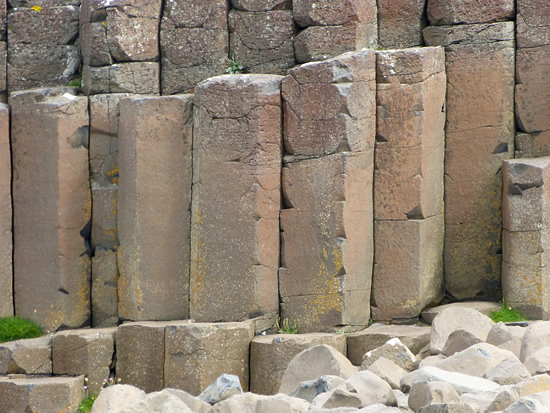
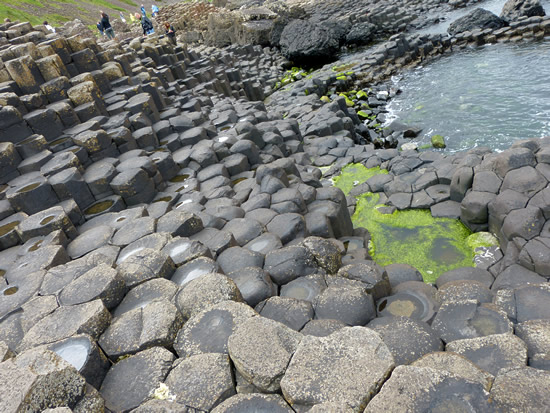
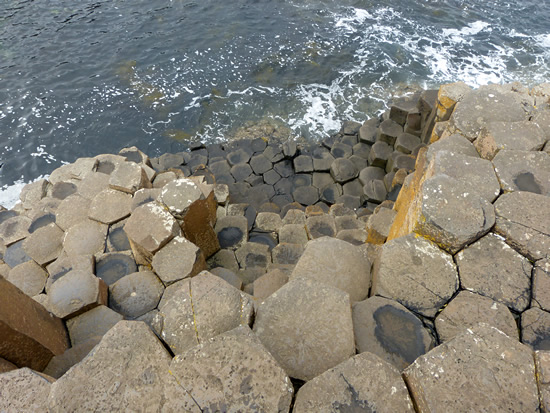
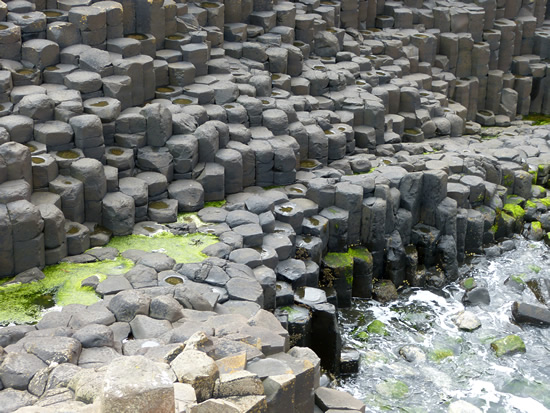
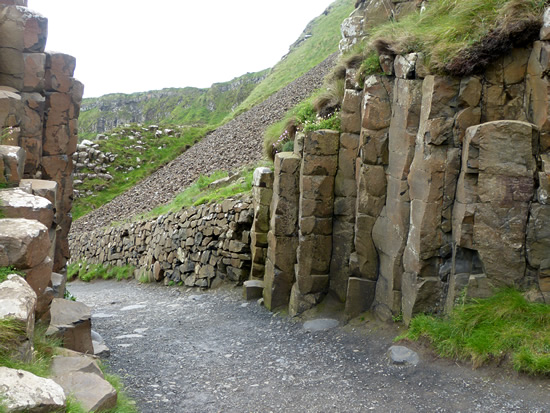
After our morning excursion to Carrick-a-Rede Rope Bridge in Northern Ireland, we made our way down the coast to Giant's Causeway, an area of beauty with natural basalt columns that were a result of an ancient volcanic eruption. The area is a UNESCO World Heitage Site. It has been painted and photographed many times over the years. We received an audio guide tour that told us about the history of the location, the legends about it, and tours and lives of tourist guides in the old days.

giantscauseway10.jpg

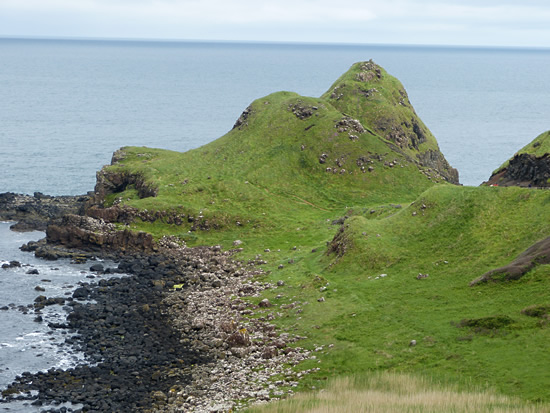
The tour started at the top of the hill, outside the new Visitor's Centre, and the first audio guidepoint was here. We had a view looking down a paved road at an oddly-shaped green mounds along the cliffside. Along the sides, we could see some of the oddly-shaped basalt columns disappearing into the sea.

giantscauseway01.jpg

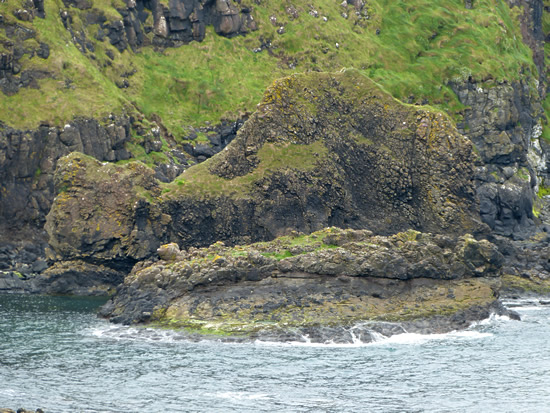
One of the items of interest was pointed out to us by the audio guide. Off to the left and as we were descending the hill to the cliffs is a rock shaped like a camel. 

giantscauseway02.jpg

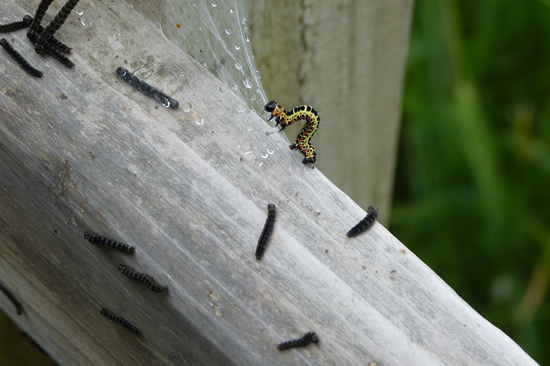
All along the wooden fence on our way down the hill were millions of caterpillars or fuzzy worms that had just hatched and were crawling all over the place. Many had made some sort of webs. Steer clear of the wooden fence by the coast when visiting in early June if you dislike the fuzzy creatures. I did not mind them, but there were so many. The wooden fence was literally crawling with them.

giantscauseway03.jpg

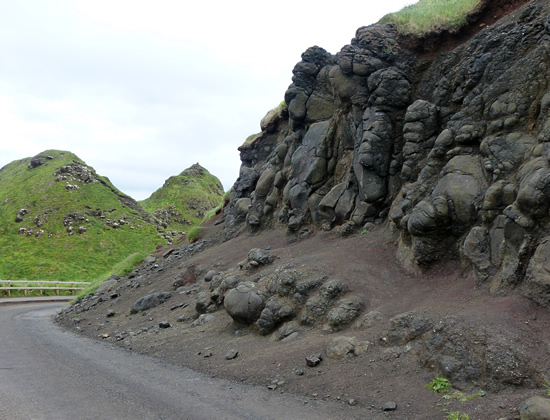
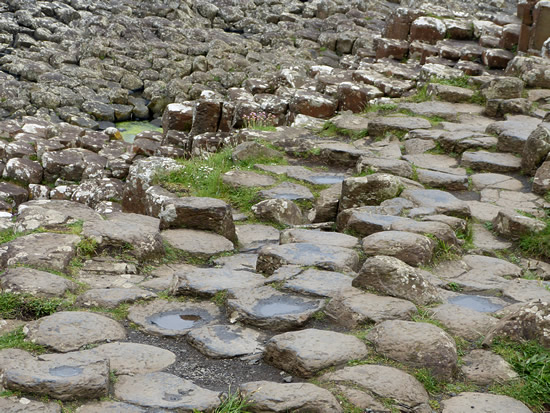
The stone mounds on the way down the hill were interesting and one can easily see that these rocks were a result of a volcanic eruption and had cooled in circular lumps. The audio guide had a piece on this, but I cannot remember what it said about the rocks and their shapes.

giantscauseway04.jpg

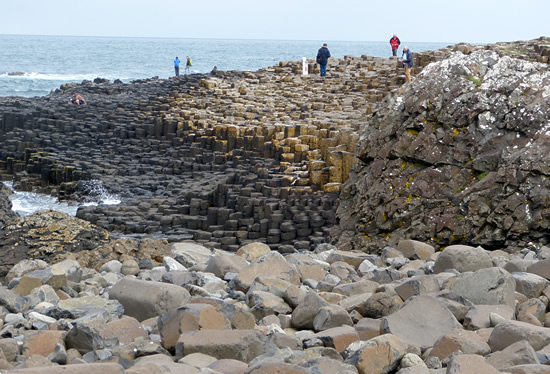
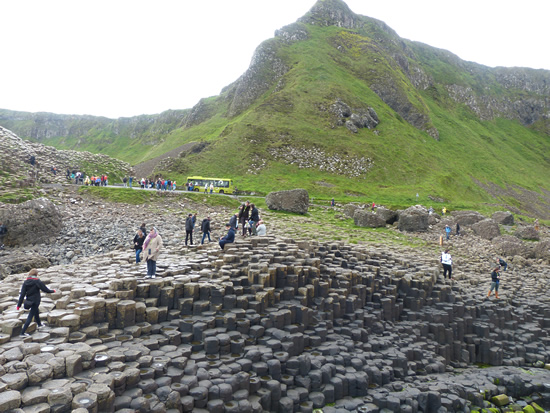
As we came around the corner of the mounds, we saw Giant's Causeway unfold before us in all its glory. Quite a few tourists were already climbing over the stones and admiring them.

giantscauseway11.jpg

While we descended and walked toward the causeway. we were told about the legend of the giant who built Giant's Causeway. The giant, Finn McCool, lived with his wife on the coast and learned that he had a rival in Scotland. (The rock formations also appear in Scotland.) The two giants decided to have a fight, so Finn constructed a causeway from large stones to Scotland. While he was on his way to meet the giant, he saw how large he was and ran back home. Finn asked his wife to help him hide, and she disguised him as a baby. When the Scottish giant saw the size of the sleeping baby, he assumed that the father must be much larger and ran all the way back to Scotland, tearing away much of the causeway.

giantscauseway05.jpg

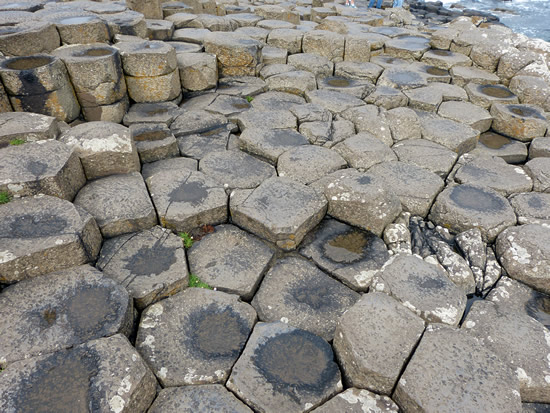
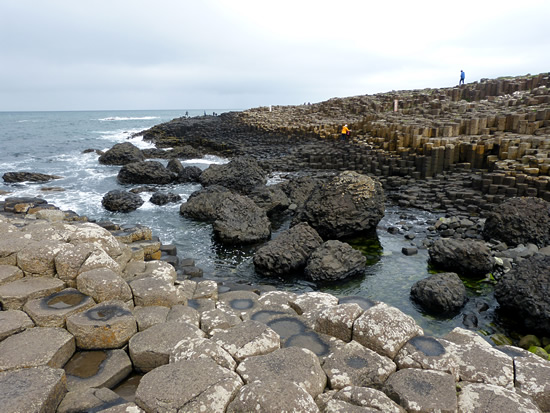
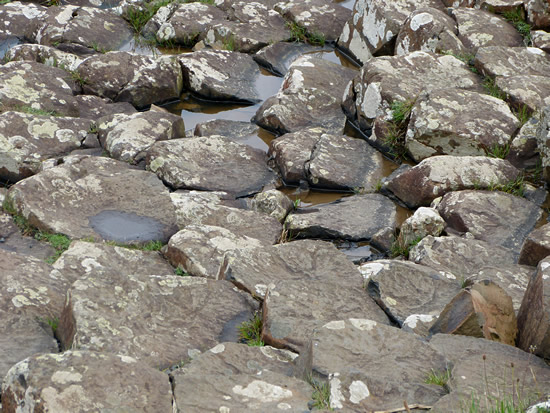
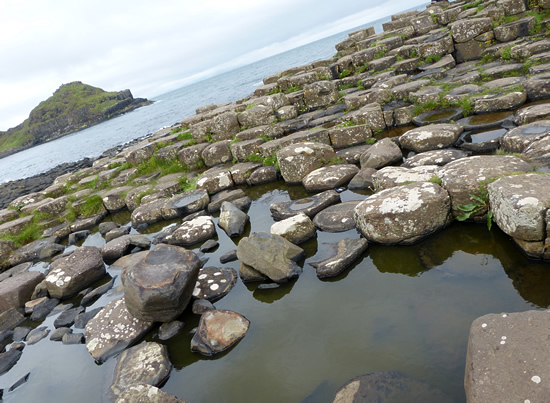
We climbed over the stones, and I took several photographs. The stones are amazing and made out of columns. Some of them are stacked higher than other ones, and these can be climbed upon. The stones finally disappear into the sea with waves crashing up onto them.

giantscauseway06.jpg

giantscauseway07.jpg

giantscauseway08.jpg

giantscauseway09.jpg

giantscauseay12.jpg

giantscauseway13.jpg

The hills above the causeway also have stories about them which relate to the giant's story. An organ and the back of the giant's grandmother can be seen in the hillside. I saw the organ but could not find the grandmother.

giantscauseway14.jpg

giantscauseway15.jpg

One of the trails appears to have been cut out of in between columns of stone. Visitors can walk the causeway trail.

giantscauseway16.jpg

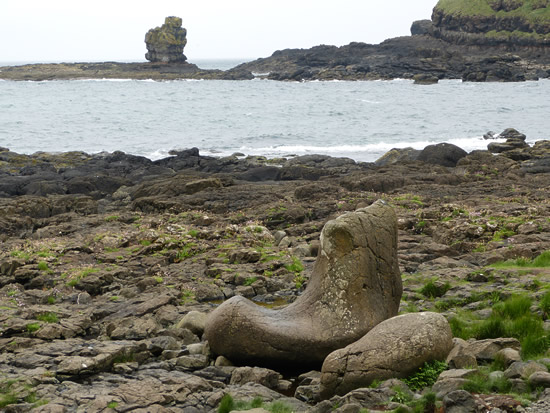
In the giant legend, Finn McCool loses his boot on his run back home from Scotland, after seeing how large his rival is. A boot-shaped rock remains on the beach and is called "the giant's boot", and a photograph is below. A good photo opportunity is to have someone sitting on/inside the boot.

giantscauseway18.jpg

Next, I will be publishing my post and photographs of Bushmills distillery, located just down the road from Giant's Causeway.

Ciaté Mini Mani Manor Advent Calendar 2014

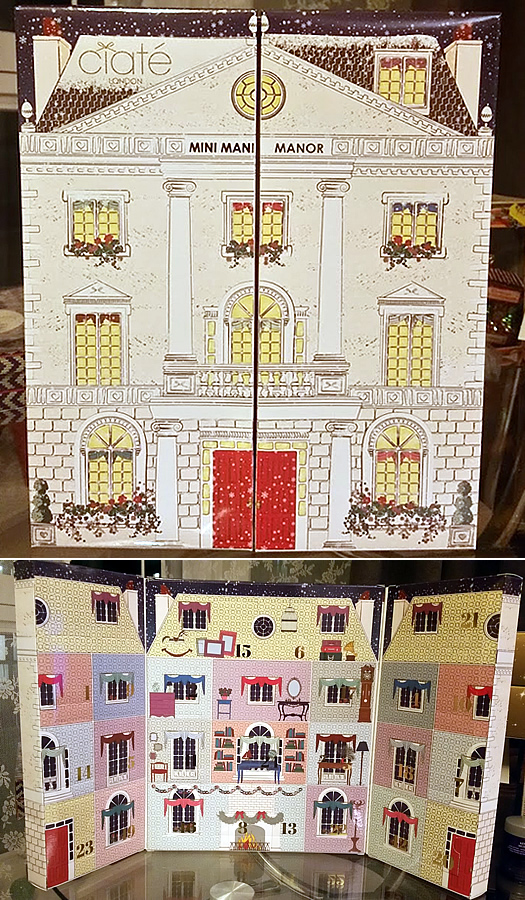
This year, I received the Ciate Mini Manor Advent Calendar. Behind each door is a new nail polish or nail accessory for each day in the run up to Christmas. This advent calendar contained loose sequins and glitter. Loose glitter for the nail's top coat was new to me, although I know that it has been around for a little while now. My first application was a little messy, and I found that the glitter was quick to wear off and needed a top-up at the end of each day. However, using a clear top coat kept the glitter on the nail, which I feel is a better alternative.

ciate-advent-2014.jpg

I liked the design of the avent calendar, which looked like a toy house with windows or doors that could open to reveal the polish and accessories. See below for a day-to-day review of the colours received in the 2014 advent calendar.

ciate-advent-2014-01.jpg

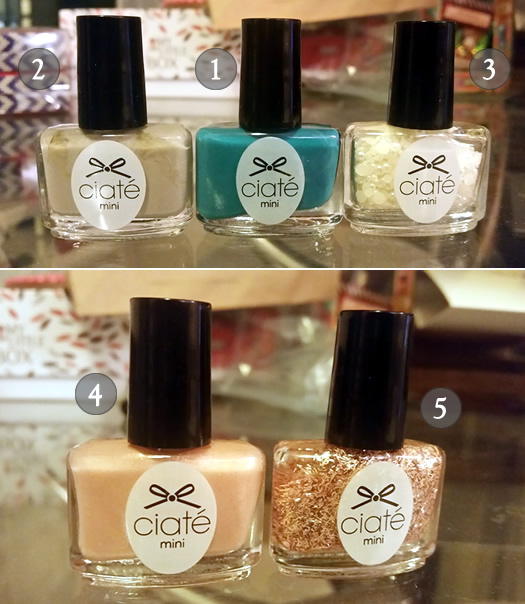
1. Headliner: This turquoise colour needs a couple of coats on the nail to deepen the colour, and it dries in a matte finish.  

2. Sharp Tailoring: This is a pale grey colour, and a couple of coats are needed as it's otherwise a streaky finish.

3. Girl with a Pearl: These loose 'pearls' are meant to be used on nails to create your own look. One side is flat so that it can stick against the nail. I have never used nail embellishments.

4. Members Only: This pale colour needs a few coats as it's almost the same colour as my nails/skin and has a slight shimmer effect. It's not one of my favourites because it needs a few coats. (I paired it with the glitter colour I received the following day.) 

5. Sloaney, Sweetie: This is the first glitter nail polish in the advent calendar, and it consists of shinny light pink and silvery strands. The colour compliments yesterday's.

ciate-advent-2014-02.jpg

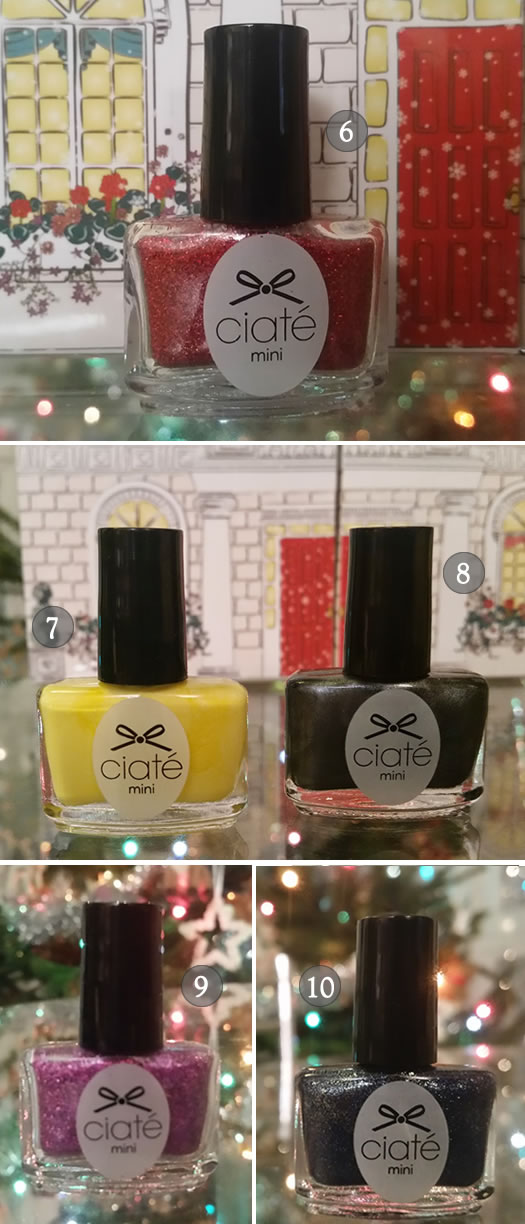
6. Runway Ribbon: This bright red loose glitter is perfect for Christmas. 

7. Tuxedo: This shimmery dark grey has a glossy finish and is a nice netural colour. I paired it with Sand Dune, Members Only, and Sharp Tailoring. This is one of my favourites so far, but it does need a couple of coats on my nails. 

8. Big Yellow Taxi: This bright yellow nail polish. I've wanted bright yellow nail polish for awhile, so this is welcome. A few coats are needed to get rid of streaky nails. I combined this with nails painted in Cupcake Queen (beneath door 16) and Amazing Gracie (behind door 17).  

9. Prima Ballerina: This loose glitter nail polish is a dark pink colour. I added this over the top of Strawberry Milkshake (behind door 11).

10. Mineral Clarity: This shimmery glitter polish is a dark blue-silver colour when dried. I love this polish.

ciate-advent-2014-03.jpg

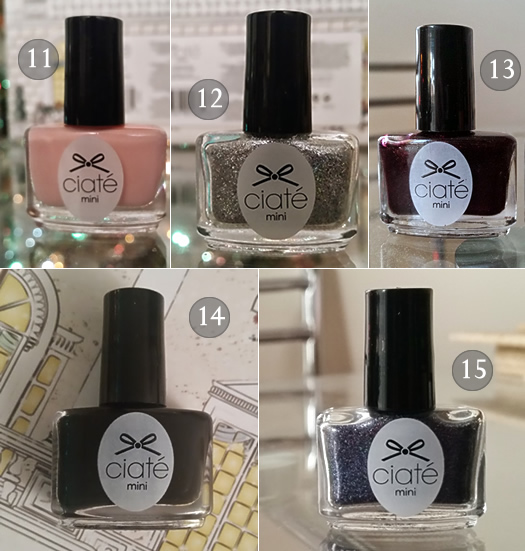
11. Strawberry Milkshake: This is the colour of a strawberry milkshake - milky pink. The product appears to be a slightly lighter colour until it dries. This needs a good three or four coats to look nice.

12. Let it Snow: This is another colour perfect for Christmas. It is a loose silver glitter.

13. Silhouette: This polish is a dark red-purple. It is almost a dark berry colour. This is a nice sophisticated colour when you want something classy but not red. I wear this colour as an alternative to wearing bright red because I feel that bright red washes out my skin.

14. Unrestricted Glam: This is a glossy black polish, but I needed several coats of this to cover my nails, and it was still not the darkest shade of black. I paired this with the glitter 'Slumber Party', and it was perfect. This polish, paired with 'Slumber Party' is perfect with black jeans and a casual look.

15. Slumber Party: At first, I thought this was a polish, but it's actually loose blue-purple-black glitter. I love this glitter and it's perfect on top of the 'Unrestricted Glam' and is a great look with jeans.

ciate-advent-2014-7.jpg

16. Cupcake Queen: This bright pink polish needed three coats to look bright on my nails. I'm not a fan of the colour pink, but I painted one nail this colour and also used 'Big Yellow Taxi' from earlier in the month and a white polish (tomorrow's 'Amazing Gracie') to create a trio of shades on my nails. I love the results. This is a summery colour, though. Also, this goes perfectly with a glitter polish that I received later on in the month.

17. Amazing Gracie: This is an off-white nail polish. This needed several coats as it dries streaky as it's such a light colour. This also took a lot longer for this colour to dry when compared to the others. 

18. Tinsel Trail: These large blue and silver sequin flakes remind me of winter, so this is a perfect shade for this time of the year. These are loose flakes, so they require getting a little messy, and they are quite large, so they take a lot of fiddling to get the desired effect instead of over-hanging on the nail.

19. Candy Cane: This is a pink glitter nail polish. The polish itself is a semi-transparent pink colour, but I did not care for the effect as a polish on its own. The polish actually looks really nice on top of 'Cupcake Queen' from day 16.

20. Frozen Daydream: This is another loose glitter, and it's a dark blue colour. This is another wintery shade which I think could look sophisticated.

21. Nail Transfers: This long strip of nail transfers contains a wintery snowflakes pattern. 

22. Sand Dune: This is a shimmery gold polish. The colour dries a pale gold.

23. Sherbert Fizz: When I originally looked at this polish, I thought that it was a festive bright red. However, it's not. The polish dries into a sherbert pink colour, and it has a shimmer effect. This is more of a spring or summer colour.

24. Celestial: This is a larger-sized nail polish compared to the others. The polish is a glittery shimmery silver with larger flakes of glitter nail polish and smaller pieces of silver glitter. This is an extremely pretty polish.

Which was your favourite shade?

Ulster Transport Museum

After a visit to the Ulster Folk Museum (covered in my post here), we paid a visit to the Ulster Transport Museum, which is located on the same site as the Ulster Folk Museum. Ulster Transport Museum has an exhibition dedicated to the Titanic as well as additional displays for everything related to transport: trams, buses, horse-drawn vehicles, trains, cars, and planes. As Belfast is home of the DeLorean car, which was famous in the Back to the Future films, there is naturally a display dedicated to these cars in the musuem.

ulster-transport-5.jpg

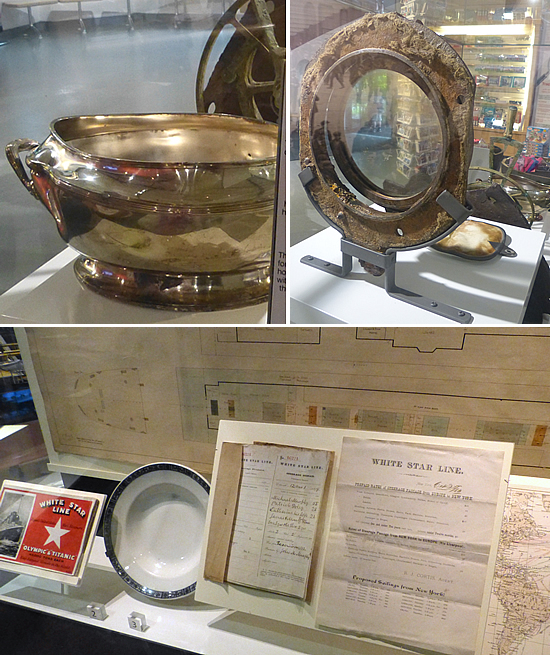
The most impressive exhibition is the Titanic exhibition. Visitors could see artefacts that had been taken from the sunken ship before it was illegal to take them, a model of the ship, ship blueprints, and many other bits and pieces. The items taken included a soup bowl and a porthole, shown below. I wonder how many people on the ship looked through this on their voyage across the Atlantic. On display in the cabinet is also a water bottle, part of the engine telegraph, and part of the hull.

ulster-transport-11.jpg

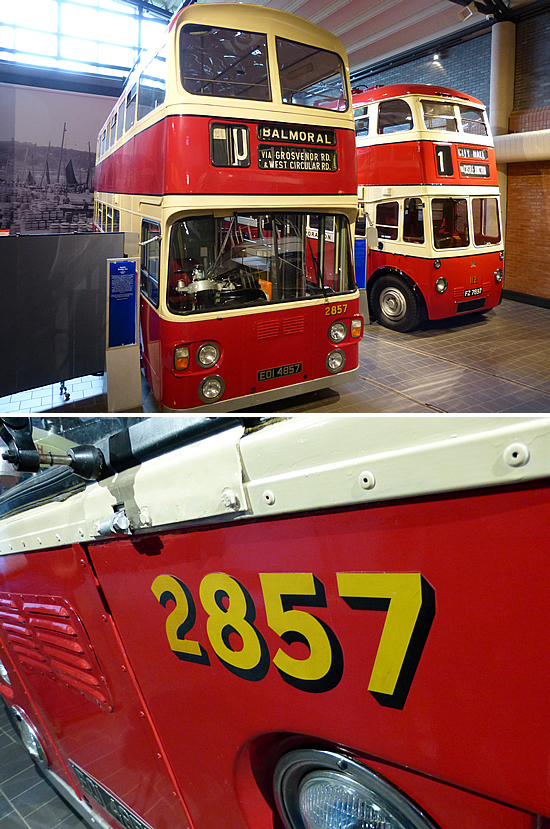
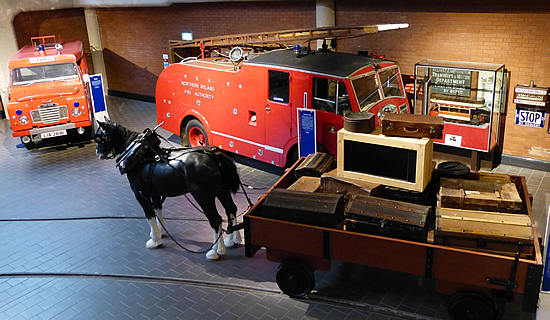
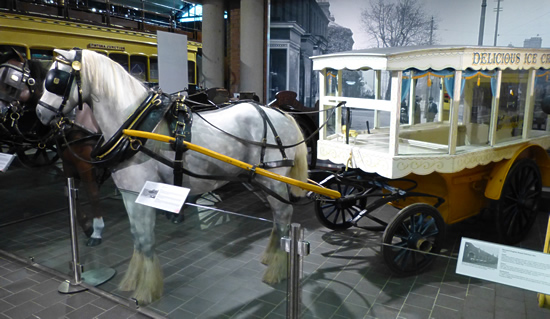
A display of steam engines, trams, buses, fire engines, and horse-drawn carriages was in one area.

ulster-transport-1.jpg
Buses

ulster-transport-2.jpg
Fire engines

ulster-transport-3.jpg
Tram

ulster-transport-7.jpg
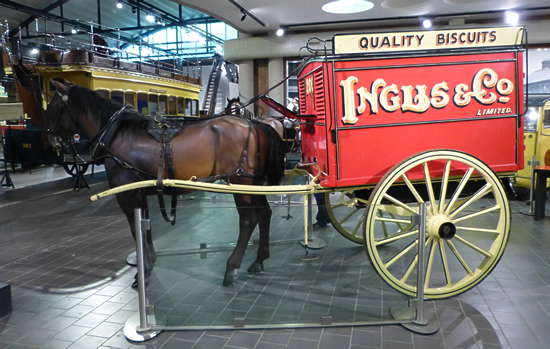
Horse-drawn wagon

ulster-transport-8.jpg
Horse-drawn wagon

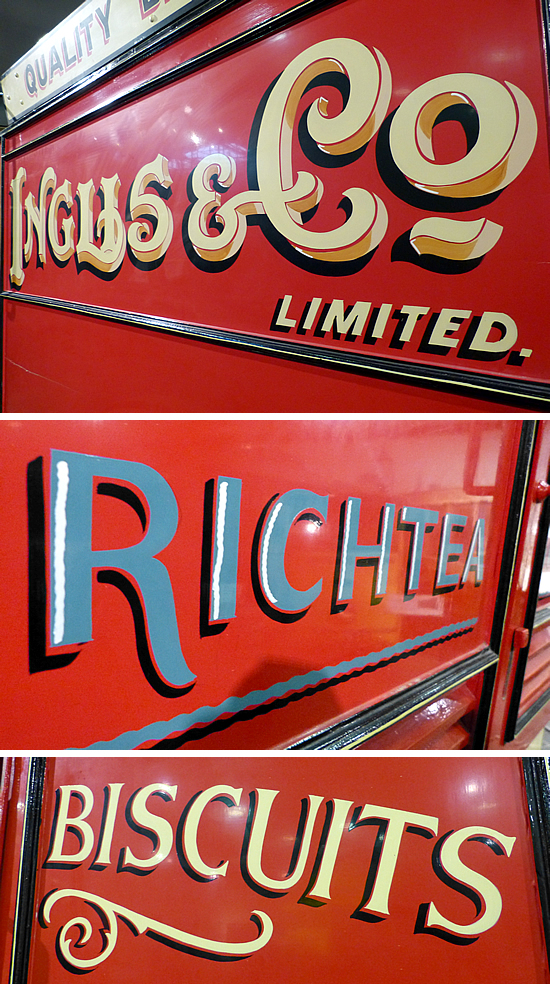
I photographed the old typeface painted on the sides of the horse-drawn wagons. 

ulster-transport-9.jpg
Vintage typeface / font

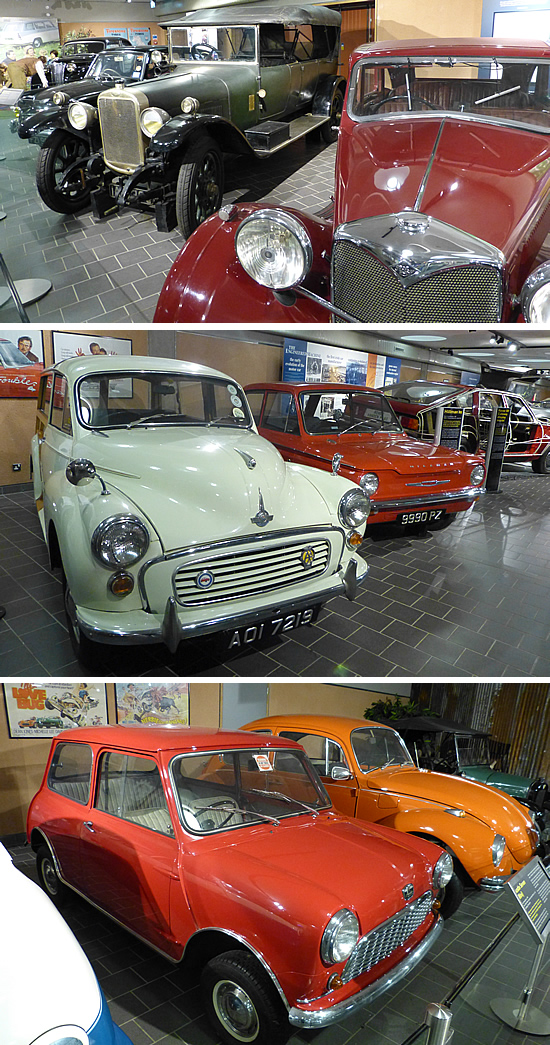
The next section is dedicated to cars.

ulster-transport-10.jpg
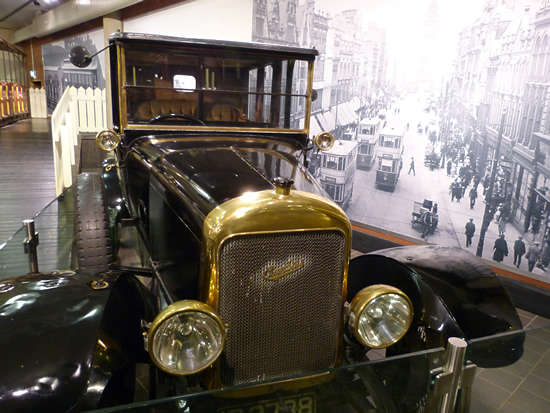
Various classic cars

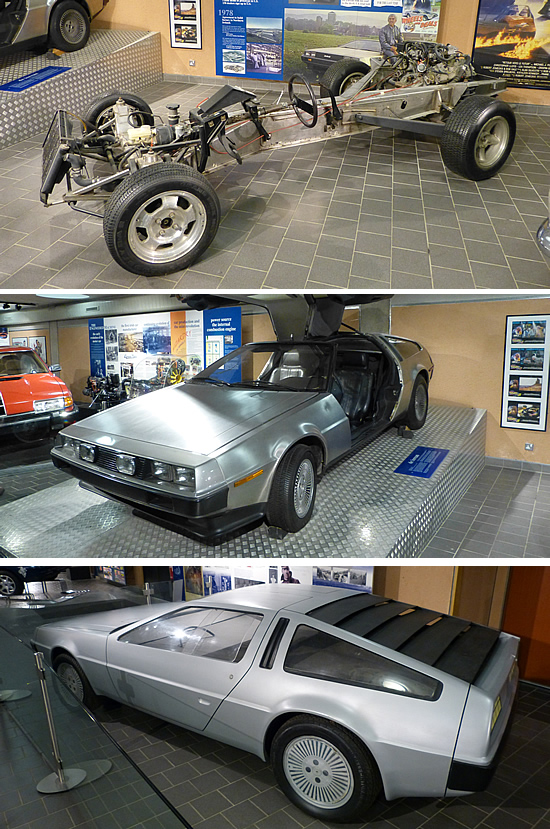
The DeLorean exhibit was the most detailed. This included a prototype of the DeLorean, a DeLorean without the body work on top of it, and a complete DeLorean.

ulster-transport11.jpg

After a visit to the Ulster Transport Museum, we went off to find lunch and then drove off to Carrickfergus to explore the castle, which I already posted about here.

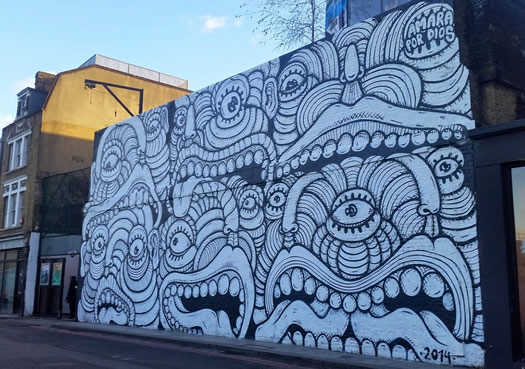
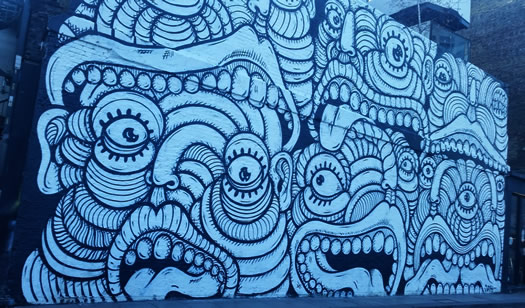
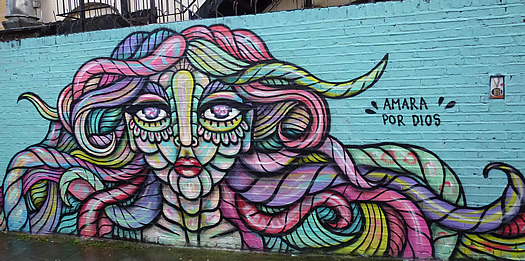
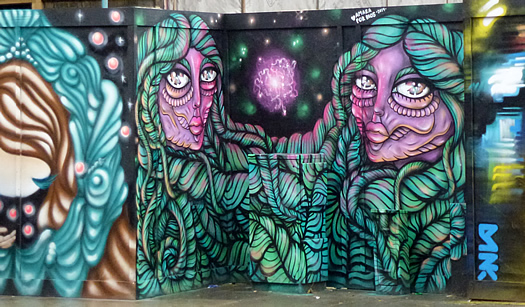
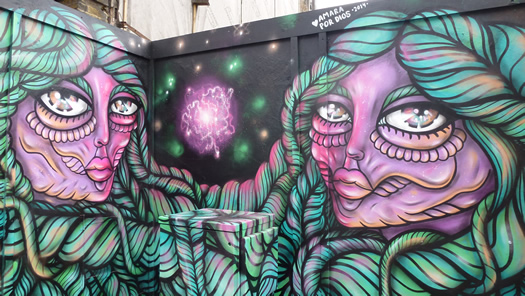
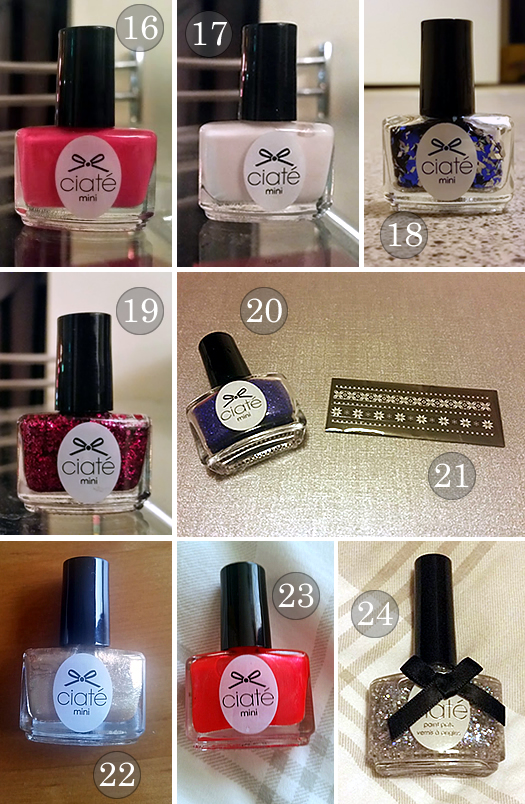
Before the holidays, artist Amara Por Dios painted the large Village Underground mural off Great Eastern Street in Shoreditch. Amara is a Swedish artist, and she has been to London quite a few times to paint the streets. Some of her previous work can be seen on the following post (Street Art: Amara and others), and she contributed to #WallsProject earlier last summer, and her painting on scaffolding on Leonard Street can be seen here.
amara2014-07.jpg

The mural is black and white with bold black lines and features several grotesque-looking faces. Normally, her works use bright and bold colours, but this piece and another piece that I saw completed at the same time as this mural seem to be an experiment without colour.

amara2014-06.jpg

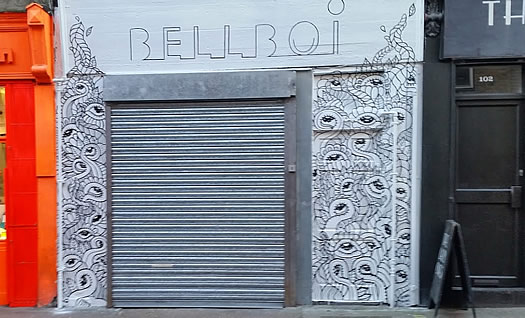
The other black and white piece was painted at the same time as the Village Underground mural.

amara2014-01.jpg

I have captured a few of her other pieces of work from summer of last year as she has been quite busy in London and a lot of her work was in prime-location street art walls. 

amara2014-02.jpg

I loved the below image as she creatively used the traffic control box and incorporated it into her artwork on the scaffolding.

amara2014-03.jpg

amara2014-05.jpg

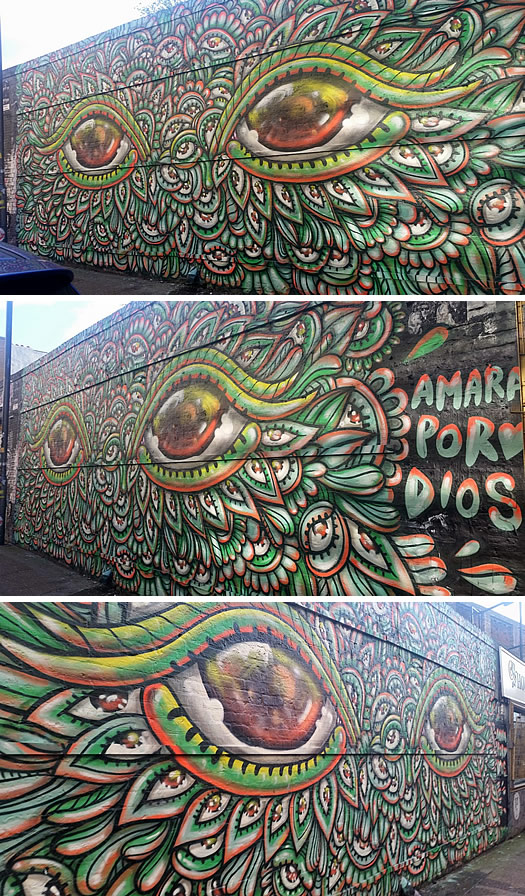
The following large wall on Sclater Street was painted not long before the Village Underground mural. It appeared in the autumn and I also saw its progress.

amara2014-04.jpg

For more information about the artist, visit her website: http://amarapordios.blogspot.co.uk or her Facebook page: https://www.facebook.com/AmaraPorDios

A Fab Four Beatles Taxi Tour in Liverpool

The bloke and I visited Liverpool on the weekend before Christmas. I really like the Beatles, and I have been wanting to do a tour of the Beatles' historical locations. This post covers photographs from previous trips to Liverpool as well as the mentioned tour. There's still three places that I have yet to visit: the Casbah Club, which was Pete Best's house (I've tried to visit it twice, but no one is around or answers the phone) and the houses of Paul McCartney and John Lennon (both owned by the National Trust), and I've also still not been to the Beatles museum in Albert Dock. Keep an eye open on this blog for those visits as I do hope to get to Liverpool at some point this year to finish off the Beatles Tour.

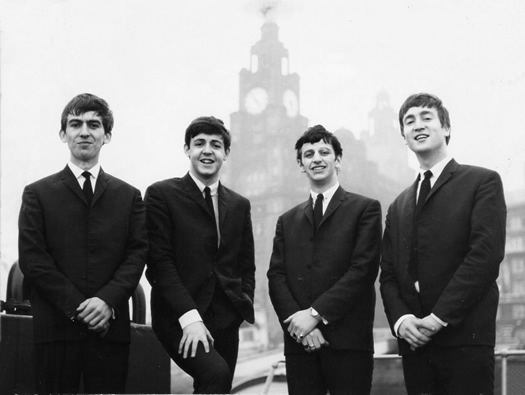
beatles-liver-building-les-chadwick.jpg
The Beatles in front of the Liver Building, Liverpool. Photo by Les Chadwick.

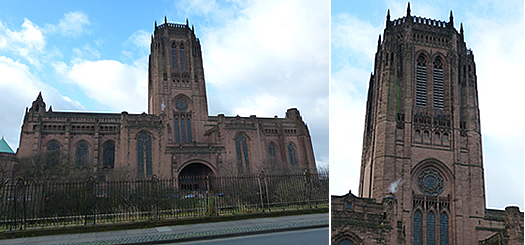
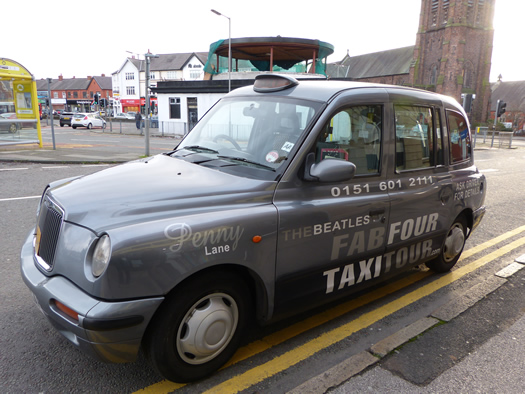
We were picked up at our hotel near Albert Dock by Eddie in his taxi cab dubbed "Penny Lane" from Fab Four Tours (http://fab4tours.co.uk). We had selected the three-hour tour (known as 'Lennon'), and although the day was cold and windy, the rain managed to stay away and we had a nice day for the tour. Our first stop was outside the impressive and imposing red-stoned Liverpool Cathedral. The size of this building is unreal, and it is one of the world's largest cathedrals. We were given a short history of it and told to visit it and climb the tower for good views. (We'll have to do this next time.) The cathedral did play a smart part in Beatles history. A young Paul McCartney failed his audition to become part of the choir here, but he did perform at the cathedral after becoming famous. 

liverpool-cathedral.jpg
Liverpool Cathedral

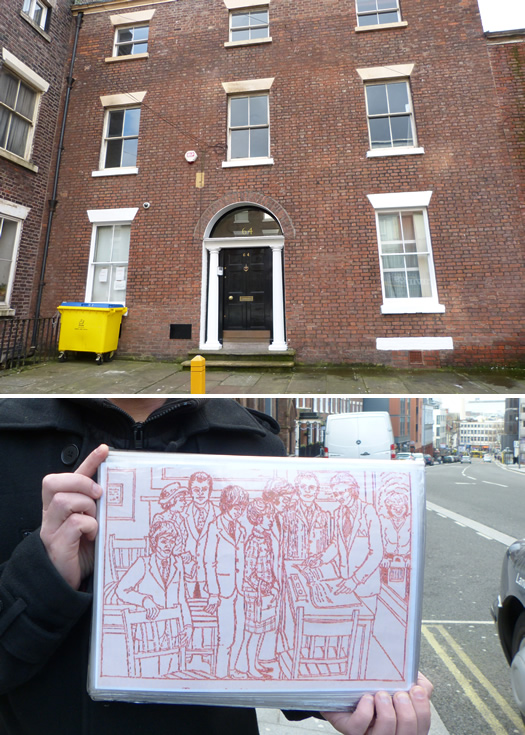
Our next stop was not far away; it was located just down the road from the Radio City Tower. We stopped at a common-looking three-floor Georgian building. This is the Mount Pleasant register office, where John Lennon married his first wife, Cynthia Powell in August of 1962. We were told that the Beatles manager Brian Epstein purchased the building to avoid word getting out that Lennon was married. The Beatles were starting to become famous then, and they were well-known in Liverpool by this time, and Epstein did not want any harmful press circulating that he thought may alienate fans of the group. John and Cynthia met at Liverpool Art College, and she ended up pregnant with their son Julian, which prompted John to propose.

John's legal guardian (aunt Mimi) did not approve of the wedding, so she did not attend. George Harrison, Paul McCartney, John's married aunt/uncle, and Brian Epstein were in attendance; Epstein was best man. Although Ringo Starr had recently joined the band, they did not know him well enough to allow him to attend. No photographs were taken of their wedding because Epstein did not want the word to get out about the wedding. After the wedding, they walked up the street to Clayton Square and had their wedding meal at Reece's restaurant, which was the same place where John's parents had had theirs. The wedding was kept secret. John had to perform with The Beatles in Chester that evening.

As no photographs were permitted, Cynthia later drew an image of her wedding day in the register office. In the drawing, a man on a road drill is outside the window and behind the registrar. The wedding day was extremely noisy with these roadworks going on outside that no one could hear what was being said.

lennon-wedding.jpg
Mount Pleasant register office and Cynthia's drawing of the wedding day

After John and Cynthia were married, Brian Epstein gave them the keys to one of his houses to use so that the wife and baby were kept secret. Previously, the house was used by Epstein for his encounters with male friends. It was not in a nice area of Liverpool, and the riots happened near to here. However, it is now one of the most attractive streets in Liverpool. It is a cobble-stoned street, and it has been used in films, television, and commercials. The house is 36 Falkner Street, and in the photograph below, it is the one with the red door. Cynthia and John were very happy here, and she had her baby Julian here. John wrote some of his early songs here, including "Do You Want To Know A Secret".

falkner-street.jpg
Falkner Street 

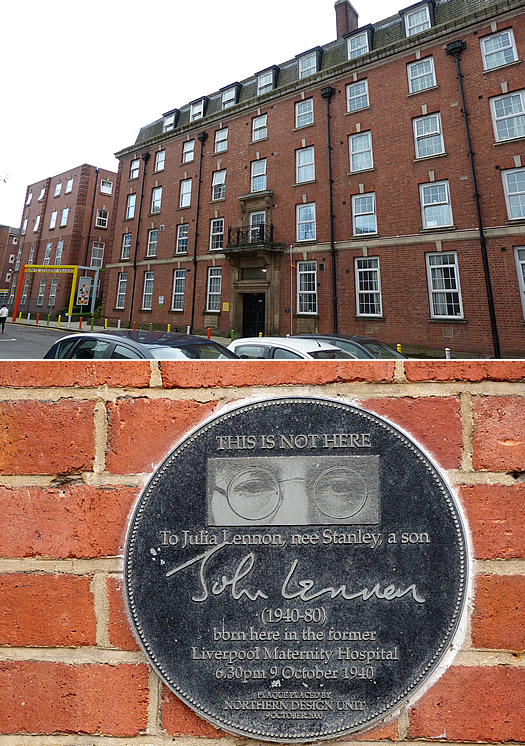
Just before we went to 36 Falkner Street, we had a quick stop at John Lennon's birthplace, a Liverpool Maternity Hospital (located at Cambridge Court), which is now a part of Liverpool University. Yoko Ono, John's second and last wife before he was murdered in new York City, had the plaque put up. In these years, German World War 2 bombings were common in Liverpool, but on the night when John was born, the bombings ceased. John's mother's name was Julia, and her husband Alf (John's father) was always at sea. John did not know his father well as he always decided to stay away. His mother eventually got tired of him being away and had affairs and fell in love with other men, and John actually had a secret half-sister from one of his mother's relationships. The half-sister (named Victoria) was born when John was very young, and Julia's father made her give the baby up for adoption. Later and when Julia eventually remarried, John's aunt Mimi made Julia give her John to take care of so that he could have a stable life.

lennon-birthplace.jpg
Maternity Hospital

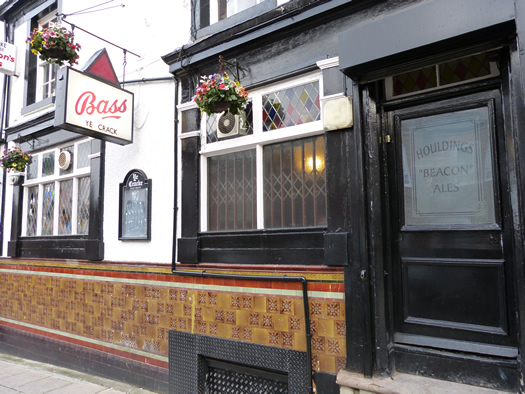
A short drive away, we drove past the pub Ye Cracke, located on Rice Street near Hope Street. This pub was frequented by students at the Liverpool Art College. John, Stuart Sutcliffe, and Cynthia frequented the pub, and it was a busy place. Inside the pub are meant to be photographs of the Beatles. We were shown a photograph of John standing outside the pub, and the door design, window text ('Houldings Beacon Ales') and tiling has not changed.

yecracke-lennon.jpg 
Ye Cracke

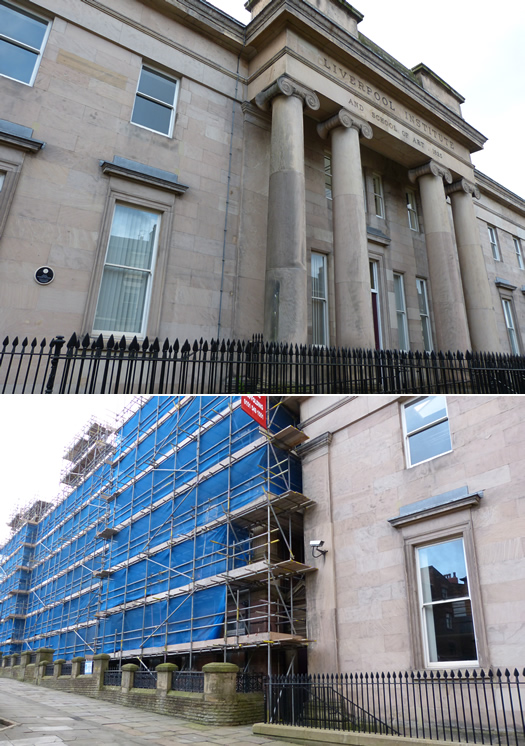
Our next stop was at Liverpool Institute, where Paul McCartney and George Harrison went to school. The building was meant to be demolished, but Paul McCartney and producer George Martin managed to save it. It is now the Liverpool Institute for Performing Arts. Paul does often visit the institute (and Liverpool), and he shakes the hands of graduates. Next door to this was the Liverpool Art College building where John Lennon attended. They did not know each other at the time. The Liverpool Art College is currently under scaffolding as it was recently acquired by McCartney to expand the Liverpool Institute for Performing Arts.

liverpool-institute.jpg 
Liverpool Institute

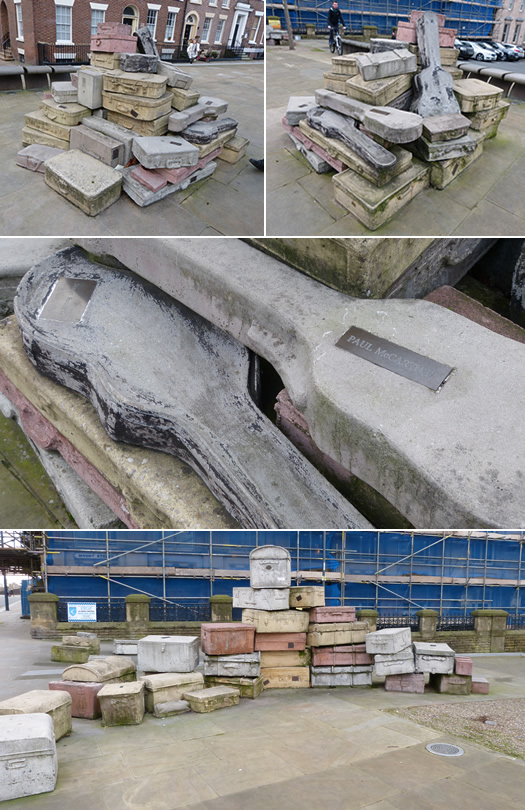
Outside of the institute is a sculpture by John King, called 'A Case History'. It was placed in 1998 as it won the competition. The artwork features several pieces of luggage, and some of these contain plaques with the names of famous people who studied at the institute. The names include the Beatles and former Beatles, but a couple of the items from the sculpture have been damaged or stolen.

cases.jpg 
'A Case History' by John King

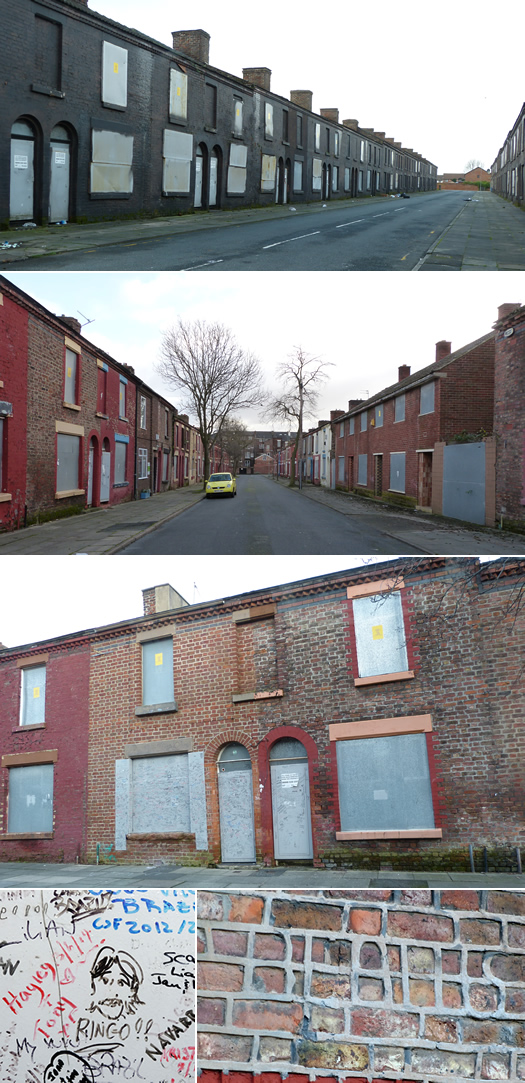
We then headed to another part of Liverpool (Welsh Streets, Dingle), where the council have decided to force people to move out so they can gentrify/regenerate the area with new housing. In the middle of this is grafitti "European City of Culture?" on a wall amongst the abandoned houses.

european-city-of-culture.jpg
Welsh Streets - Dingle - Liverpool

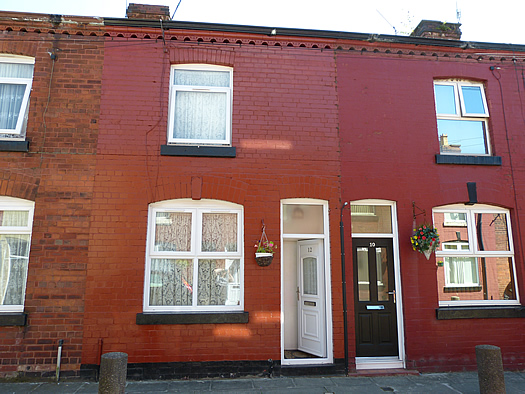
The abandoned buildings have been used in television programmes. Around the corner of this and on Madryn Street is Ringo Starr's childhood home at number 9. And at least one resident on this street has resisted and not moved out. Apparently, the council have now claimed that some of the buildings will be kept as is and some of the buildings will be torn down and new homes will be built. Apparently Ringo did not have any memories living at this house, and he did not live here for too long. Although boarded up, Ringo's house is covered in doodles left by fans. Apparently the resident who lived across the street from this house before being forced out, was a big fan of the Beatles and had 'Beatles' put into the brickwork (pictured below).

ringo-childhouse.jpg
Ringo's childhood home

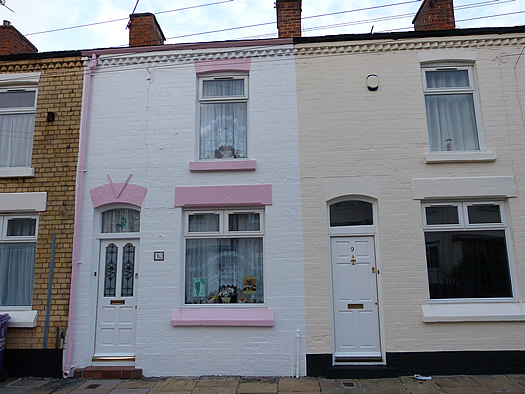
Ringo's house above had six rooms, but his father and mother separated when he was very young. The house was too large for the family, and Ringo's mother found another family who wanted to swap from a smaller house to a larger house. This resulted in Ringo and his mother moving to a smaller and cheaper house, 10 Admiral Grove, which is basically around the corner from the old house. We were told that the lady who lives in this house is a fan of the Beatles and has many Beatles items in the front room. She also has many stories about the Beatles and those who visited the street.

arnold-grove-ringo.jpg
10 Admiral Grove

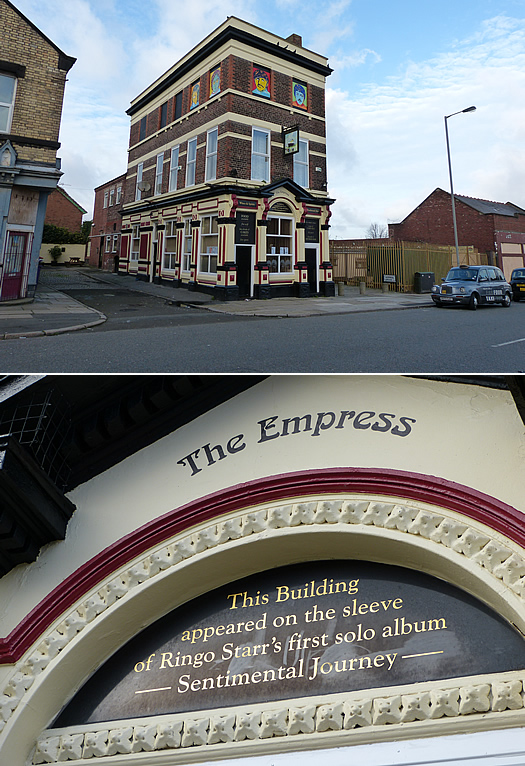
Around the corner is where Ringo went to school, and we were also told that many celebrities went to the same school. On the corner of Admiral Grove is the pub immortalised as the album cover of Ringo's album "Sentimental Journey". In the photograph below, you can see Admiral Grove just to the right of the pub where the fencing is. Houses did exist where the fencing was at one point, but they have been torn down and the terraced housing and Ringo's childhood home starts on the other side of the pub in this photo.

sentimental-journey1.jpg
Sentimental Journey

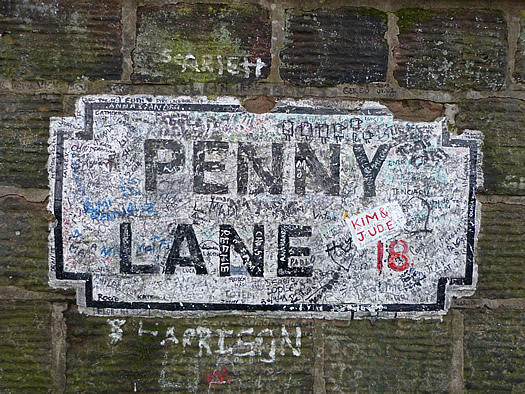
Our next stop was a little bit of a drive away, and this was a visit to Penny Lane, the road made famous by the Beatles' song "Penny Lane". We started at the top of the road first, where we got a photograph of the Penny Lane road sign. Some of the signs have been replaced as the council was getting fed up with fans stealing the sign. To deter this, they painted on the walls. This has become a magnet for fans to doodle on.

pennylane1.jpg
Penny Lane

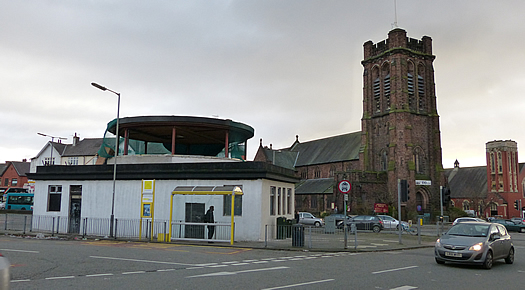
We drove to the other end of Penny Lane where the lyrics in the song make sense - "the shelter in the middle of a roundabout", the bank, the barber where Paul and his brother had their hair cut, and the fire station.

pennylane-roundabout.jpg
Penny Lane - shelter in the roundabout

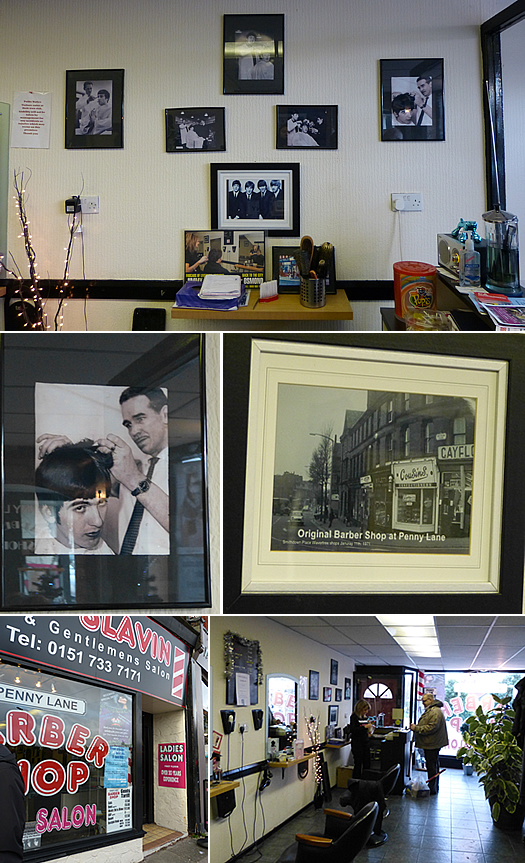
Paul McCartney, who wrote the song, had fond memories of his childhood here. John Lennon also knew the area well as it was not far from his home. John would have also used the same barber. The barber shop was run by an Italian, but it's changed since then. Visitors can go inside the barber shop and have a look around; a small charitable donation can be made, and this goes to a Linda McCartney cancer charity. Images of the Beatles and old photographs of the shop and Penny Lane can be seen in the barbershop. We were also shown a child's 'seat' (wooden board) that belonged to the shop in the older days when the Beatles would have been children.

barber-penny-lane.jpg
Penny Lane barber shop

I took a photograph of the cab we had, "Penny Lane", on Penny Lane!

penny-lane-cab.jpg
Penny Lane

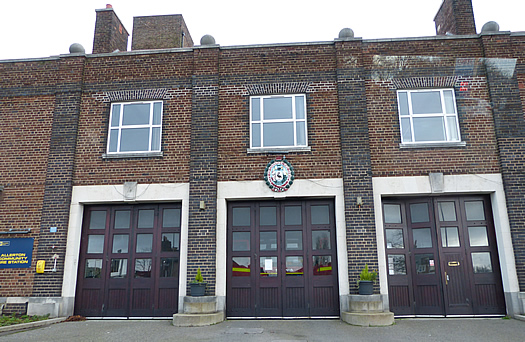
On the way away from Penny Lane, we passed the fire station, which is also referenced in the song lyrics.

penny-lane-firestation.jpg
Penny Lane fire station

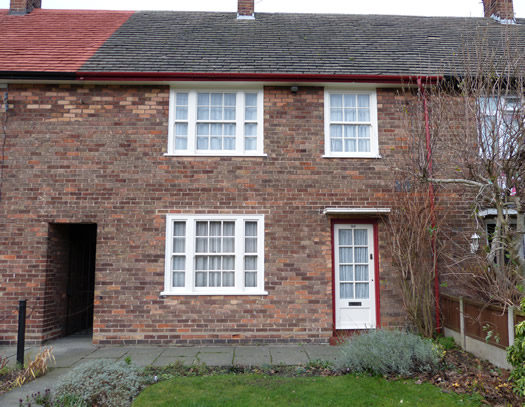
The next stop was Paul McCartney's childhood home, and this was not too far away. This is located at 20 Forthlin Road. The property is now owned by National Trust, and it can be visited. The road does get quite busy in the high season, but it was not too busy when we visited. Apparently our taxi driver just missed seeing Paul McCartney drive to his childhood home and speak to visitors outside the window, though he did say that he had taken Paul's brother on taxi journeys around Liverpool.

The house has been refitted to look like it was when Paul lived there. Luckily, Paul's brother was interested in photography, so many photographs of it were taken so that they could make it look like it did when Paul lived there. Paul's bedroom was the one above the door. The house is only open from March and closes for the winter months, so we did not visit it on this trip.

This house was a sad one in a way. Paul's mother had wanted to move into a new house for awhile, and she finally was able to move into this nice house but died a few months later.

The house was purchased by the National Trust because of the important history in song-writing that was made here. John Lennon and Paul McCartney wrote some of their songs together here, and Paul wrote songs here as well. "When I'm 64" is one of the songs that Paul wrote here.

paulmccatney-home.jpg
Paul McCartney's home

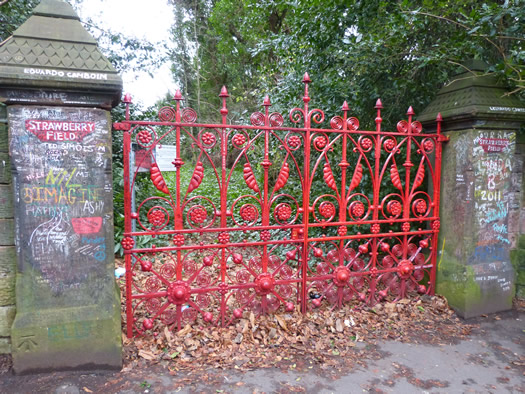
After visiting Paul's childhood home, we rode over to "Strawberry Fields", which John Lennon wrote a song about. The fields may have been used for strawberries at one time, but a gothic-style mansion used to exist beyond the red gate. The mansion was an orphanage when John Lennon was a child, and he did not live far away from here. This was one of the places that reminded him fondly of his childhood. Unfortunately, the mansion/orphanage burnt down. Fans of the Beatles stole pieces off of the red gates, so fake ones have been set up in its place. There are plans to create a visitor's centre here so that visitors can easily park in the area as this is just off the road at the moment and is not easy to access.

Apparently John was so besotted with this mansion from his childhood that he was drawn to an exclusive apartment building in New York City because it looked similar and reminded him of home, so he worked at getting an apartment there with his wife Yoko Ono. This was the building he was later shot outside of.

strawberry-fields.jpg
Strawberry Fields

After the visit to Strawberry Fields, we drove a few blocks away to the house (Mendips) where John Lennon grew up with his aunt and uncle, after he was placed in their care. The house was placed onto the housing market, and Yoko Ono purchased it and gifted it to National Trust to keep John's memory alive. Also, song-writing history was made here as John did write some songs in this house. Many of John's friends lived in the houses around here, but the area has also been built up. John would have been able to see the top of Strawberry Fields from this house. 

Unfortunately, John's mother was hit by a car not far from this house. She was on her way to see John and John had gone out. She stayed to have tea with Mimi and later in the evening happened to meet one of John's friends who lived around the corner. He walked her to the crosswalk to cross the road, which was not busy in those days. Unfortunately, a driver who was drunk hit her as she was crossing the road and she was killed. We were shown where this happened, which was not far from the house.

John's house has a blue plaque because he has been gone for twenty years. Like Paul's house, it is owned by National Trust and not open in the winter months. 

lennon-house.jpg
Lennon's house - Mendips

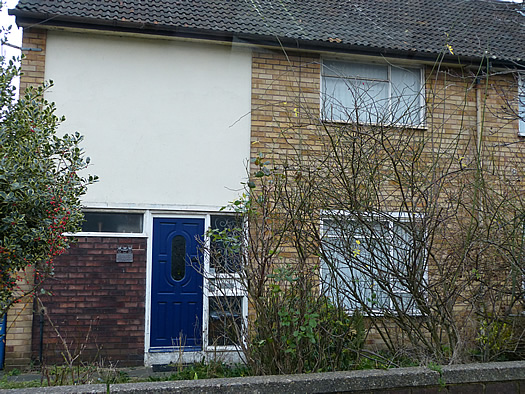
The next photograph is of George Harrison's childhood home (12 Arnold Grove), which I went to see in last summer on the way home from Liverpool. I was interested in seeing this house because George Harrison is my favourite Beatle. I have read online that the person who lives at the house currently does not like the publicity and the distractions caused by Beatles fans visiting at all hours and even trying to enter the house, so I was careful that we parked a couple of blocks away, and I quietly made my way to this small street and got a photograph. A few children were playing in the street, but it was a quiet cul-de-sac, and the front door was wide open.

This house had small rooms, and George Harrison's parents had four children. George was the youngest, and he was born during the bombing in 1943.

george-harrison-childhood.jpg
George Harrison's child home - Arnold Grove

Getting back to the taxi tour, the next place that we visited after Mendips was the third house that George Harrison lived in. (The second house that he lived in is in the Speke area of Liverpool, but it is quite rough and it was also not a nice place when he lived there and his parents tried for awhile to get to move to a new location.) The house below is also lived in by someone who would rather not be associated with the Beatles.

george-harrison-childhood2.jpg
George Harrison house

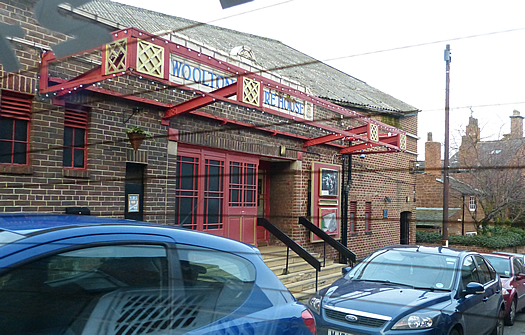
After this visit, we were taken to Woolton. This is where John Lennon and Paul McCartney visited the cinema. 

woolton-cinema.jpg
Woolton cinema

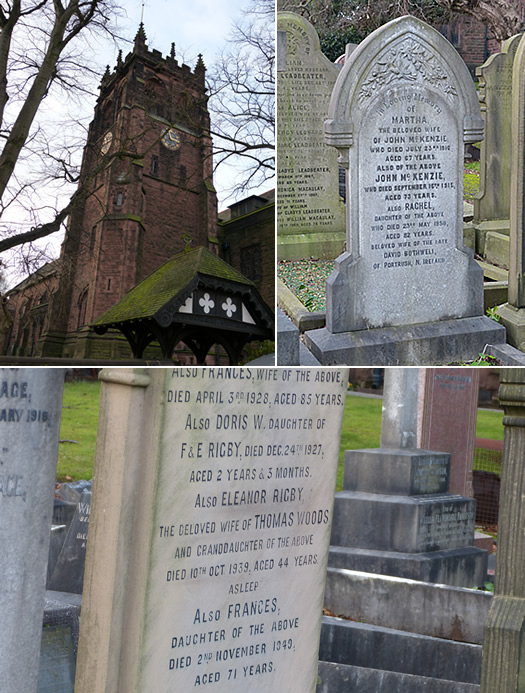
We stopped a little further along in Woolton where there's a picturesque church (St. Peter's). In the cemetary here are references to lyrics in the song "Eleanor Rigby". John and Paul would have hung out with their mutual friends in this church yard. Although Paul said that the name "Eleanor Rigby" was made up, it is thought that it actually referenced the lady buried here. Perhaps he did not want the place to become a Beatles pilgrimage and destroyed by this fame. Although Eleanor Rigby was married, she kept her maiden name and was known by both names in the village. the "Father McKenzie" may have been a name on another grave.

eleanor-rigby.jpg
Eleanor Rigby

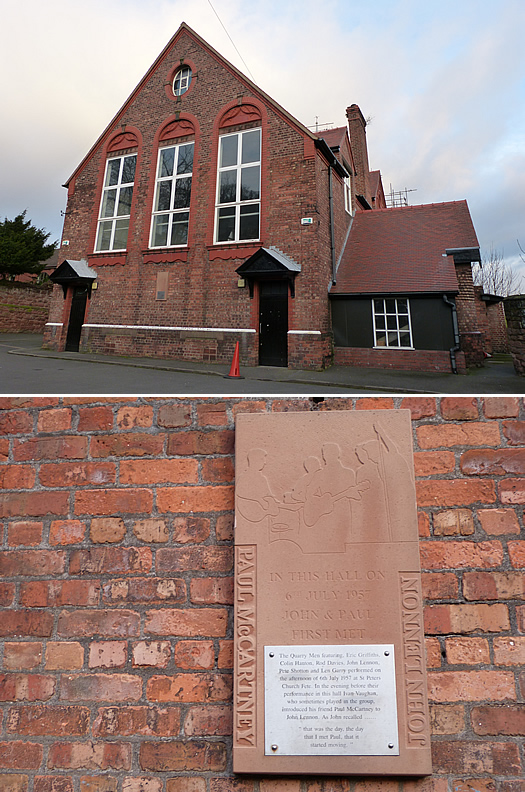
Across the street from St. Peter's Church is the church hall. John Lennon and Paul McCartney met here at the church's garden fete. They were introduced by a mutual friend. John was a member of the Quarry Men band, and the mutual friend mentioned the fete to Paul and asked him to bring his guitar. By the end, Paul and John were friends and respected each other's music ability. A plaque on the hall commemorates this event. Our driver gave us a CD with information about this meeting.

woolton1.jpg 
Woolton church hall where John and Paul met

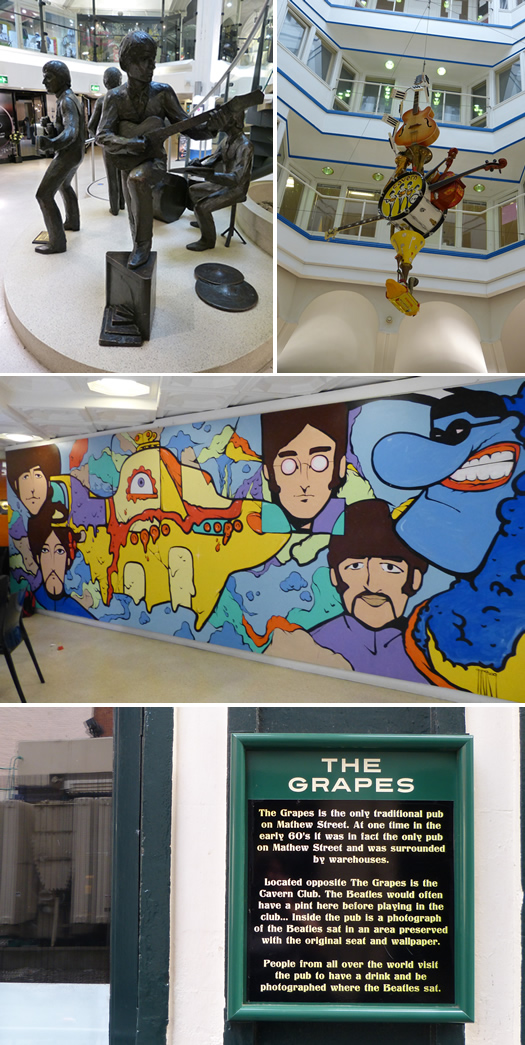
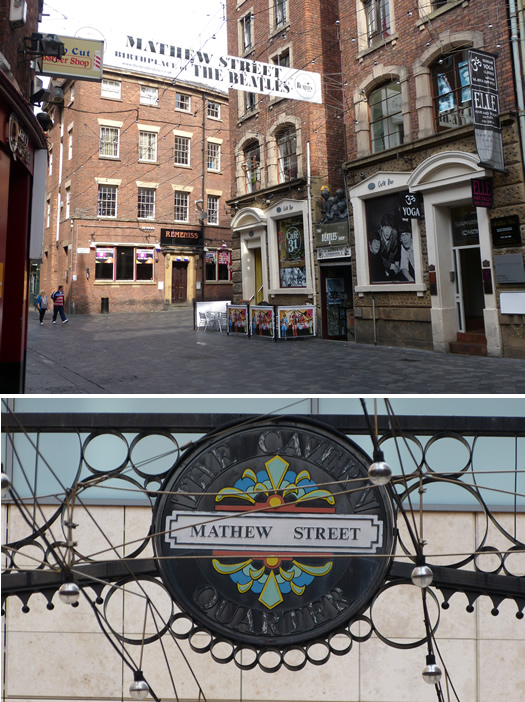
This concluded our tour. However, we had been to Liverpool before, so the remainder of this post will be photographs of other places with Beatles fame that I have visited. The photographs below show the Cavern Walks shopping centre, where there is artwork and sculptures dedicated to the famous band. Outside in the street (Mathew Street) is the pub district of Liverpool. The pub called 'The Grapes' is where the Beatles would have a drink before playing at the Cavern Club across the street.

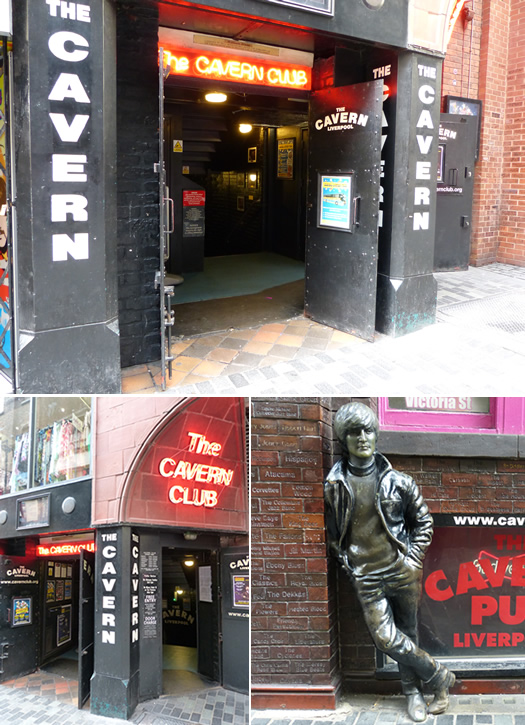
The original entrance to the Cavern Club was next to the entrance to where this shopping centre is today. The artwork and statue of the Beatles in the shopping centre were created by Cynthia Lennon.

cavernwalks.jpg
Cavern Walks

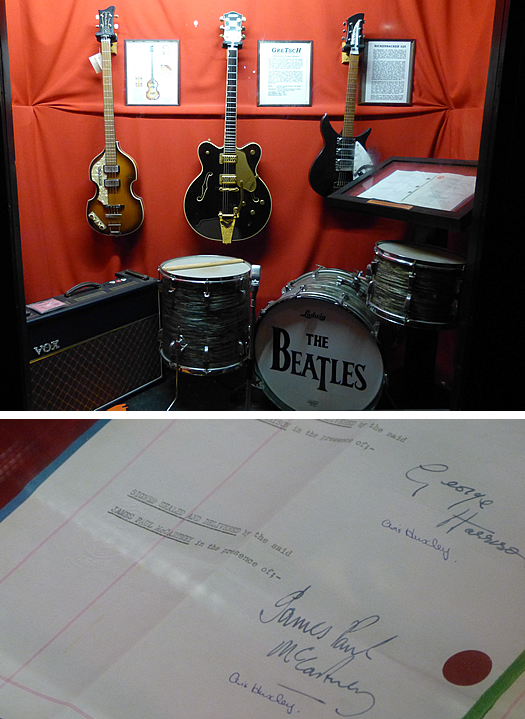
We went into the Cavern Club. I've been a few times before, but I had never seen the Beatles guitars and drum and the contract with the Beatles signatures. This display contained information about the instruments.

cavernclub1.jpg
Cavern Club - Beatles display

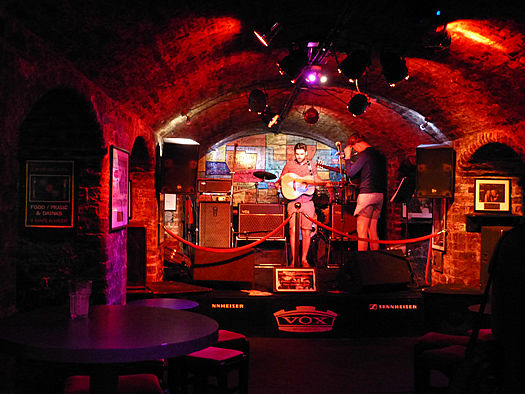
We visited just before mid-day, and a band was practising. They were singing Beatles songs, which was appropriate. We had been the first people in the club, but a small crowd turned up to listen to them practice while we were there. This bit of the Cavern Club is what the stage would have looked like at the time of the Beatles, but the Cavern Club is only a quarter of its original size. The area where the Beatles performed no longer exists as it was torn down. Actually, the club is more popular now than when I visited in 2007, and one area is a large gift shop with Beatles merchandise.

The walls and ceiling were filled with grafitti from Beatles fans or simply tourists wishing to leave their mark. Other bands have played here, and there's a wall of bricks outside with the names of other musicians who have performed.

cavernclub2.jpg
Cavern Club stage

I have a few shots of the exterior of the Cavern Club, and a statue of John Lennon is located across the street from the entrance.

cavernclub3.jpg
Cavern Club

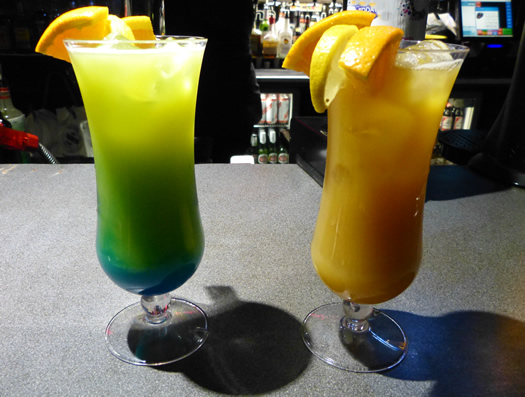
It may have been a little too early for cocktails before mid-day, but we decided to have one anyway. The Cavern Club serve Beatles-themed cocktails; each one of four cocktails is named after a Beatle. The one that appealed to me was the one named after my favourite Beatle, George. The cocktail "My Sweet George" contained Vodka, Triple Sec, orange juice, and Archers. The bloke had the "Ringo's Rum Drum", which contained rum and orange juice. "Lennon's Long Island" and "Macca's Magical Mystery" were also on offer. 

cavernclub4.jpg 
Beatles cocktails

The following photograph shows Mathew Street as it currently looks (summer 2014).

mathewstreet.jpg
Mathew Street

This concludes the Beatles post for now, but check back for an update as I still want to see the National Trust Houses, the museum, and Casbah (if they ever answer their phone/emails). I plan to see them at some point this year.

Note that this post is not an endorsement.

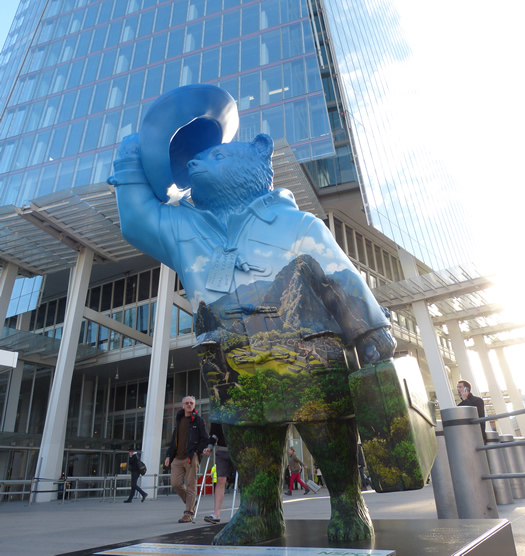
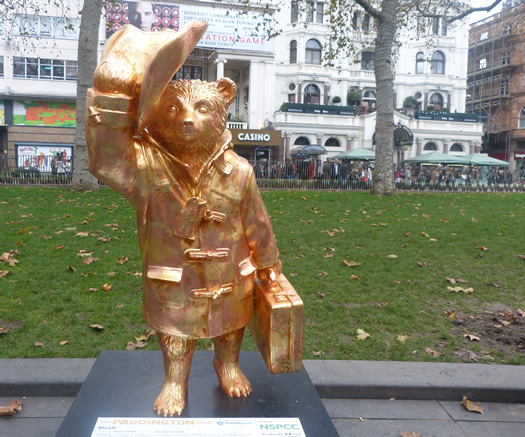
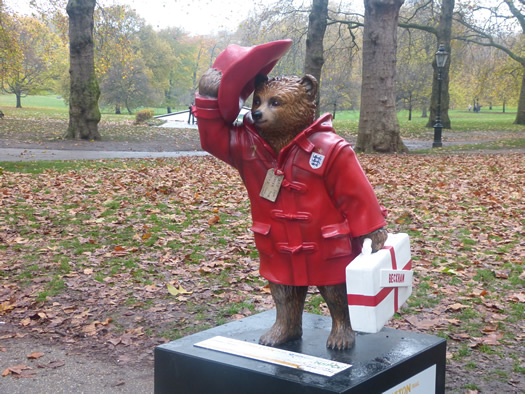
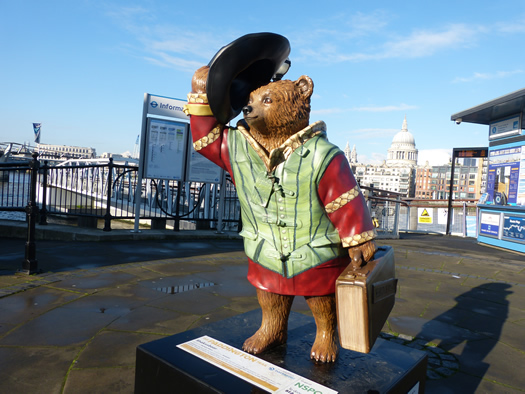
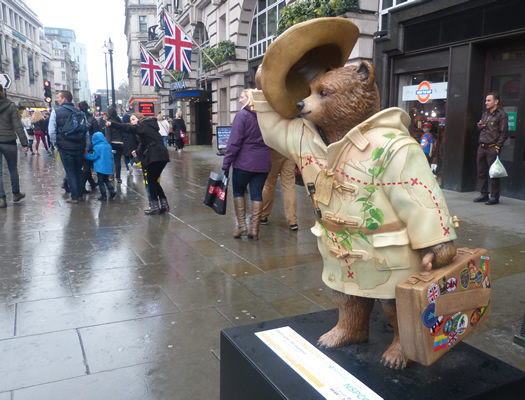
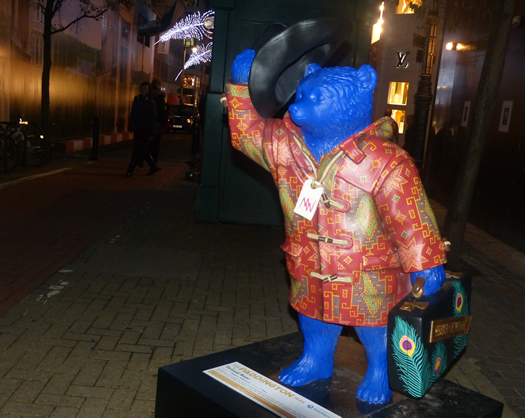
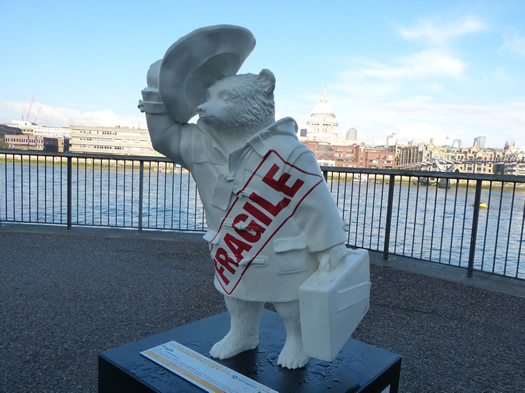
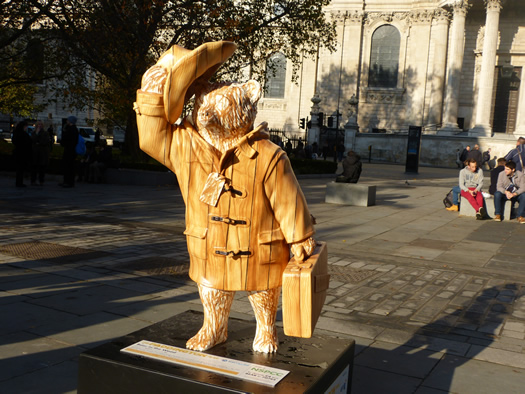
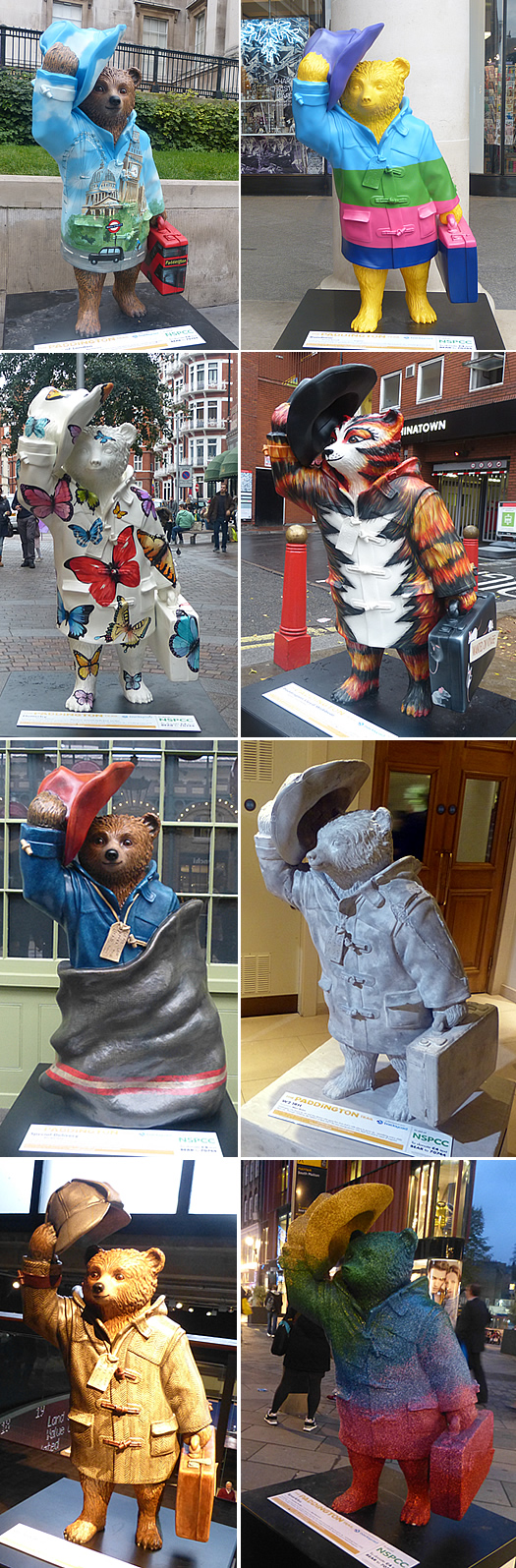
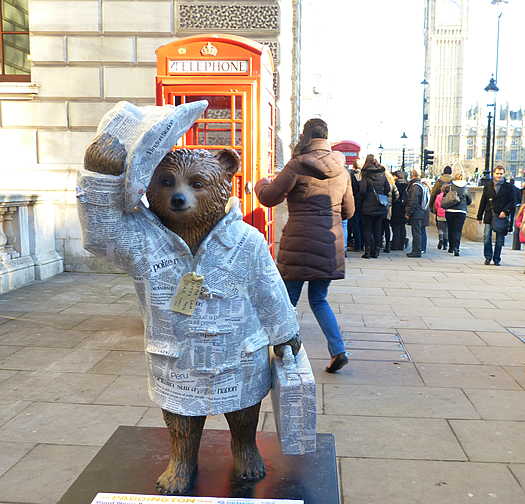
The Paddington Trail

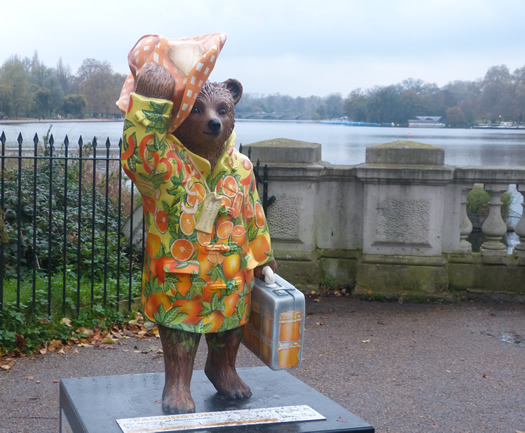
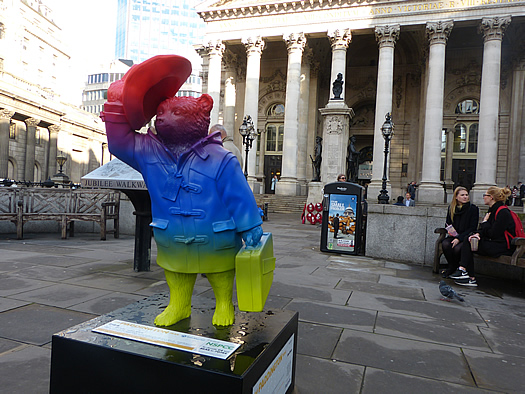
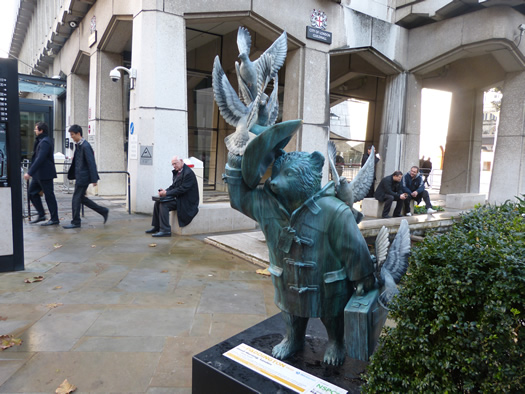
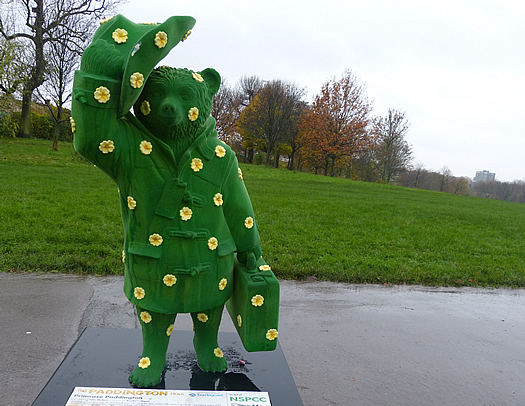
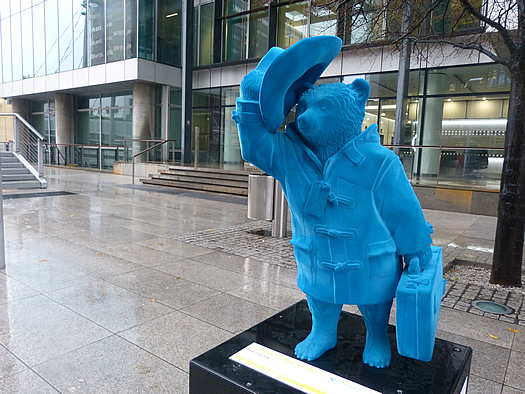
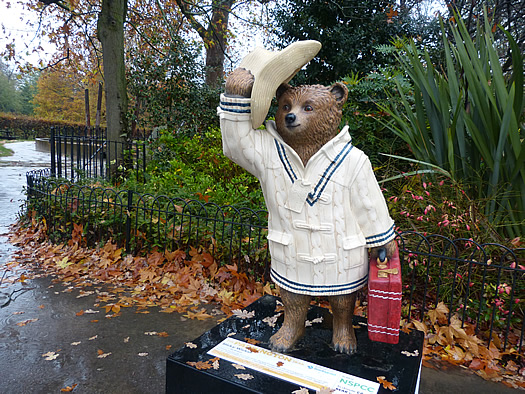
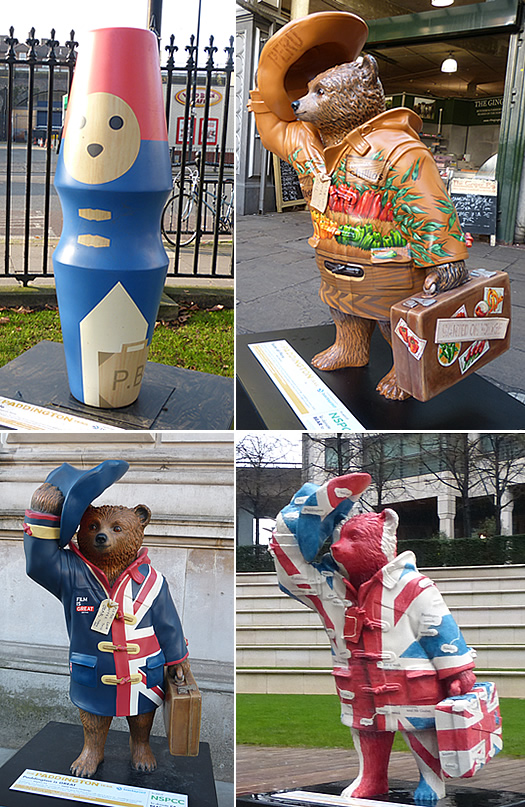
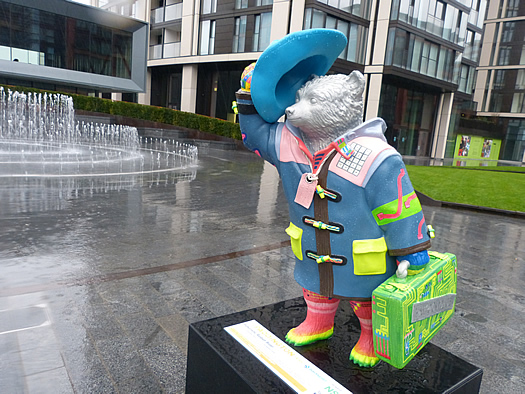
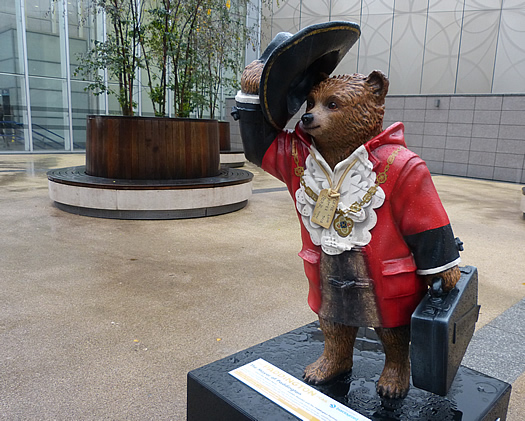
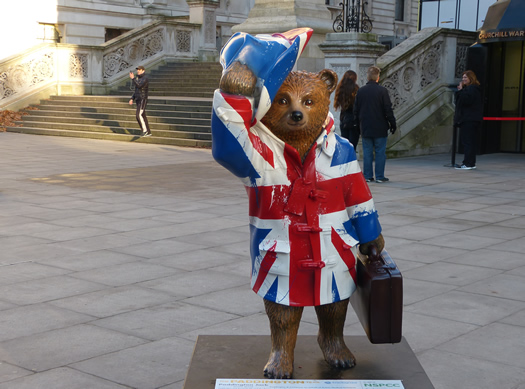
At the end of last year, fifty statues of Paddington the Bear appeared across London. Paddington Bear is a book by Michael Bond about a Peruvian bear who ends up in Paddington station in London with a note "Please look after this bear" tied around him. A film adaption (simply known as Paddington) has been in cinemas since the end of November, and this sculpture trail consists of several painted Paddington Bear sculptures to celebrate the film. Many of the bears are designed by British celebrities and other celebrities that had some influence in the film, such as Hugh Bonneville, Peter Capaldi, Nicole Kidman, David Beckham, and Emma Watson. The bear sculptures will be auctioned for children's charity NSPCC at the beginning of January.

paddington
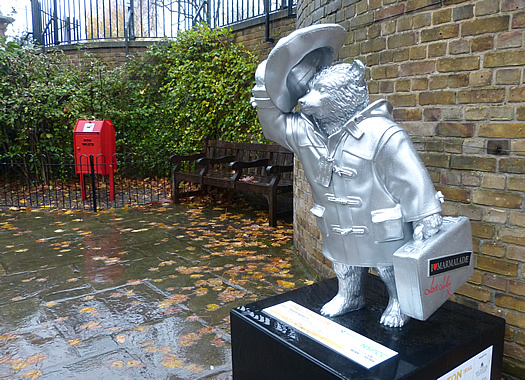
Hugh Bonneville - The Journey of Marmalade

The Paddington Bear sculptures were on the streets from the beginning of November until the end of December, so they have sadly all gone now. They were spread across London, so I sadly did not get to see all of them due to them being scattered about the city and for the fact that the past two months have been busy with the Christmas season, holidays, and shorter hours of daylight. I saw all apart from five of the sculptures, so I did not do too badly considering one was far out as Heathrow.

paddington
Peru - Wonders of the World

paddington
Nicole Kidman - Blush

paddington
David Beckham - Golden Paws

paddington
Michael Sheen - Shakesbear

paddington
Ripley's Believe it or Not! - Paddington the Explorer

paddington
Matthew Williamson - Thread Bear

paddington
Ryan McElhinney - Fragile

paddington
Rankin - Bear in the Wood

paddington
Bears by Boris Johnson, Darcey Bussell, Emma Watson, Andrew Lloyd Webber, Ben Whishaw, Marc Quinn, Benedict Cumberbatch, Frankie Bridge

paddington
Zaha Hadid - R; G; B

paddington
Michael Howells - Good Morning London

paddington
Julie Walters - Primrose Paddington

paddington
Taylor Wimpey - Bearing Up

paddington
Canterbury of New Zealand - Paws Engage

paddington
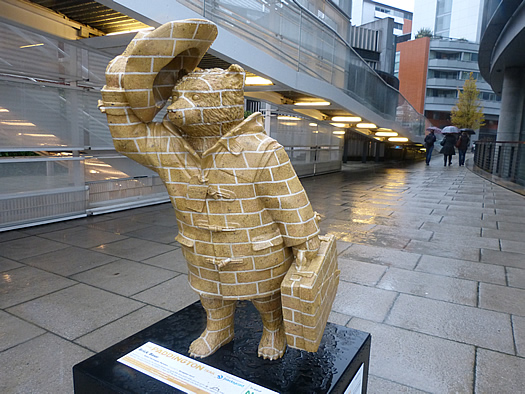
Robin Partington & Partners - Brick Bear

paddington
Jonathan Ross - Futuristic Robot Bear

paddington
Lulu Guinness - Love Paddington x

paddington
Costain Skanska and the Paddington Partnership - The Mayor of Paddington

paddington
Davina McCall - Paddington Jack

paddington
Guy Ritchie - Dapper Bear

paddington
The Telegraph - Good News Bear

paddington
Bears by Benjamin Shine, Peru, Stephen Fry, Westminster Academy

Some of the bears were orgnaised into a trail. Although not all of the bears could be seen this way, this was a good way to see some of the bears. The trails included:

  • Royal Parks: This went through Hyde Park and up through to Westminster but only contained six bears over a long walking distance. 
  • Paddington Trail: This trail went around the Paddington and Little Venice area of London and consisted of several bears in a small area.
  • River and Historical London: This trail contains approximately eight bears centrered around the London Bridge area of the Thames
  • The Christmas Trail: This trail contained several of the sculptures around west London to allow visitors to combine this trail with seeing with Christmas lights.

Did you see any of the bear sculptures in the Paddington Bear Trail? I could not pick a favourite sculpture as all of them were completely different and there were so many good designs. The Paddington Trail map and information about the bears can be seen here: http://www.visitlondon.com/paddington/trail-map 

Nuremberg Christmas Market

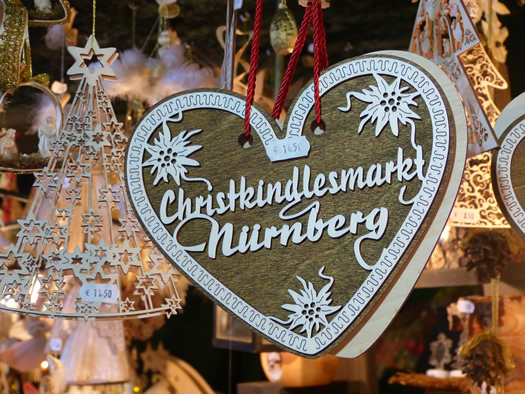
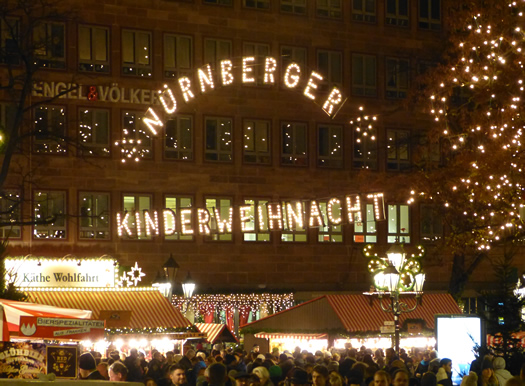
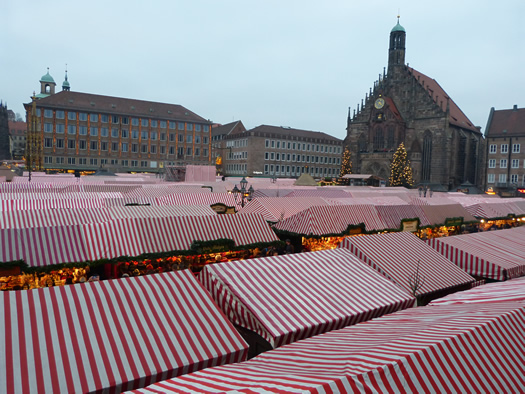
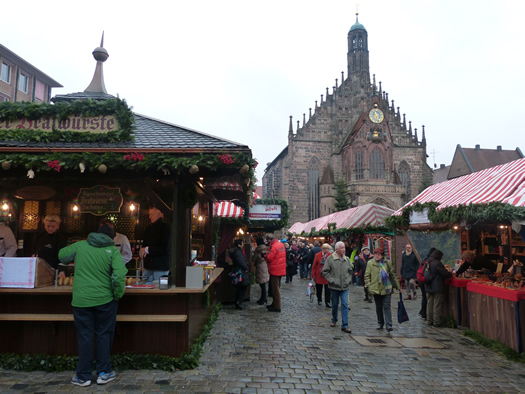
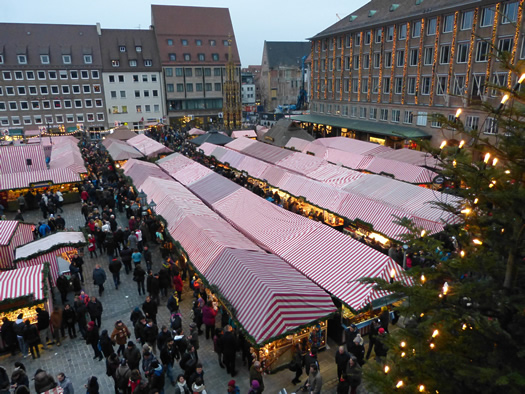
After Thanksgiving, the bloke and I jetted off to Germany to spend a few days visiting Nuremberg and its famous Christmas market (Nürnberger Christkindlesmarkt). We arrived on Friday evening, the opening day of the Christmas market. We headed into the city's main square (Hauptmarkt) after dropping off our luggage at the hotel. As it was the opening day, the market was exceptionally busy.

nuremberg-xmas-28.jpg

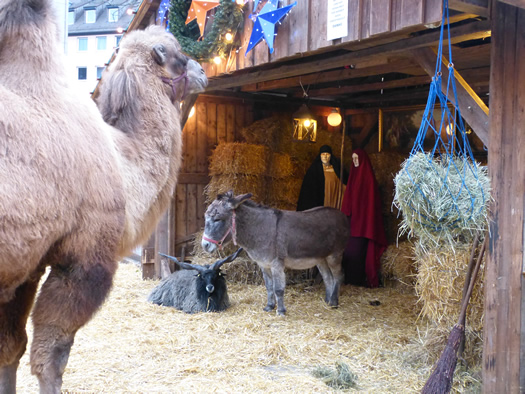
On the way to the main square, we walked through Ludwig Platz where we saw a living nativity with donkeys, goats, an alpaca, and a camel. The Mary, Joseph and baby Jesus were not living, of course. We saw the animals here almost every day that we walked past the nativity, though they do take them away at night.

nuremberg-xmas-11.jpg

The Christmas Market in Nuremberg consists of the main market, a children's market, and a sister city market. The sister city market is based on Nuremberg's twinned (sister) cities, and each has its own market stall that specialises in its country's products off of the main square. For example, shortbread and whisky were available to buy in the Glasgow stall. American sweets were available from the Atlanta, Georgia stall.

nuremberg-xmas-03.jpg

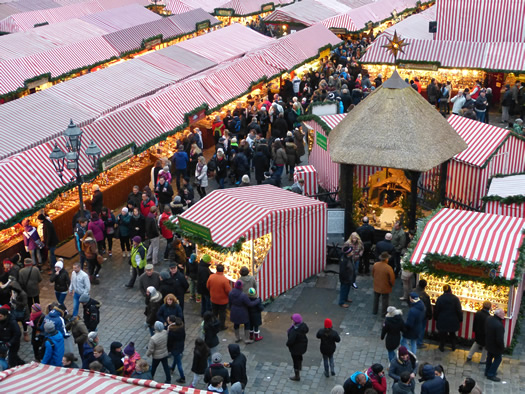
The Christmas market is huge, and it took us about half of a day to go through it and see everything. We did visit it a few times over the few days that we were there, but we had a proper look around all of the stalls on one of the weekday mornings when the market was quieter.

nuremberg-xmas-04.jpg

The market gets incredibly busy as the day goes on, and dusk is the busiest time to visit the market. At times, such as the weekend and the opening night, it was too busy to browse. I do not enjoy browsing busy places as it is impossible to have a proper look.

nuremberg-xmas-37.jpg

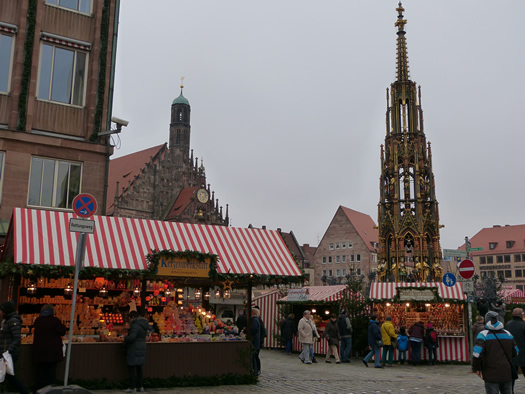
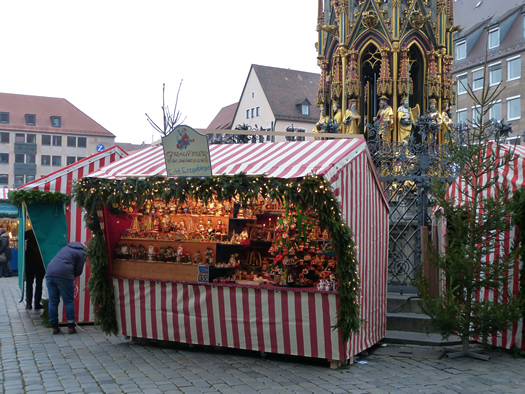
The fountain in the Hauptmarkt is called Schöner Brunnen, and during the Christmas market, all but one side is surrounded by stalls. A gold ring is located on the railing of the fountain, and turning this three times will make wishes come true. The fountain was always surrounded by tour groups during our visits to the market.

nuremberg-xmas-29.jpg

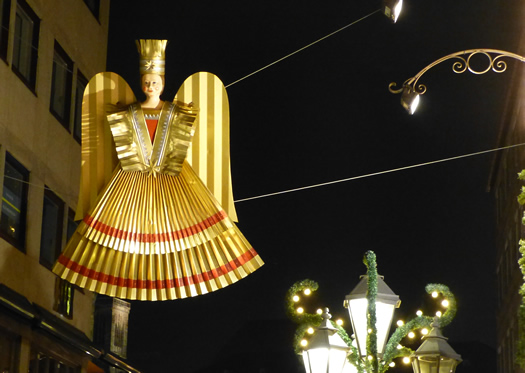
Upon entering the square, visitors will see a large gold tinsel angel. This is one of the symbols of Nuremberg. The golden tinsel angel is made of thin metal and is made to be a tree topper. It is a symbol of the Christkind, translated Christ Child. The Christ Child is a Nuremberg tradition. She is a giver of gifts and became a tradition for the market in the early 1930s.

nuremberg-xmas-05.jpg

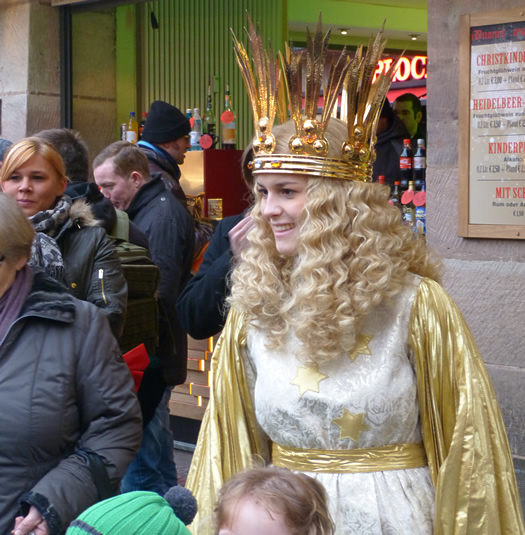
Every year, young women between the ages of 16 and 19 can enter the competition to be the Christmas Market's symbol, Christkind. In this tradition, they open the Christmas Market each year with a speech and also visit the market nearly every afternoon. The ChristKind is popular with children, and every child and some adults wanted their photograph taken with her.

nuremberg-xmas-13.jpg

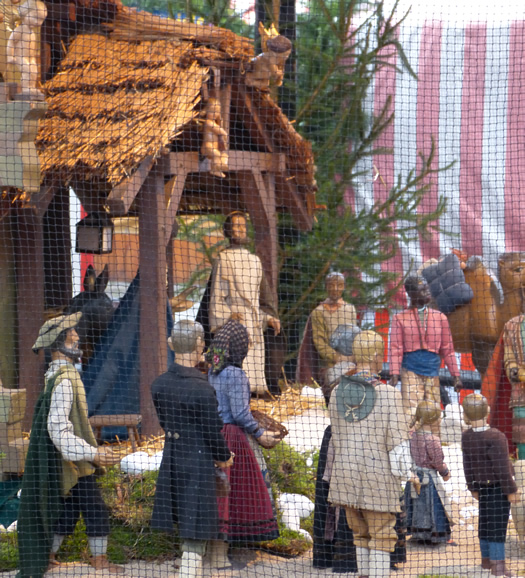
Another area of the square, in front of the Church of Our Lady, is sectioned off and contains the antique nativity scene.

nuremberg-xmas-21.jpg

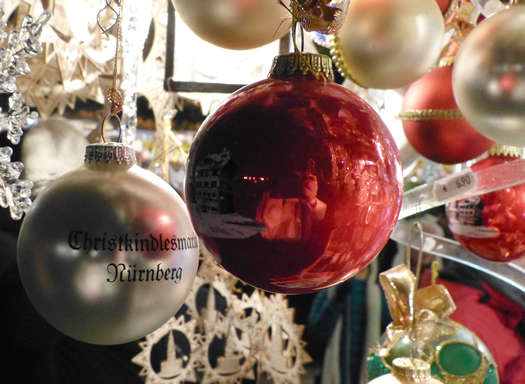
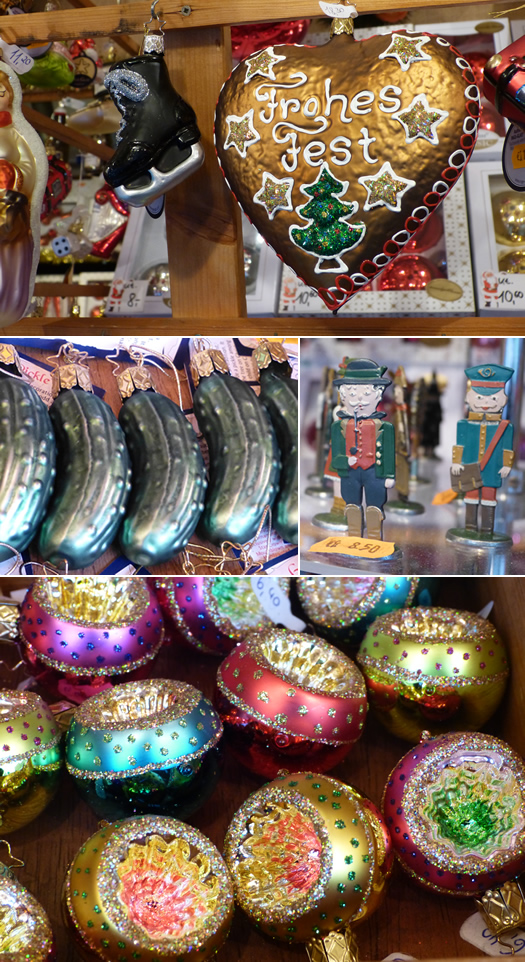
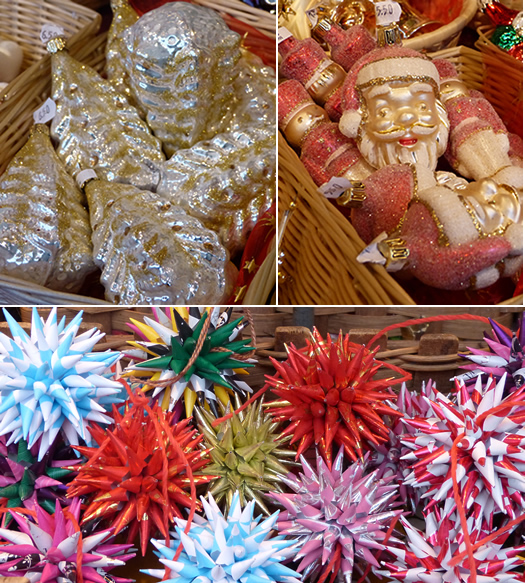
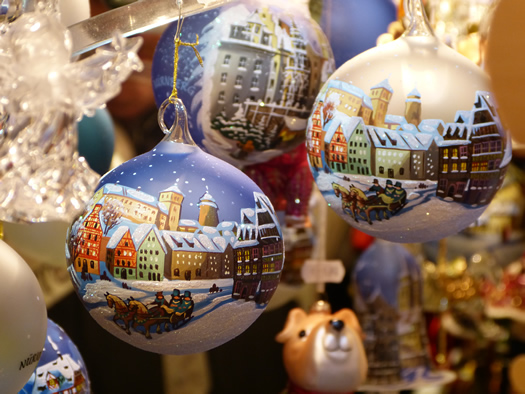
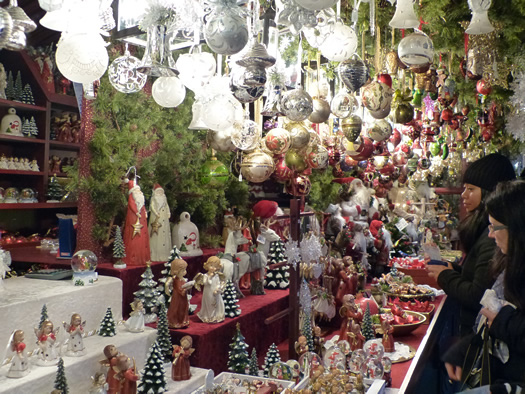
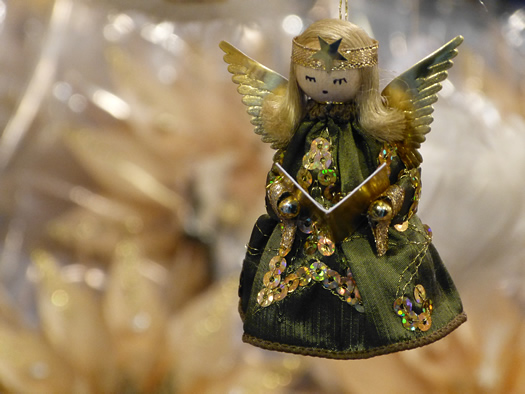
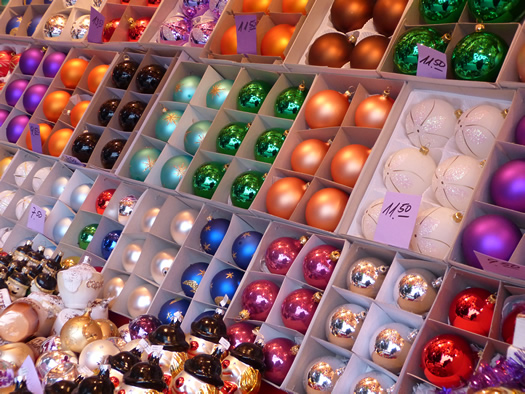
One of the most popular items for sale are Christmas ornaments and Christmas craft items. Some of these are so beautiful but also so fragile as they are made of delicate glass. I loved looking at them, but I am put off buying them because I am afraid that they would not make the journey back in one piece, and if they did, I would be worried that they would break in storage or fall off the Christmas tree.

nuremberg-xmas-07.jpg

One tradition is the pickle tree ornament. Each year, the pickle is hidden on the tree. When the child discovers it, he/she will receive a special prize. The size of the pickle varies. For younger children, the pickle is larger so that it is easier for them to find. As the children get older, the pickle becomes smaller and more difficult to find.

nuremberg-xmas-16.jpg

nuremberg-xmas-02.jpg

nuremberg-xmas-35.jpg

nuremberg-xmas-08.jpg

nuremberg-xmas-09.jpg

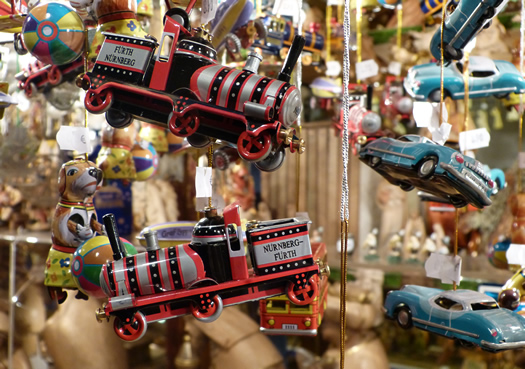
The market stalls were covered in ornaments. It was impossible to see all of them. There were so many that I loved.

nuremberg-xmas-19.jpg

nuremberg-xmas-20.jpg

nuremberg-xmas-23.jpg

nuremberg-xmas-31.jpg

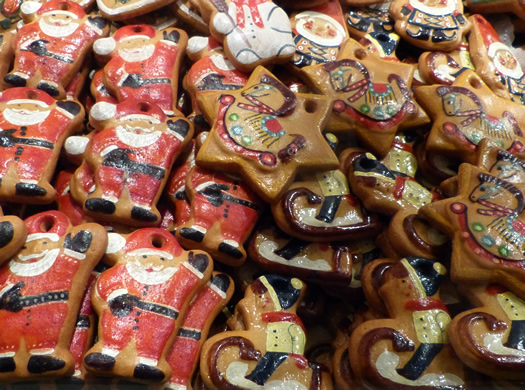
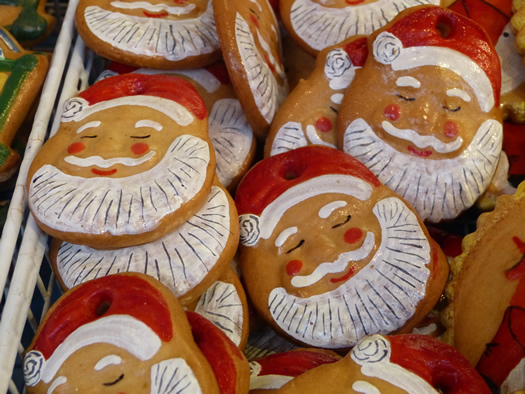
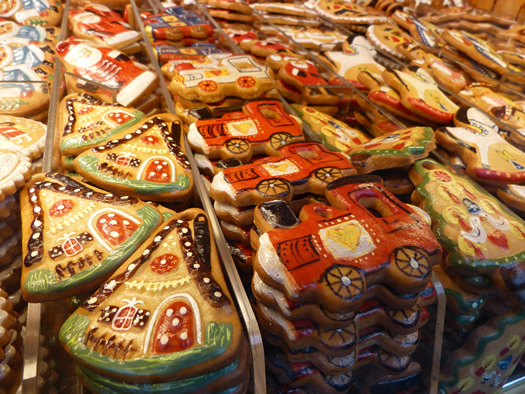
In addition to the traditional glass ornaments, visitors could buy ornaments that were cookies baked and then painted into Christmas designs. I remember making these types of ornaments when I was younger. 

nuremberg-xmas-10.jpg

nuremberg-xmas-24.jpg

nuremberg-xmas-36.jpg

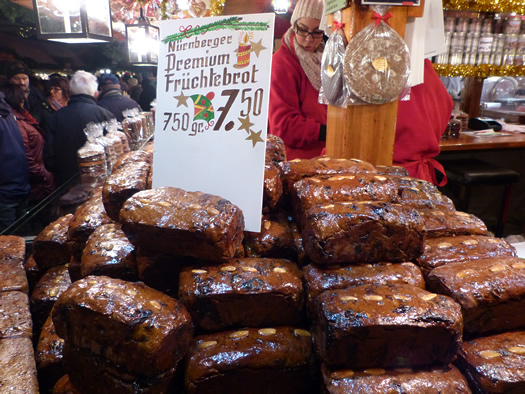
Food is also popular at the Christmas market. Sausages, candy apples, chocolate, gingerbread, and Christmas cake were all popular. Nuremberg is most known for its special Nuremberg sausage and gingerbread. I had some gingerbread, and it was nice, but it was not the type of gingerbread that I am familiar with. A mulled wine drink is also popular, and this goes well with the gingerbread. Gingerbread, known as lebkuchen, dates from medieval times.

nuremberg-xmas-01.jpg

nuremberg-xmas-06.jpg

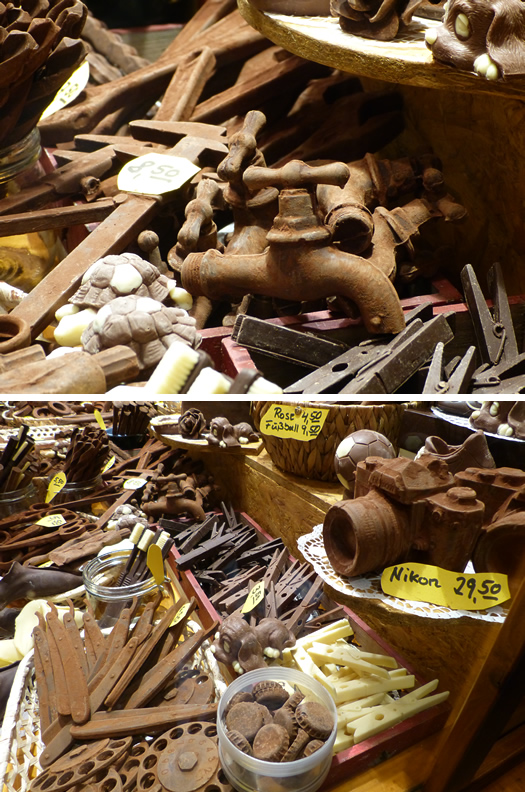
One of the most interesting stalls sold chocolate items that were shaped like tools and other everyday items. At first, I thought that these were antique items because they did look real. However, all items were made from chocolate with a dusting of cocao powder to make them look 'worn' and slightly rusty. Scissors, wrenches, faucets, bottle caps, horseshoes, clothes pegs, cameras, locks, keys, and scissors were some of the items. 

nuremberg-xmas-34.jpg

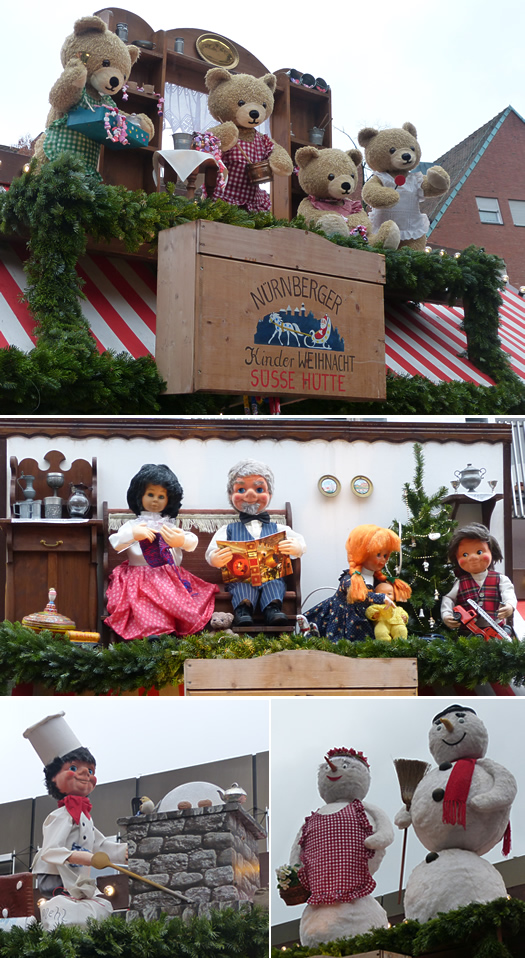
I also had a wander to the Christmas Children's Market, which was extremely popular with school groups of children. A small ferris wheel, carousel, and other games and crafts were available for the children. Children could make their own candles or ice and decorate their own gingerbread. Between the two markets is also a nativity trail with some nativity scenes. A large model train set with a few running trains was also at the far end of the Children's Christmas Market. Each of the market stalls in the Children's Christmas Market had a decoration on top of it. These varied from a family of bears making treats, a family sitting in a Christmas room, snowmen, Santa and reindeer, and a group of bakers.

nuremberg-xmas-172.jpg

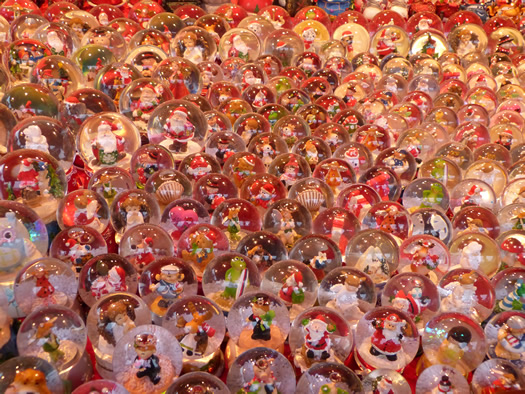
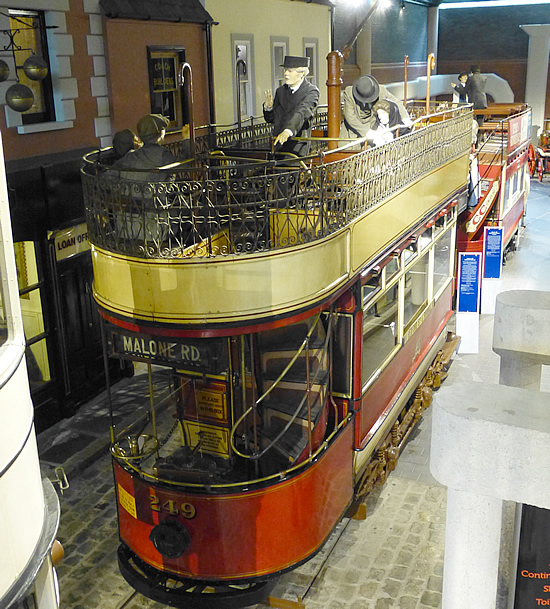
Snowglobes were a popular item in the Christmas markets.
nuremberg-xmas-18.jpg

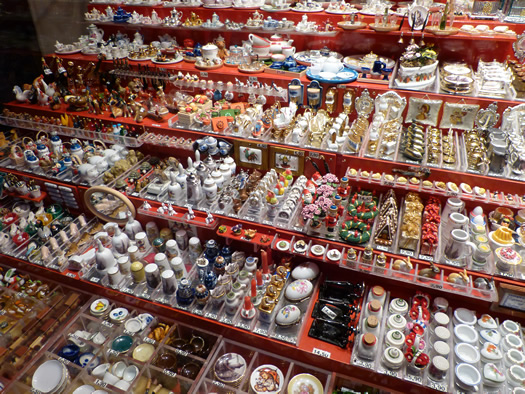
A couple of stalls also sold a large range of dollhouse items.

nuremberg-xmas-12.jpg

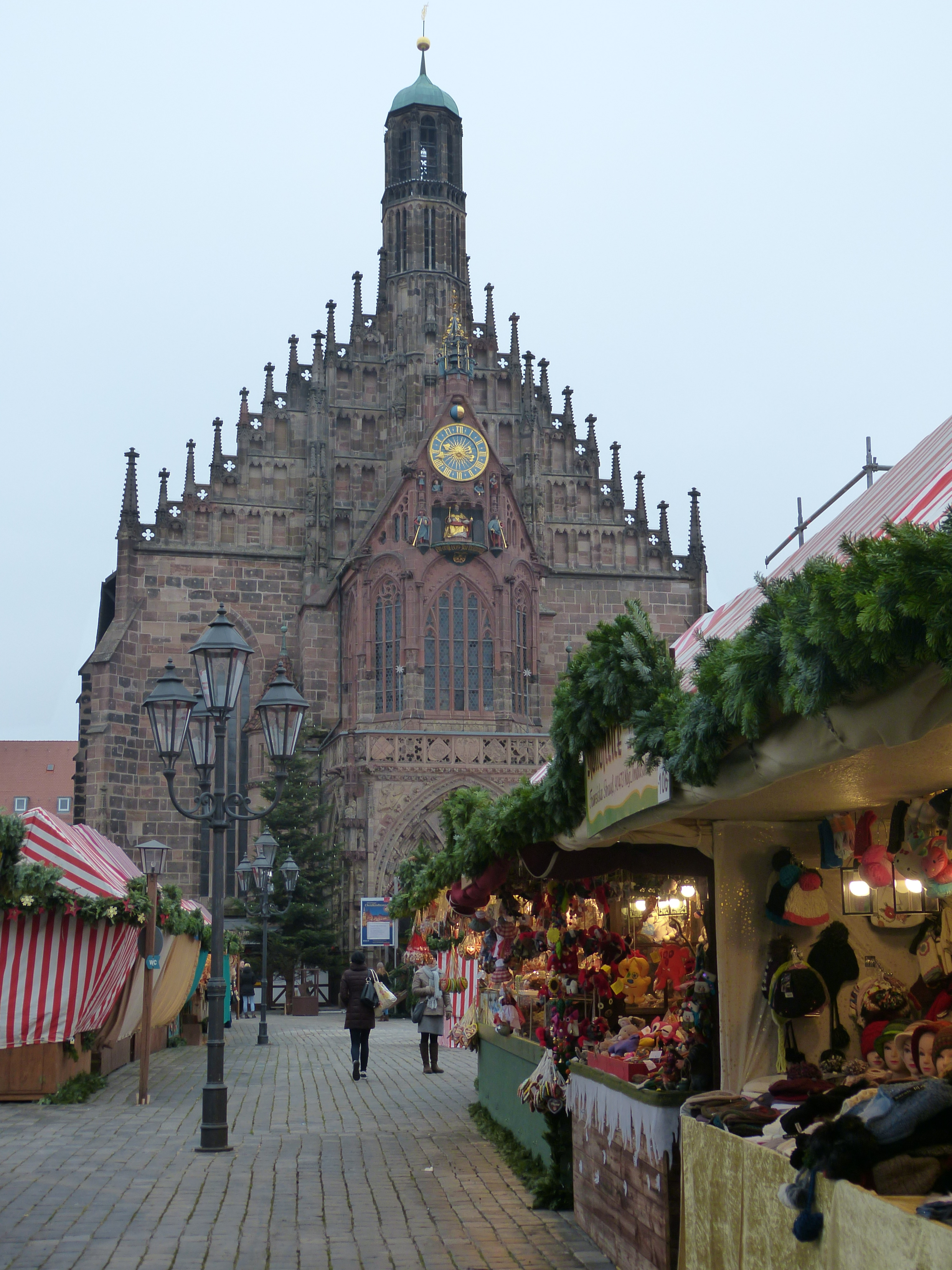
The best architectual structure (and oldest) was Frauenkirche, Church of Our Lady. Visitors could listen to church services here, and they had special advent services. Visitors could also climb up part of the way to the balcony to have an elevated view of the Christmas market, and this is the balcony that the Christkind stands on for the opening ceremony of the Christmas Market every year. At noon each day, the clock on Frauenkirche moves and little figures move around the clockface.

nuremberg-xmas-22.jpg

I took a few photographs from the balcony of Frauenkirche. The market was not the busiest at this time but the crowds were growing.

nuremberg-xmas-32.jpg

nuremberg-xmas-33.jpg

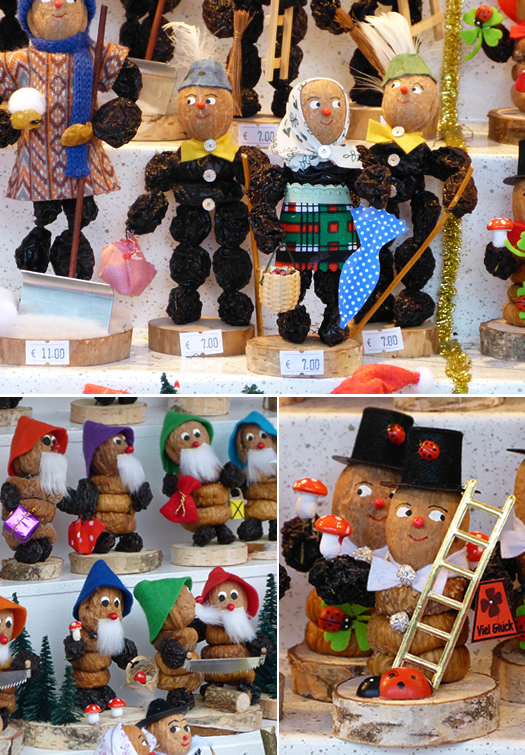
Another traditional item to buy at the Nuremberg Christmas Market at the prune men (Zwetschgenmännle). These little men and women are made from prunes and have a walnut head. A few stalls around the Christmas Market were selling these novelty items.

nuremberg-xmas-26.jpg

There are many different designs for the prune men, and a few of my photographs are below. They are said to bring happiness and luck.

nuremberg-xmas-25.jpg

Springerle is another Nuremberg traditional food. It is an embossed white biscuit design, and it is translated to "little knights". This cookie is from Renaissance times, and it is made with egg white and anise. Some of the deisgns have been coloured, otherwise they are simply embossed. I did try these, and they are a wafer-like biscuit with a slight anise taste. A few of the different designs can be seen below.

nuremberg-xmas-27.jpg

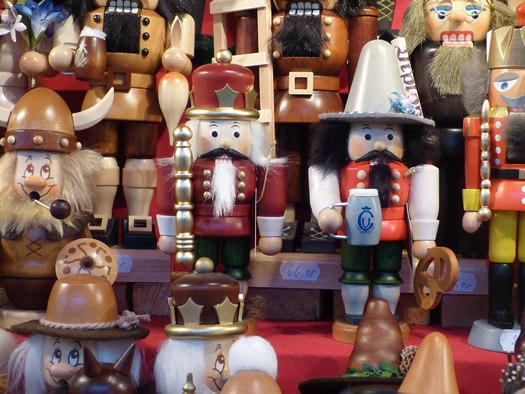
Nutcrackers were amongst the popular Christmas crafts.
nuremberg-xmas-30.jpg

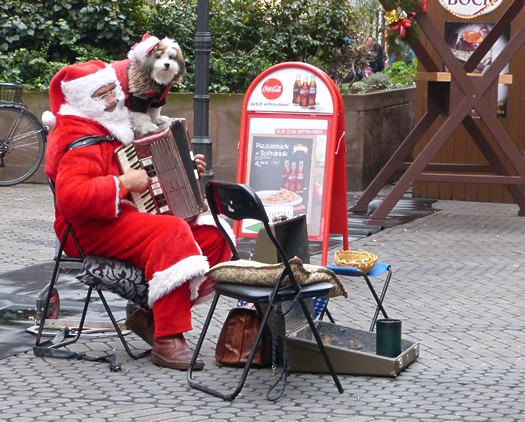
Around the Christmas area (though not inside the actual market square itself) and main streets were a couple of different buskers dressed as Santa with small, cute dogs. 
nuremberg-xmas-14.jpg

nuremberg-xmas-15.jpg

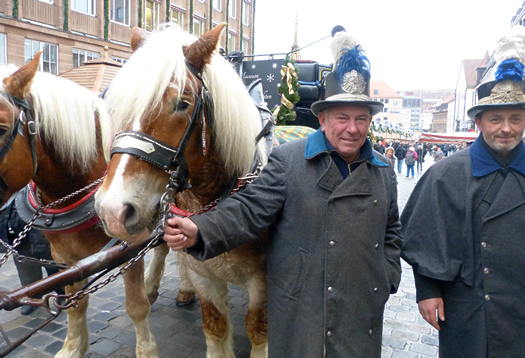
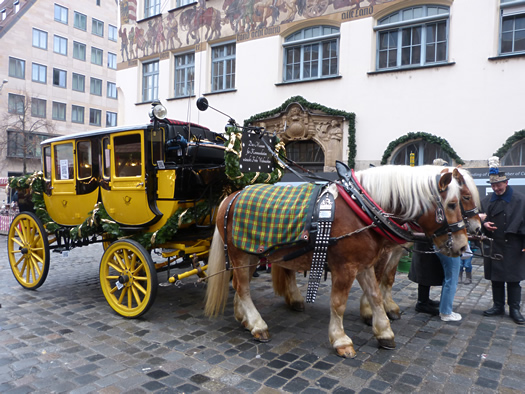
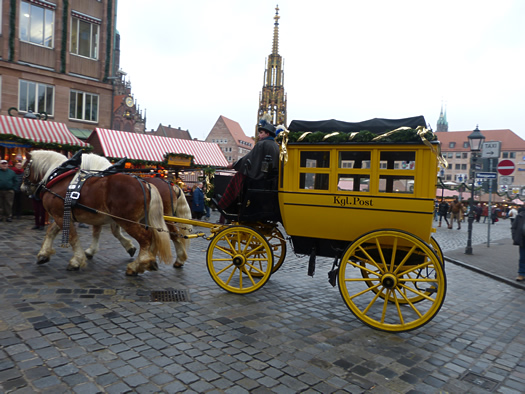
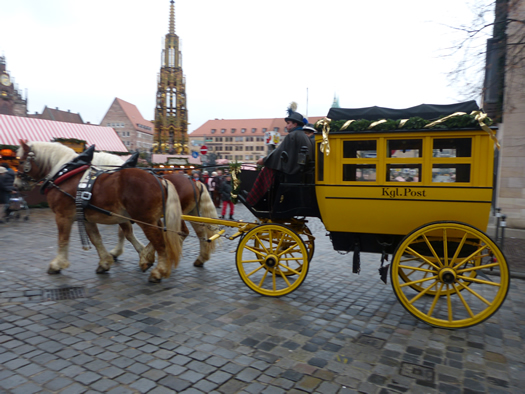
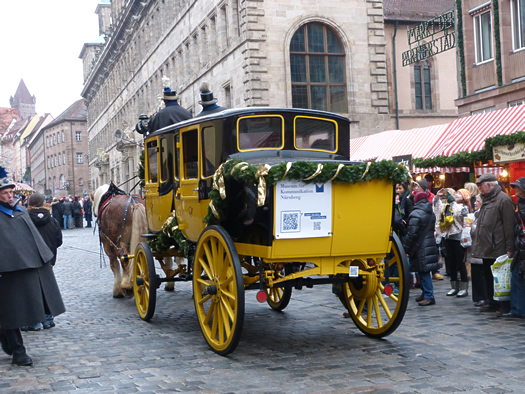
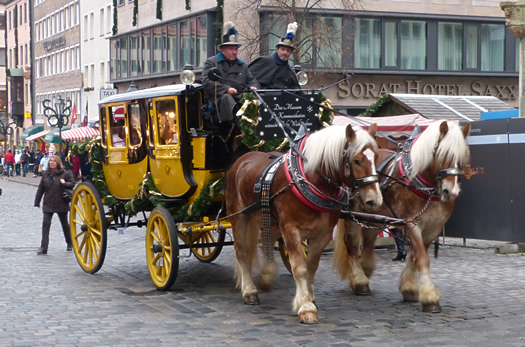
Last but not least, a twenty-minute dash around the Christmas Market and streets of Nuremberg is possible in the German post (Deutsche Post) stagecoach. The men driving the horse would blow a horn to signal the approach of the carriage as we were taken around the market, and everyone would stop to look. I felt like a celebrity for those twenty minutes.
nuremberg-xmas-38.jpg

nuremberg-xmas-39.jpg

nuremberg-xmas-40.jpg

nuremberg-xmas-41.jpg

nuremberg-xmas-42.jpg

nuremberg-xmas-43.jpg

Also, if you love postcards and stamps like I do, do not forget to visit the special Christmas market stall for German Post. This is located across the road from the fountain. Tickets for the stagecoach rides mentioned above can be purchased here as well as stamps and postcards. Even if you have written your postcards, stamped or not, you can take your postcards here to receive one of two special Nuremberg German postmark stamps. I went back to this stall several times to receive the special postmarks.

Last but not least, I have put together a list of tips for visiting the Nuremberg Christmas Market. The list below mentions good points and what to avoid.

Tips for Nuremberg Christmas Market:

  • Some of the stallholders are dishonest and rude. I gave money for a glass of mulled punch across from the horse stagecoaches, and the stallholder tried to deny I had given her money even after I kept insisting, and she and her boss were extremely rude to me. I eventually got my money, but I had to make a scene by arguing. Make sure that the stallholder has your full and undivided attention throughout the transaction and force them to make eye contact with you.
  • Prices vary greatly for the same item and change as the market gets busier. Again, some of the stallholders are dishonest and will charge more. Look around first and note the price. If the price is not on display, ask and then continue to look for the best price. Prices can vary greatly fort he exact same item. Also, as I did visit the market several times, I noticed that the stalls changed their prices during busier times. I saw one stall sell one particular item for 2.50, and this price was raised to 3.50 as the day progressed and market got busier.
  • Watch your money and possessions as there are pickpockets. I did not have any trouble, but this was advice given to me.
  • Visit in the morning when it's quiet. The evenings and dusk gets extremely busy, and it's not possible to browse when it's too busy. The market opens at 10:00am, but some stalls open a little later, and the market is relatively quiet then.  
  • Try new things. Sausage, mulled wine, and gingerbread are a few items to try.
  • Get a map of the Christmas Market. A map of all stalls in the main Christmas Market, the Children's Christmas Market, and the International Christmas Market is available in the Tourist Information building on the market square. This is located near the church.
  • Look for prune men. The map available from the Tourist Information centre includes locations of the stalls for the prune men separately. 
  • Get your special stamps and postmarks. For those sending postcards, visit this stall opposite the fountain and receive a special postmark. Postcards and stamps can also be purchased here.
  • See Christkind. She makes an appearance daily at approximately 3:00 in the afternoon on most days. The brochure in the Tourist Information can provide more information as the timing and availability is subject to change.
  • Have fun!
  1 2 3 4 5 6 7 8 9 10 11 12 13 14 15 16 17 18 19 20 21 22 23 24 25 26 27 28 29 30 31 32 33 34 35 36 37 38 39 40 41 42 43 44 45 46 47 48 49 50 51 52 53 54 55 56 57 58 59 60 61 62 63 64 65 66 67 68 69 70 71 72 73 74 75 76 77 78 79 80 81 82 83 84 85 86 87 88 89 90 91 92 93 94 95 96 97 98 99 100 101 102 103 104 105 106 107 108  

Archives

Recent Comments

  • jenn: Thank you. read more
  • Murge: Amazing post. read more
  • Herbert: good post. site read more
  • Frank Quake: Hey, This is great when you said that I had read more
  • Chappy: You mention peptides here? I have had first hand experience read more
  • jenn: Thanks! I love the work. I have got more recent read more
  • Fanakapan: Thanks for the write up. This was some of my read more
  • jenn: Yes.... but that's only for the islands. Mostar and Montenegro read more
  • jenn: Hello, the code is not mine to hand out. I'll read more
  • pantich: More info about the best day trips from Dubrovnik can read more
OpenID accepted here Learn more about OpenID