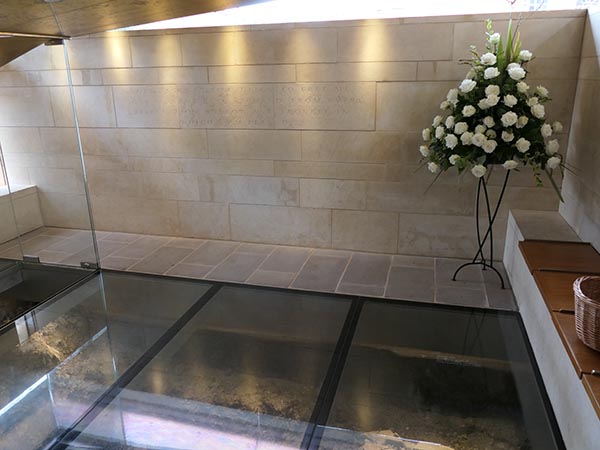
It has been almost ten years since the remains of Richard III were discovered underneath parking in the centre of Leicester, and I remember reading about it and seeing the story unfold on the news. There's now a museum, "Richard III Visitor Centre", on the spot where the remains of the king were discovered, and I could not leave without visiting the cathedral next door as that is where his remains were later interred (in 2015). I love history, and the story fascinated me, so I really wanted to see this exhibition when I was in Leicester over the summer. I happened to visit the attraction on a special day for King Richard III - the day that he was buried all of those years ago (1485) and also the day his skeleton was discovered. This special day was marked with white flowers at the spot where he lay buried for hundreds of years.
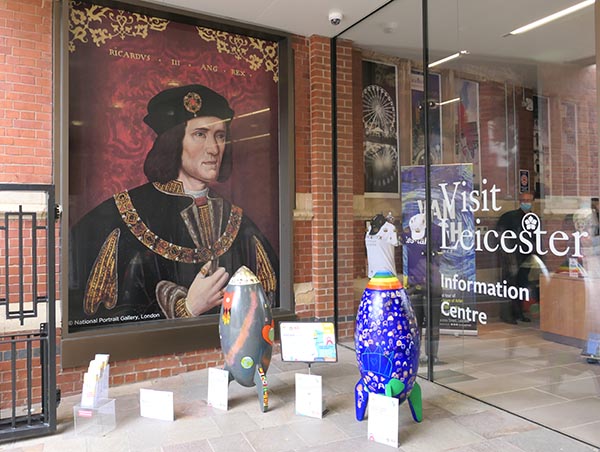
The attraction opened in 2014 following the discovery and formal identification of the king. He was the last king killed in battle, and the site he was buried was Greyfriar's, a chapel in a monastary complex. The complex was destroyed sometime after 1538, and there were some accounts that bones were thrown into the river. On the first day of the search, Richard III's body was discovered, but they were not then aware of the discovery. The attraction is across several rooms and features a film with some excerpts of the Shakespeare play, history of the king and lineage, the battle that claimed his life, how his remains were discovered and then verified, and the portrayal of King Richard III in the media as a villan and inspiration to other characters. One of the most evil is that King Richard III is credited for murdering his nephews, who were only small children. They disappeared, but their skeletons were discovered in the Tower of London. Richard III is thought to be responsible for this.
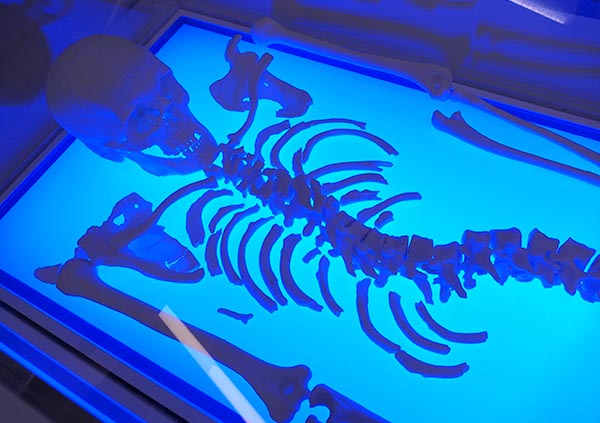
A replica of the skeleton is on display, and visitors can see just how bad the spine was. At first, those who discovered the skeleton did not know it was the king, but they noted the age of the skeleton, age the body died, injuries to the back of the skull, and the medical condition scoliosis. Richard III suffered from scoliosis, which is a condition of a curved spine. All of these fit the profile of the king. To formalise it, they traced back DNA on the maternal lines via Richard III's sister and concluded that the skeleton was Richard III. Also to note that the feet of the king are missing due to foundations work in the Victorian age, but they thankfully did not move the rest of the body.
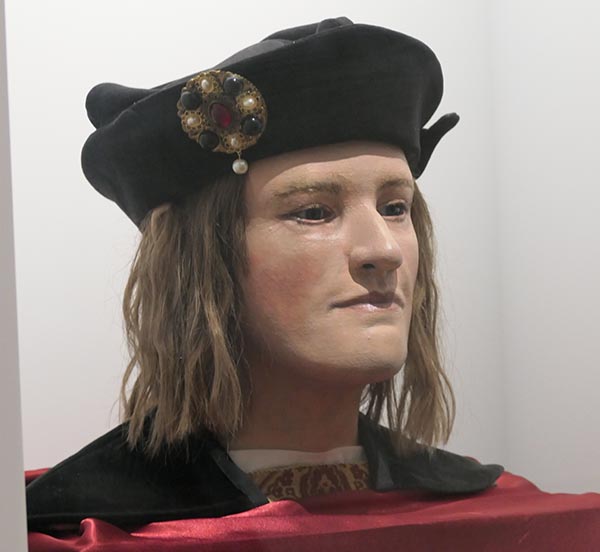
In addition to the DNA profiling, the face of Richard III has been reconstructed. The person who reconstructed it did not know the skull was Richard III's skull, so it is remarkable how much his likeness in artwork replicates to the model created (see below). However, I think as he was unpopular, some of his depictions would have been less than flattering of him.
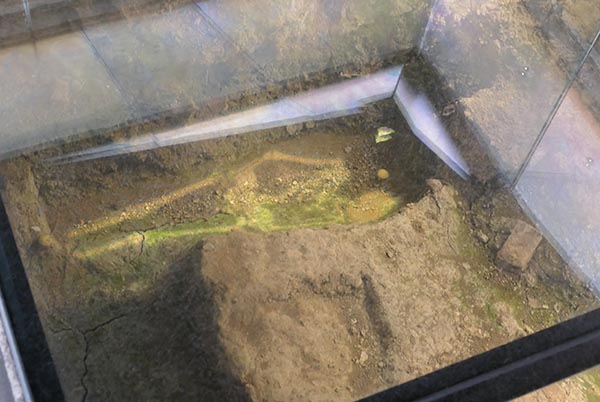
The final part of the exhibition was to see the place where he was discovered. This is its own room with the area exposed with glass fit over the top. The area of his grave is lit up and imposed with light model of the bones to see how his body had lain in that grave. He was buried quickly, so not much care was given to his burial.
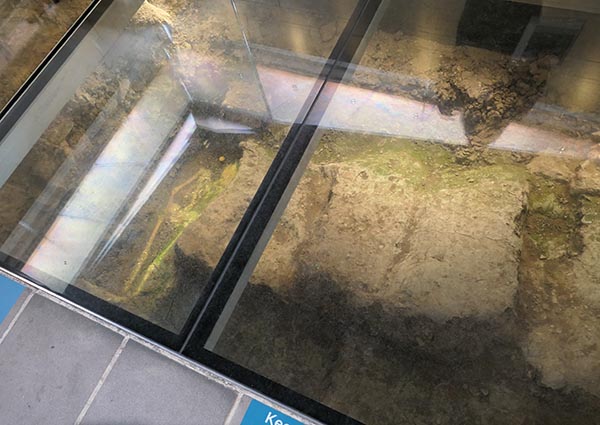
As mentioned earlier, the white flowers can be seen below to mark the special day.
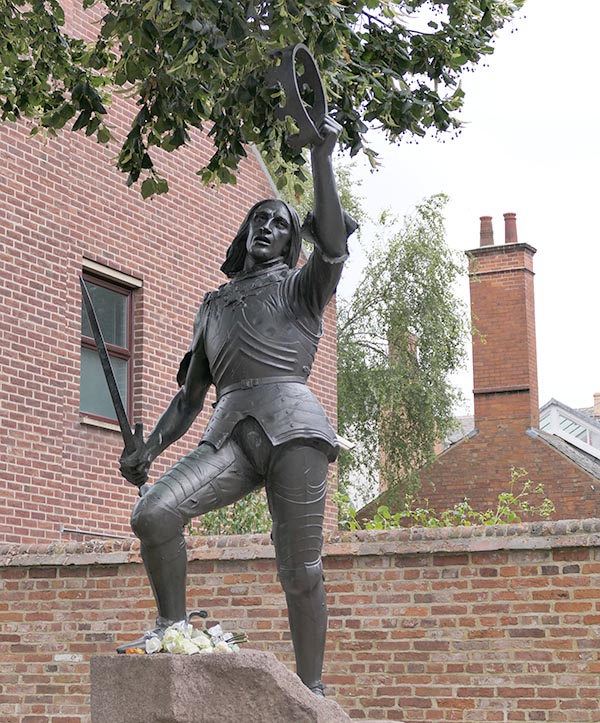
A monument is located in the room adjacent, memorialising the king who lay forgotten beaneath a car park for a very long time.
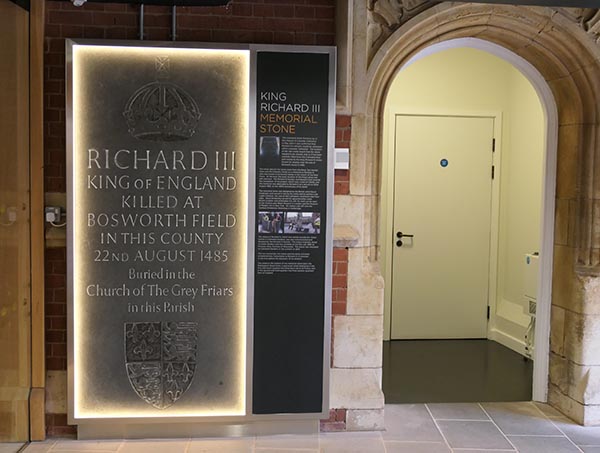
Richard III was buried in Leicester Cathedral as per court decision in March of 2015, though it was not a popular move for others who thought his home of York or notable Westminster Abbey would be more appropriate. I visited the cathedral.
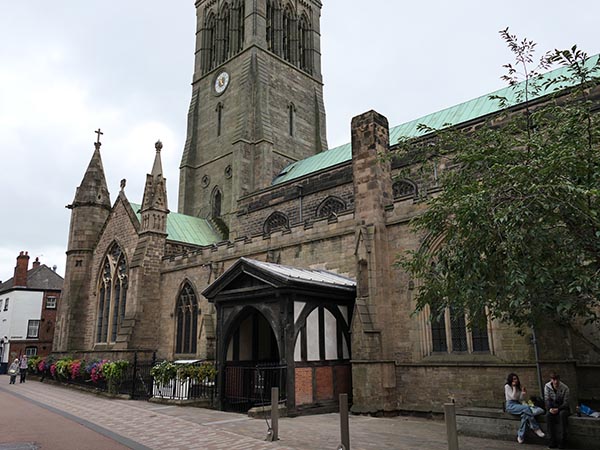
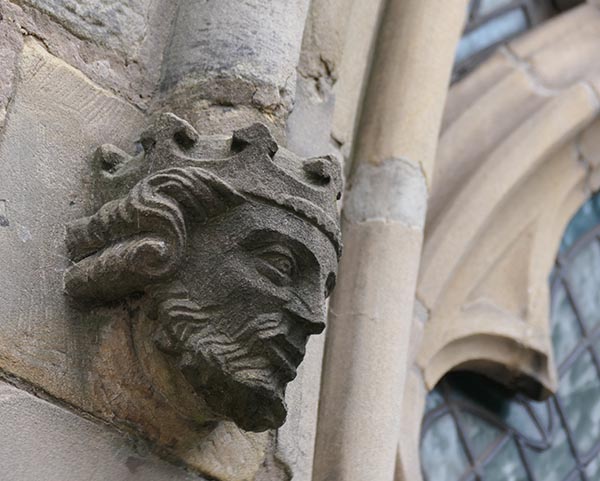
Leicester Cathedral (also known as Cathedral Church of Saint Martin) was built on Roman ruins and was mentioned in the Domesday Book. The oldest parts of the cathedreal date to the 12th century, but the building today is mainly Victorian.
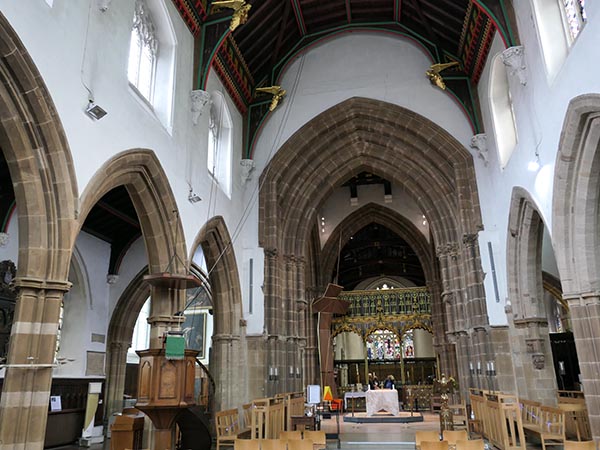
Leicester Cathedral is a modest size without too rich in decor compared with other cathedrals. Its walls are whitewash but the arches retain their stone colour.
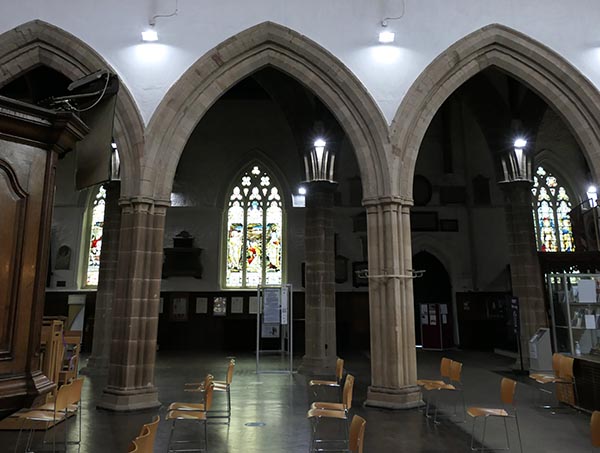
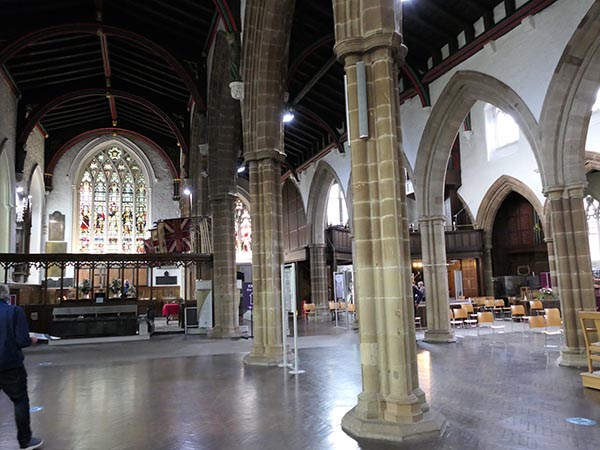
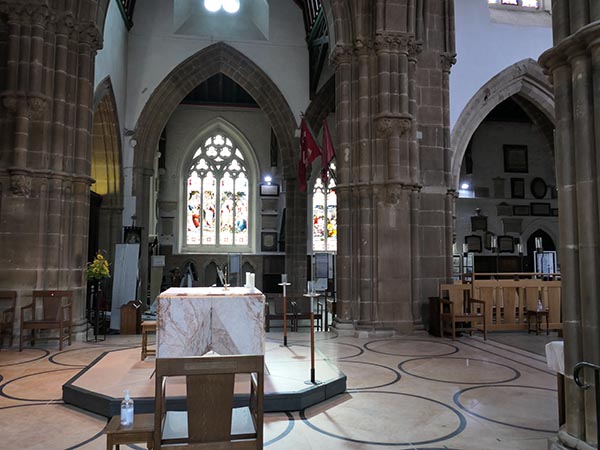
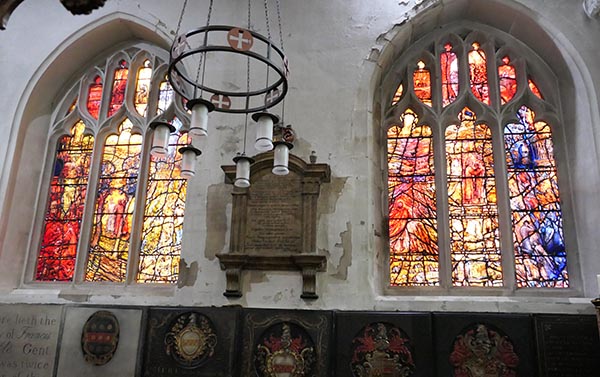
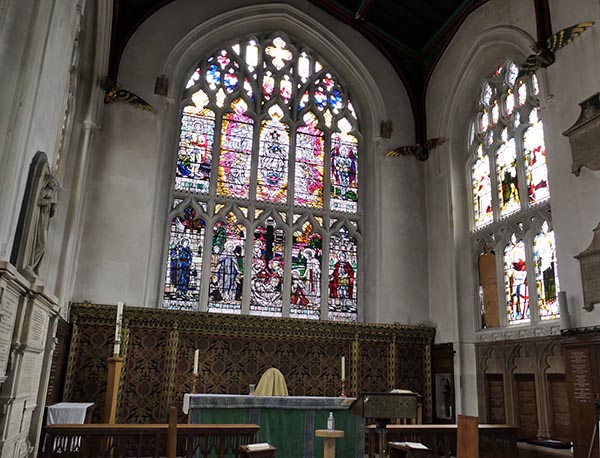
The stained glass is beautiful. I had a wander around the different areas of the cathedral.
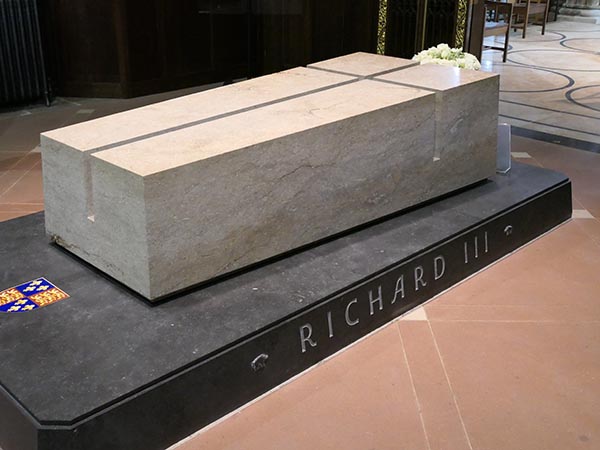
Richard III's grave is marked in a prime location in the church with a slab of marble that has a cross cut into it. This looks like a sword when looking at it from below, I was informed. It looks much nicer in real life.
That marks the end of my journey to locate King Richard III and to understand more about the king and how he died and how his body came to be discovered hundreds of years later. A mystery of the king's remains are now solved, and people in future generations can learn about the king.

Leave a comment