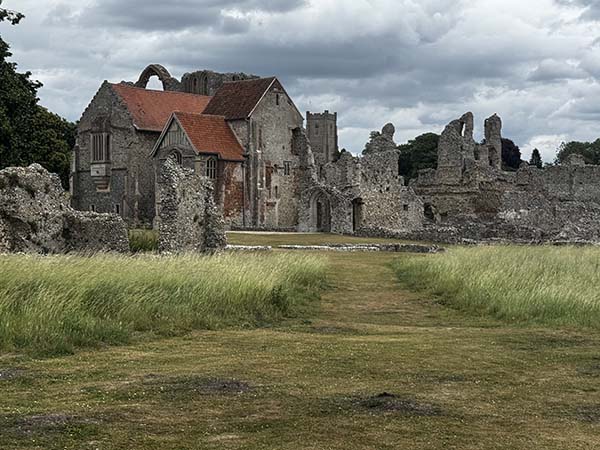
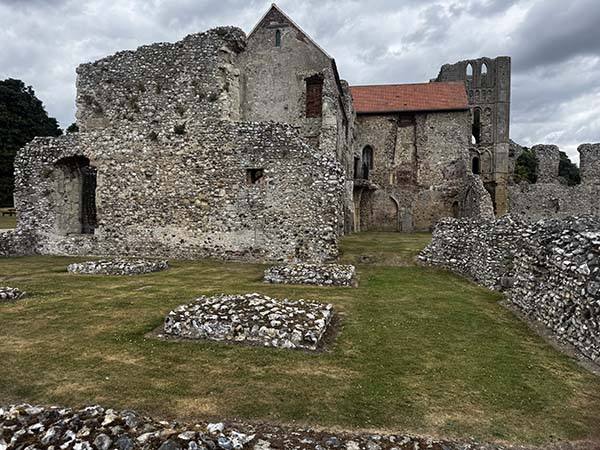
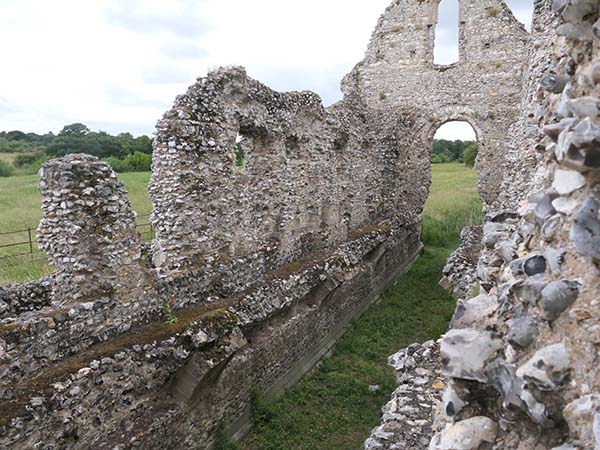
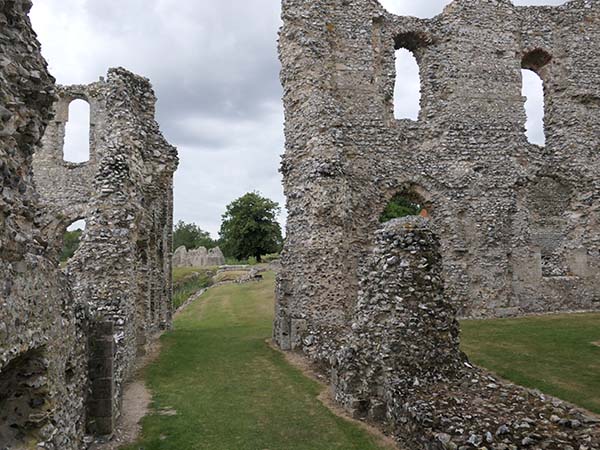
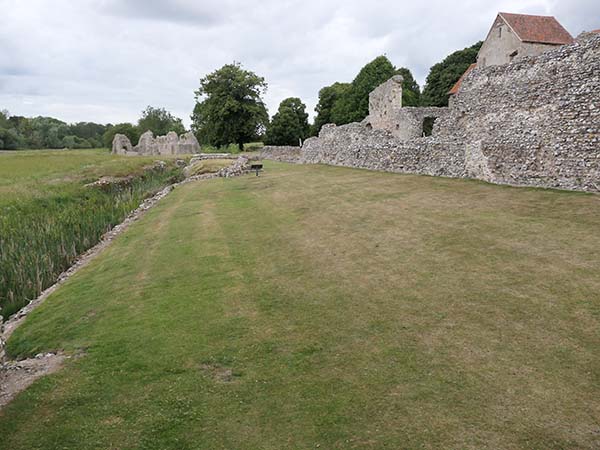
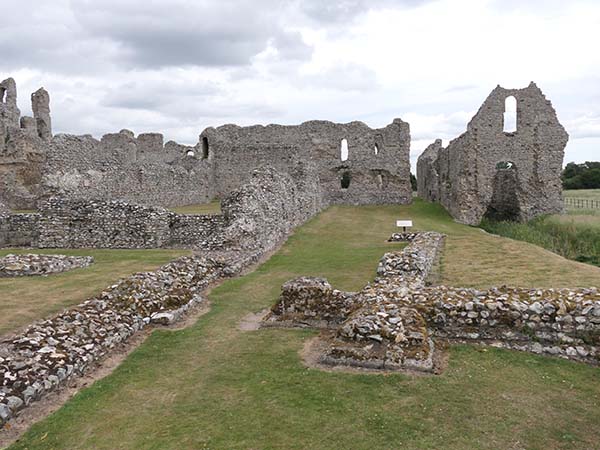
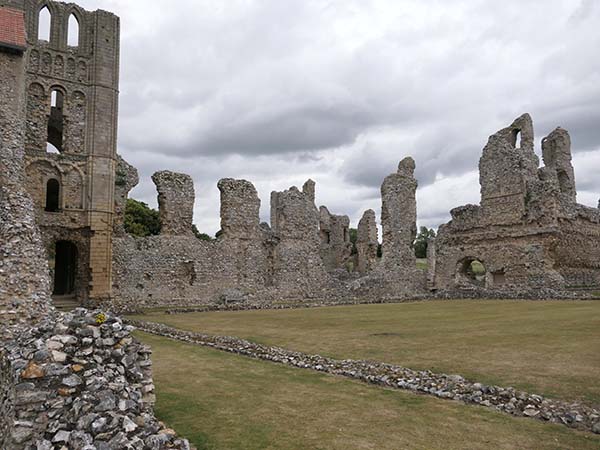
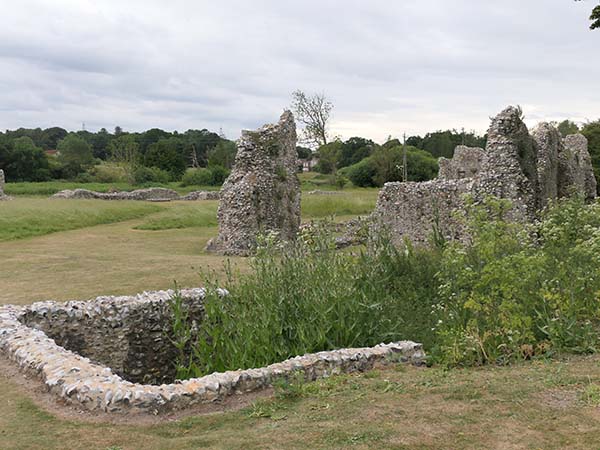
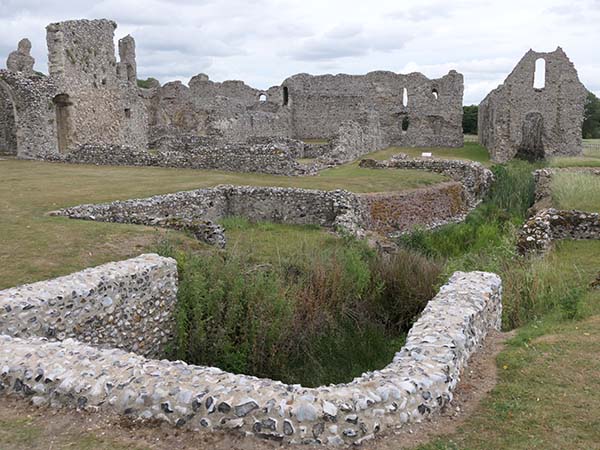
Castle Acre Priory is located in the village of Castle Acre in Norfolk, and this priory was founded around the year 1089 by an order of Cluniac monks from Burgundy. In addition to the priory, there is also a castle here (Castle Acre Castle in Norfolk). The site is largely ruins with some structure remaining to explore, and it is a fairly large site with some architectural decoration still visible and the remains of a large toilet block over a former stream of running water. The ruins date from the 12th century.
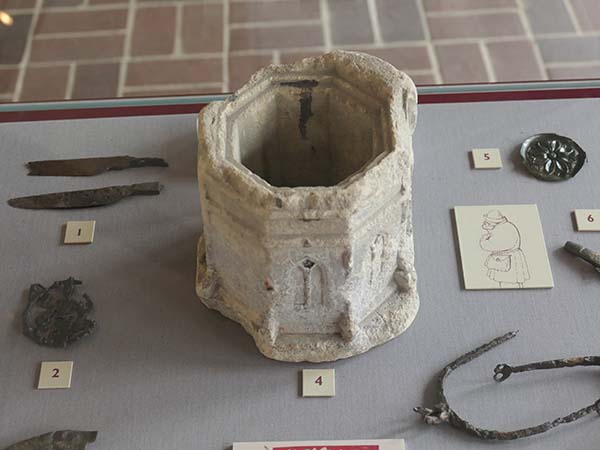
At the entrance to the priory is the visitor's centre, which also contains a museum room about the priory's history, purpose, and the people who lived and worked there. There is also a display of items discovered at the priory.
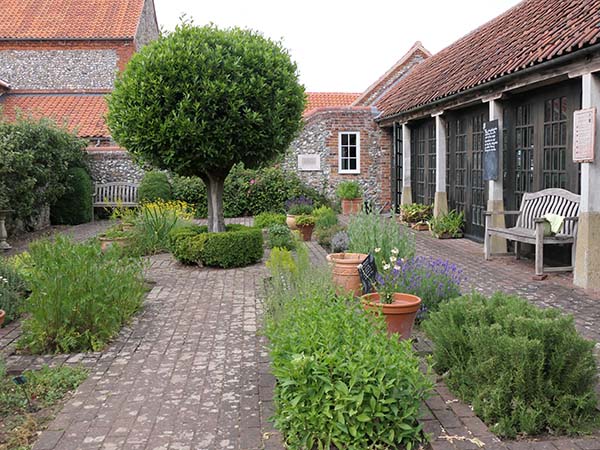
A small herb garden also exists next to the visitor centre.
William de Warenne, who founded the priory, was given the land after he fought alongside William the Conqueror at Hastings. The castle was built with the priory, and a town was built up around it.
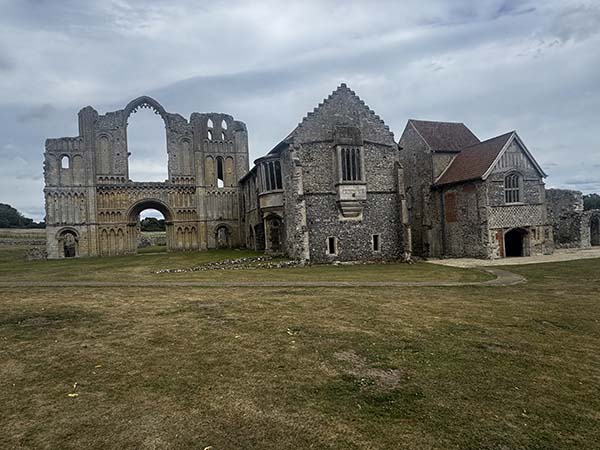
The site plan of monastaries normally followed a pattern with the different rooms leading off cloisters and the church itself facing a specific direction. This included the dorms for the monks, the refectory where they would have eaten, kitchens, a chapter house, infirmary, and other such buildings.
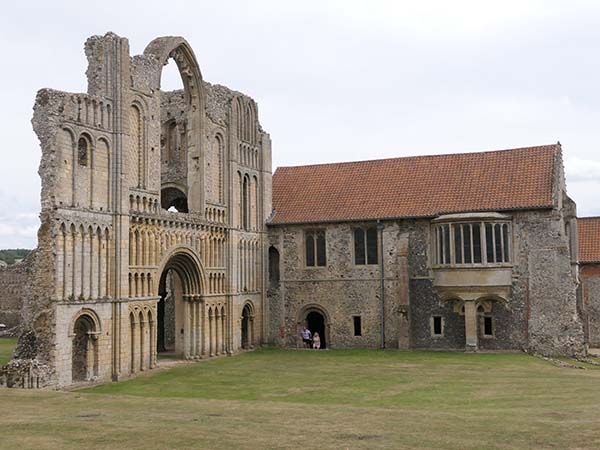
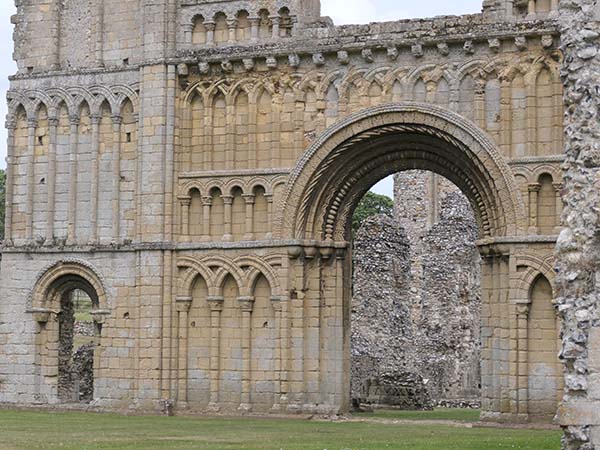
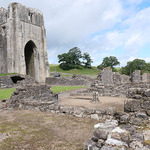
The front of the cathedral here contains the elaborate decoration with influences from the middle east in the decoration around the doors, windows, and arches.
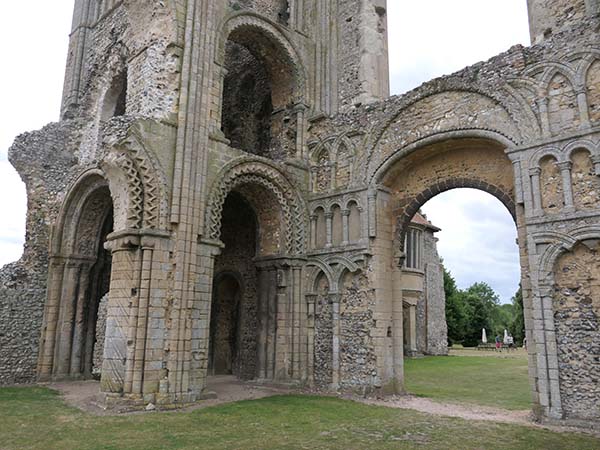
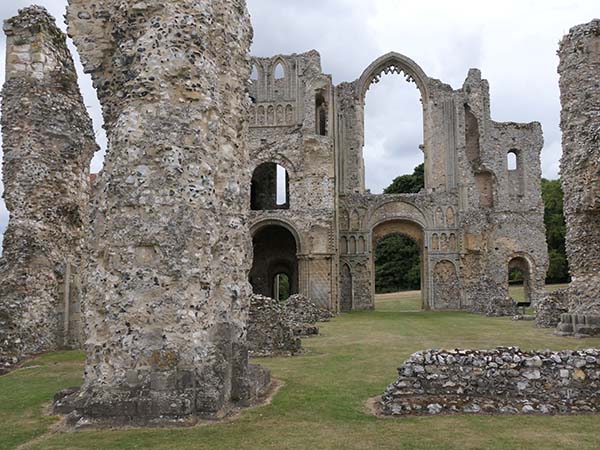
I went to explore the buildings and learned about them through the audio guide.
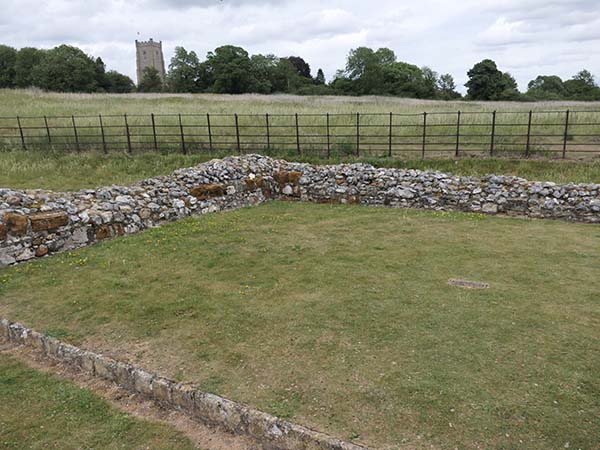
part of the infirmary buildings
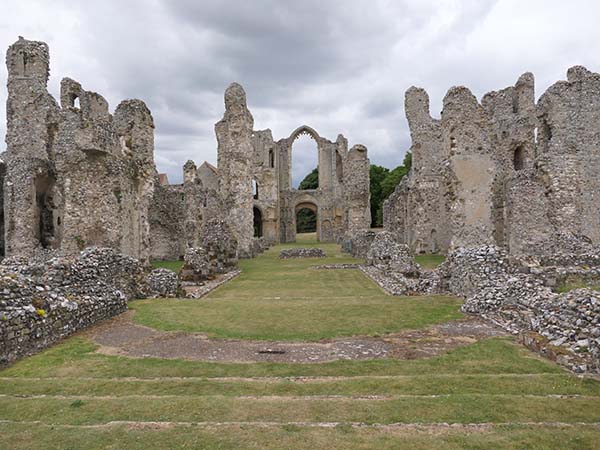
Nave
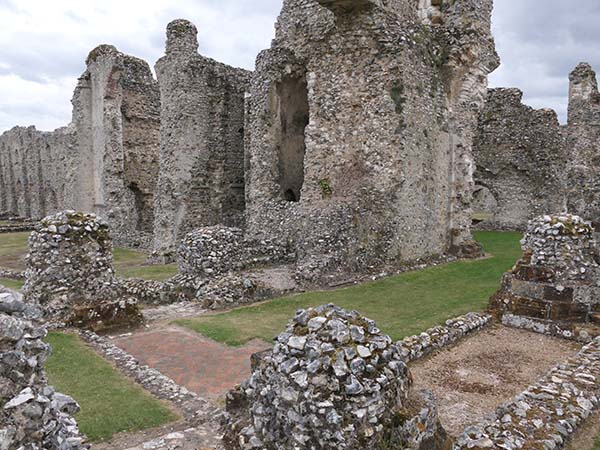
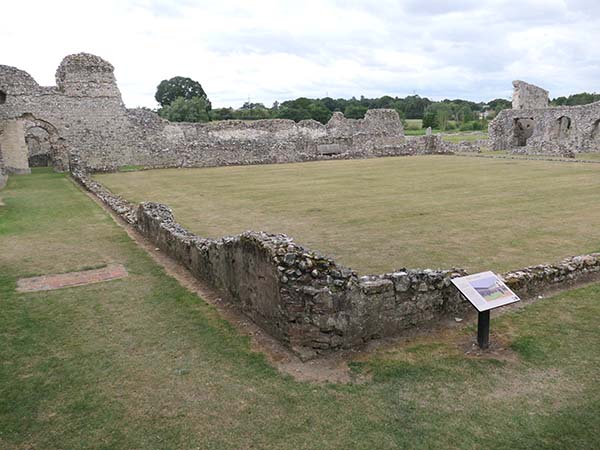
Cloisters
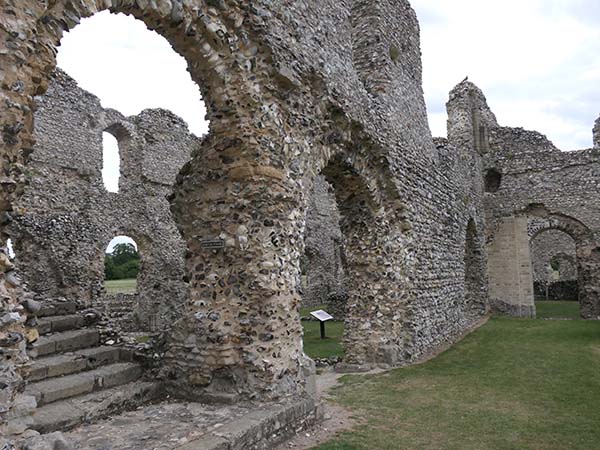
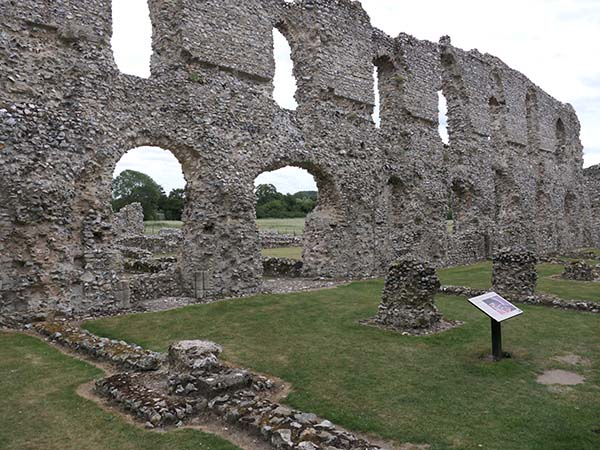
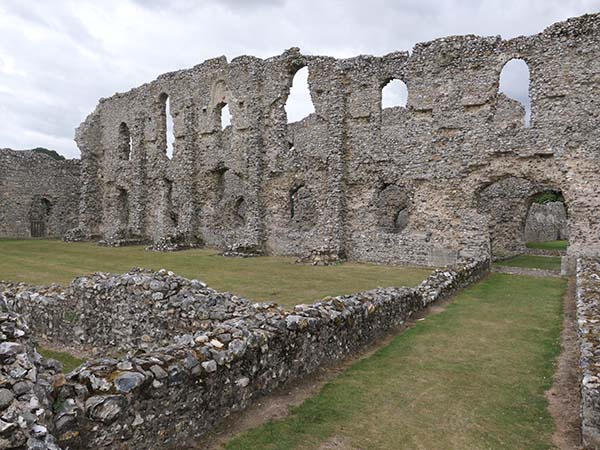
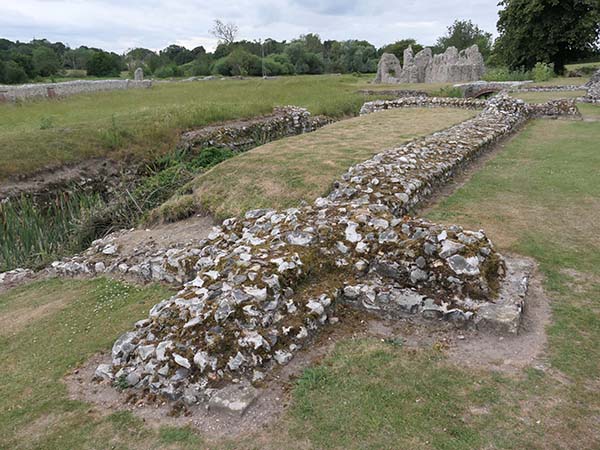
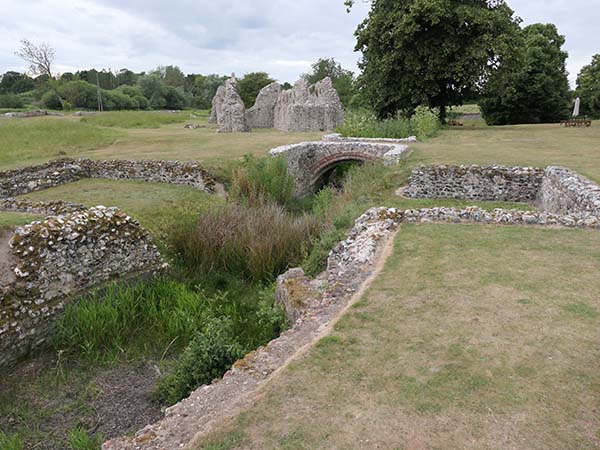
The latrines would have been connected to the dorms where the monks would have slept. There were twenty-four seats in the latrine. There were two levels, and the waste would have gone into the stream and eventually into the river.
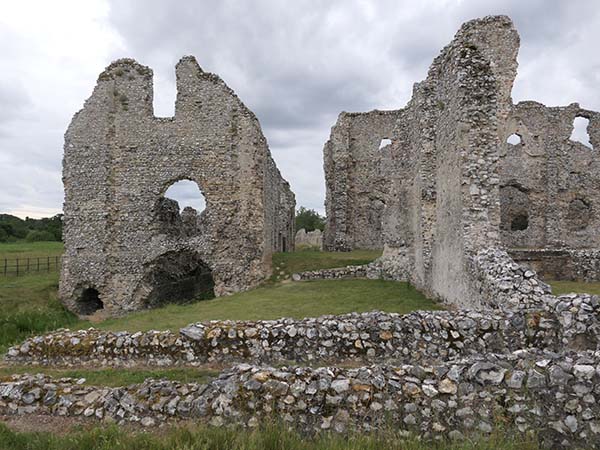
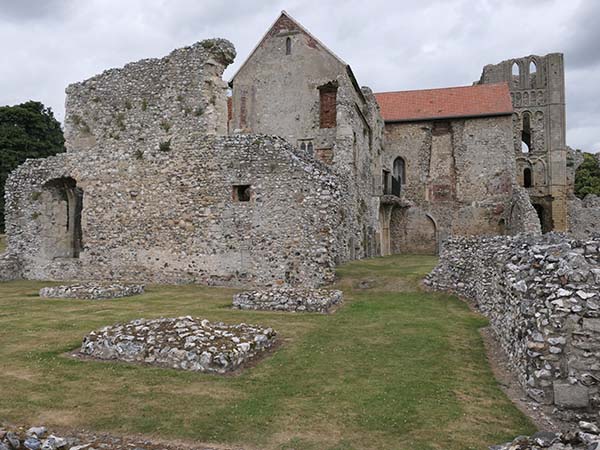
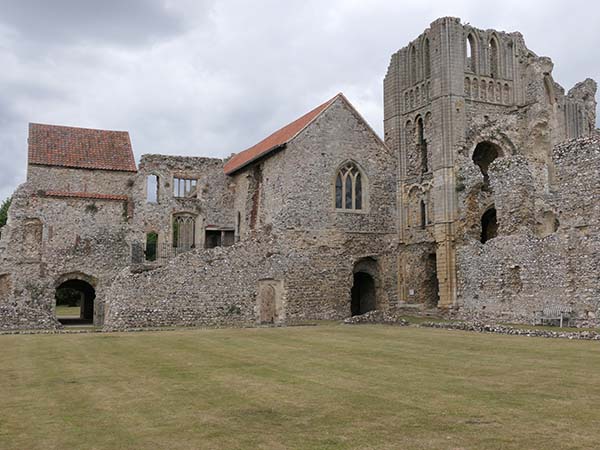
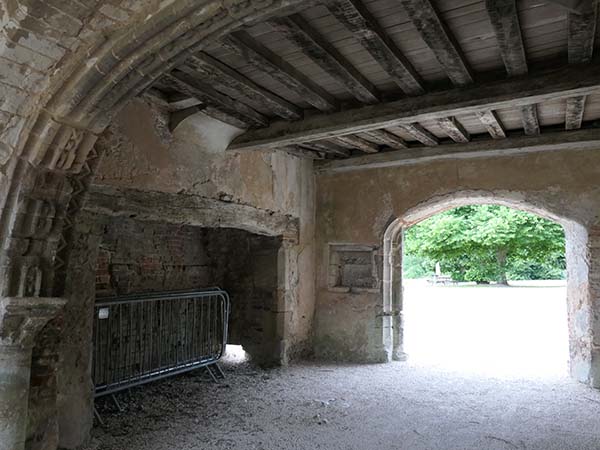
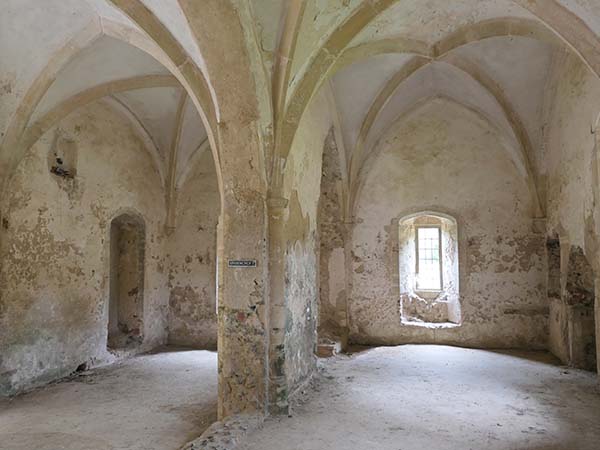
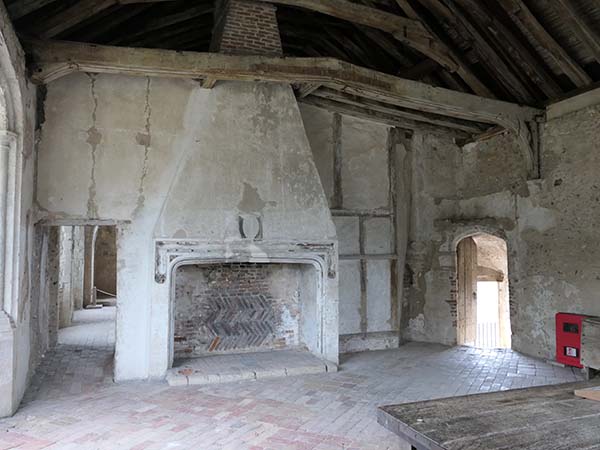
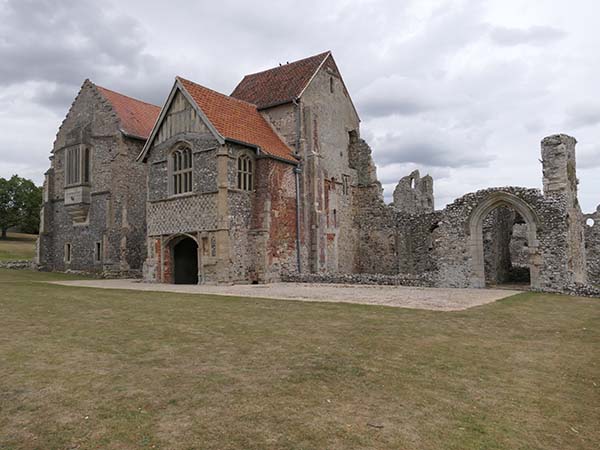
Next, I went to the Prior's Lodging, which is still a functional roofed building on the site. It was converted into a home after the monastary was dissolved in the mid-1500s. The other buildings were ruined.
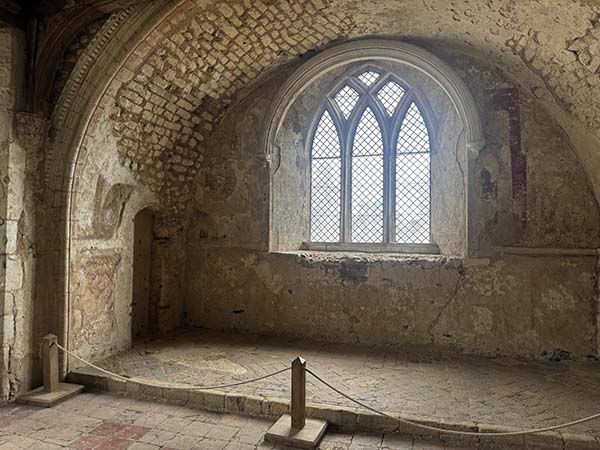
The chapel contains some fragments of colour near the window featuring Tudor roses, and the floor tiles can still be seen as well in the chapel.
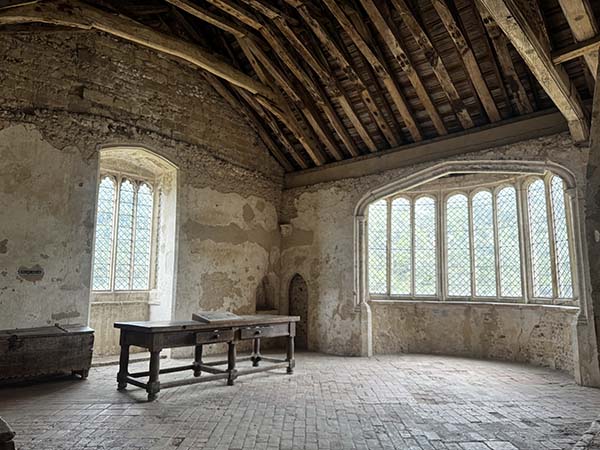
The Great chamber was lavishly decorated for the prior and is still standing for visitors to enjoy.
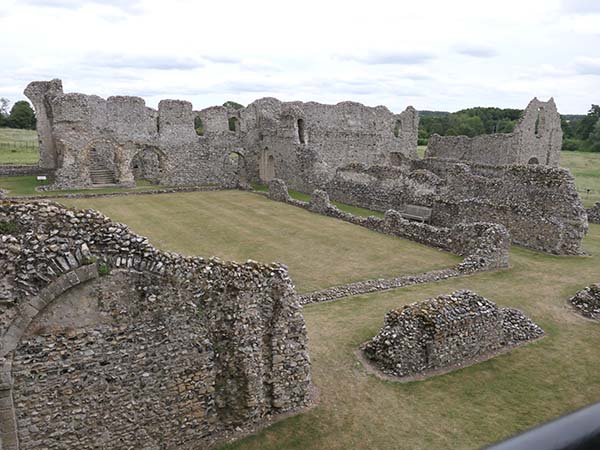
Before I left, I headed across the bridge to the other side where there were additional buildings. These were used for agricultural and brewing.
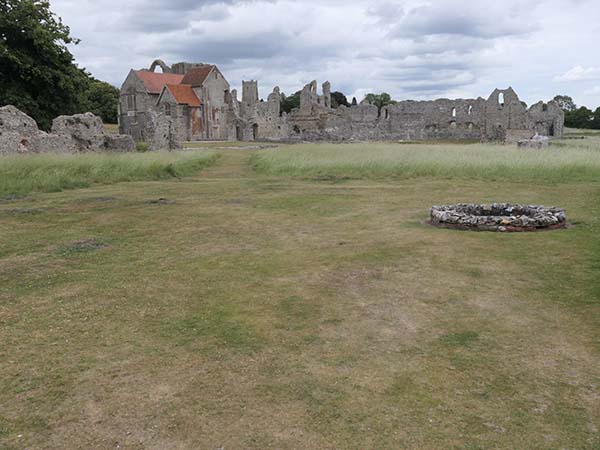
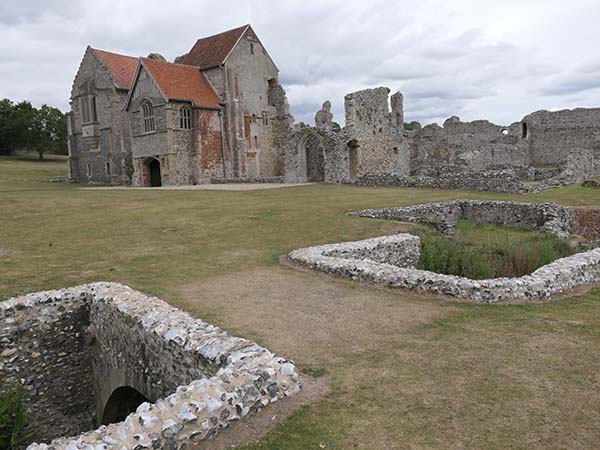
There is a lot to see at the priory, and the audio guide tour is very good. I had just enough time to see everything before it closed, and I think visitors need approximately two hours here to see everything and listen to the audio guides. The site is maintained by English Heritage.

Leave a comment