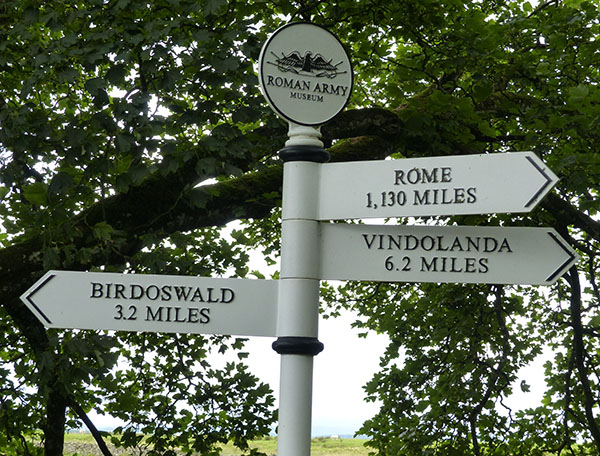
While exploring Hadrian's Wall in Northumberland/Cumbria, I visited the Roman Army Museum. The Roman Army Museum has everything you ever wanted to know about the Roman soldiers who were stationed at Hadrian's Wall, notably Vindolanda where the artefacts on display came from. Overall, it took me a couple of hours to walk around the museum, watch a 3D video about the wall and listen to projections of Roman soldiers/scholars teach Latin or new recruits. Outside the museum is a photo opportunity with the number of miles between Rome and the nearest two Roman forts to the museum that can be visited today.
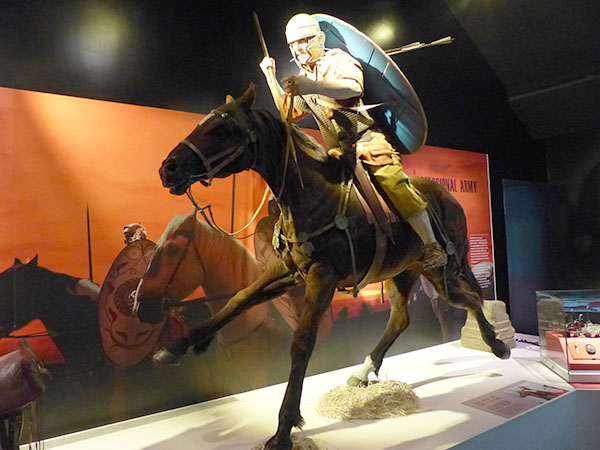
The first part of the museum described the make-up of the legions or troops, where they came from, what they wore, and what they carried around with them.
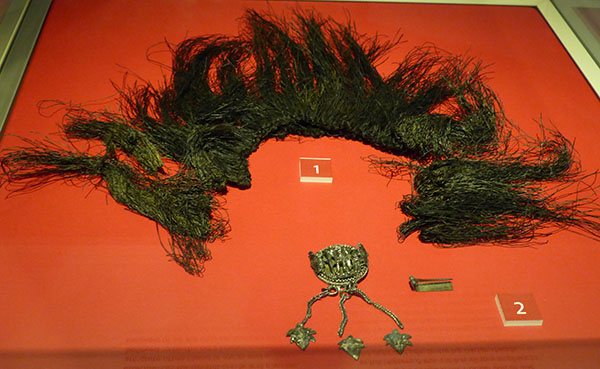
In this part of the museum is the most unique find. It is the Roman helmet crest, which was found at Vindolanda. The crest is the only one in the world that has survived, and it is approximatel 2,000 years old. A lot of perishable items were discovered at Vindolanda because of the moist cavity in between building work or renovations during the Roman times. A lot of leather was also discovered as well as tablets, which gave an insight into the lives and diets of the Roman army. The other find underneath the crest is a medal awarded to one of the Romanian soldiers and was quite and expensive item.
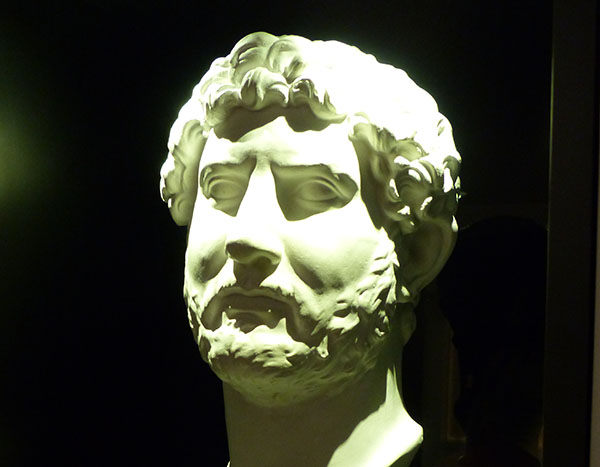
A statue of Hadrian accompanies information about the emperor who was responsible for building the wall. Information panels explain the length of the wall and the ruins and sections of the wall that can be visited and hold some interest.
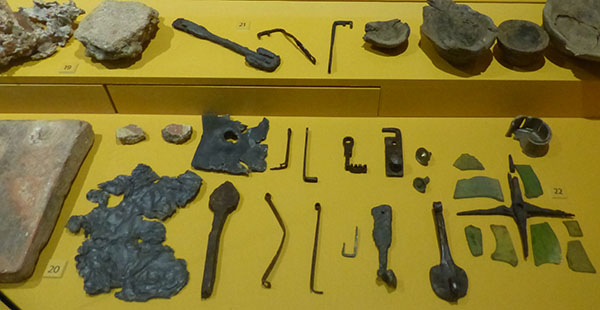
The museum also has a lot of metal and stone items that the soldiers would have used day-to-day.
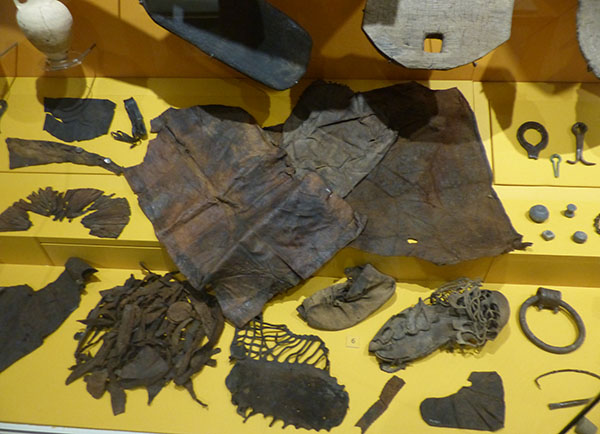
There is a small selection of what appears to be unworked leather and leather shoes on display here, but an even larger selection is on display at Vindolanda.
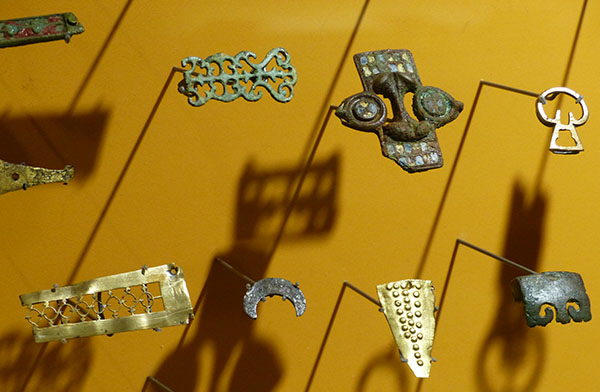
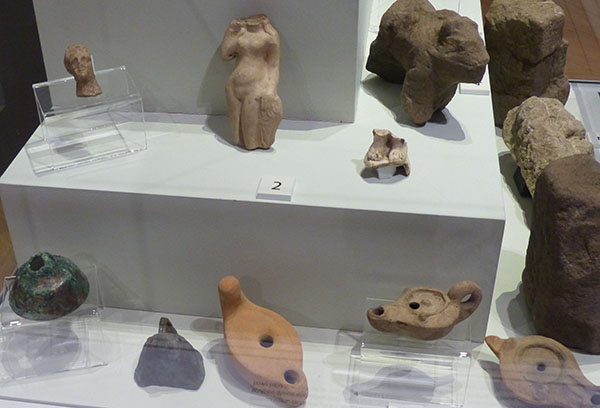
Religion also played a factor in the lives of the soldiers. Some of the gods and goddesses were imported from Rome, but many were either local dieties or dieties from the home lands where the auxiliary soldiers came from. These were soldiers from other conquered lands in the Roman empire who were enlisted as soldiers for a time and paid a wage. Eventually, if they lived long enough, they would become Roman citizens for their service.
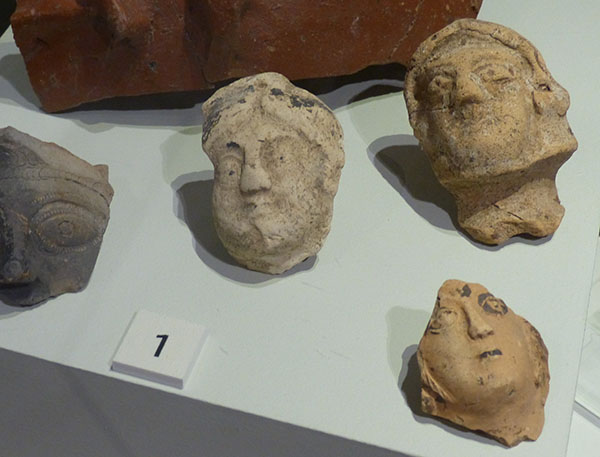
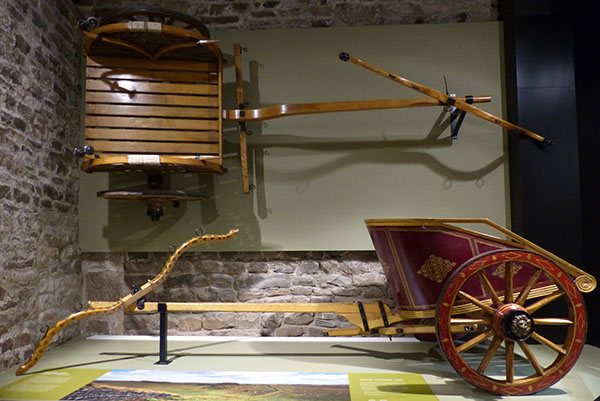
Two examples of chariots are located in the museum. One is Roman, and the other is Celtic. The Celtics used chariots in battle against the Romans.
A small selection of coins can also be seen in the museum.

I suggest a visit to the Roman Army Museum if you are visiting Hadrian's Wall because it provides an additional level of appreciation and understanding of Hadrian's Wall and Roman Britain heritage. Hadrian's Wall and area is a UNESCO World Heritage site.

Leave a comment