Segedunum is the first (or last) Roman fort located along Hadrian's Wall at Wallsend, Newcastle. The name of the fort is translated as "strong fort", and it is from two British words. The wall marked the northern-most boundary of Rome, and it was built around the year 120. The modern name "Wallsend" dates from 1085 when the wall could still be seen heading down to the river.
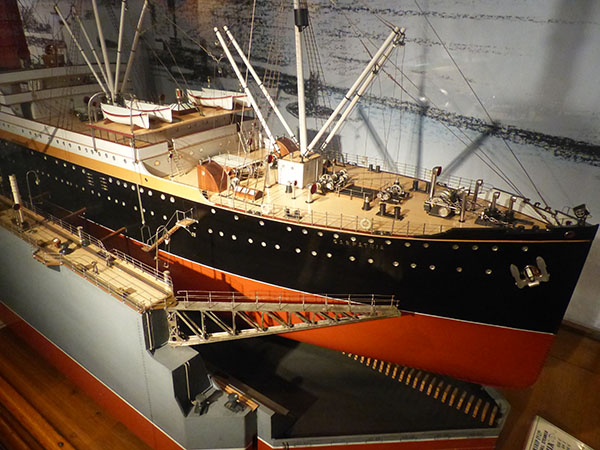
Over the centuries, the area here was used by the Roman army and then forgotten; it was then used for coal-mining and shipbuilding. The museum here at the location mentions the area's history in these areas with the most focus spent on the Roman fort. The below model ship of the Carpathia was built here, and it was a ship that recovered some survivors of the sunken Titanic.
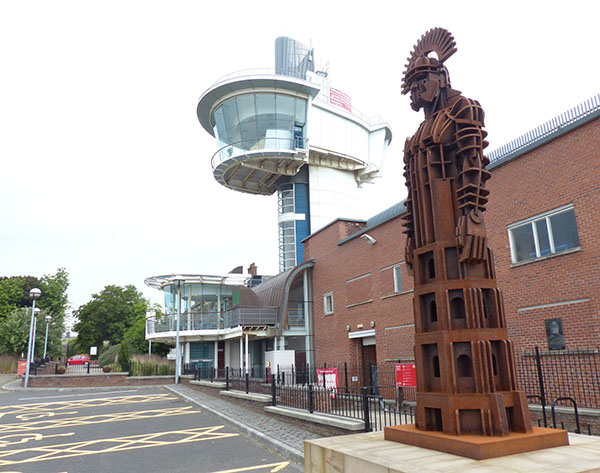
A viewing tower at the museum allows viewers to see the area from above and to imagine what the fort was like. The river and location of the old dockyard can also be seen here, and a television screen in the viewing area shows how the area below evolved over the centuries.

The statue in front of the museum is a Roman centurion made of steel, and it marks the start or end of Hadrian's Wall. The statue is named "Sentius Tectonicus", and its name is from an inscription of a centurian who supervised a section of the wall near here; "Tectonicus" references architecture. The statue was added in 2017 to mark 30 years of Hadrian's Wall being a World Heritage Site.
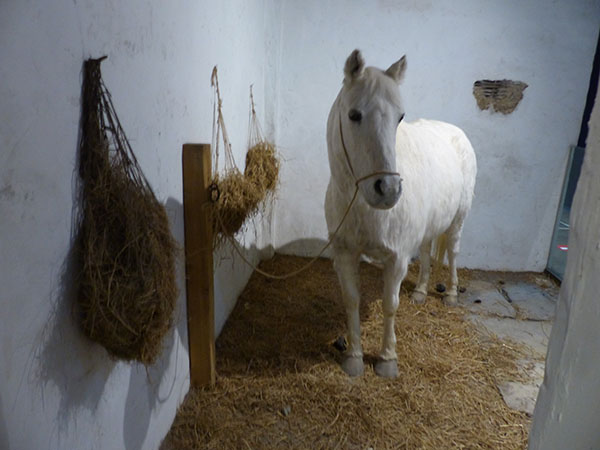
At Segedunum, archeologists discovered walls and drainage for buildings where men and horses would have lived together. The front rooms contained drains for the urine of the horses, and three horses would have lived in one barrack with the three men at the back in heated areas.
During the escavations, they also found that certain areas of the wall needed to be rebuilt and that the wall was at least ten meters high; over time, some of the wall was buried over a meter down from the current ground level.
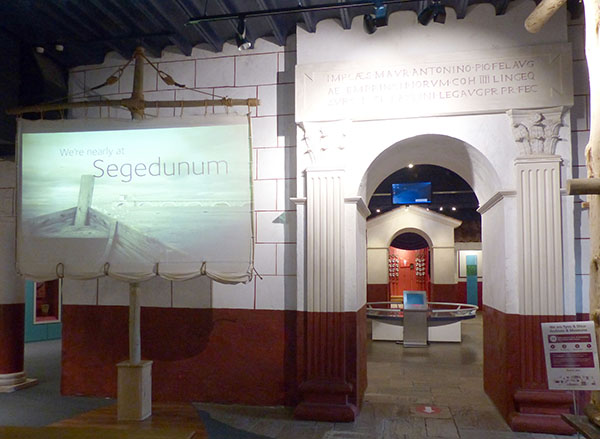
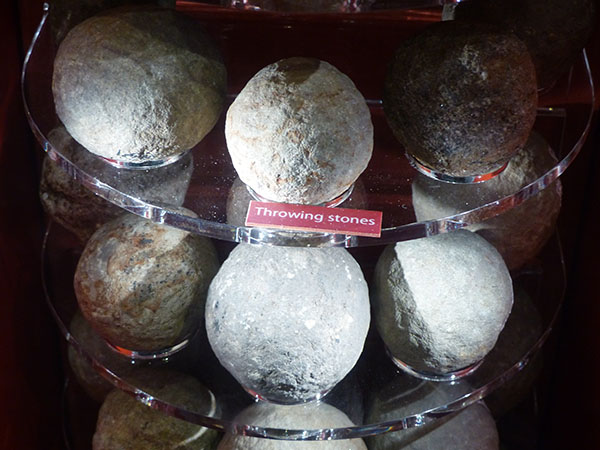
Before the Romans, there is evidence of the land in the area being used by local farmers and tribes of people. These people lived in roundhouses about a kilometer apart from each other, and there is evidence that the land where the fort was built was ready to be planted but confiscated by the Romans; there is evidence that other farmsteads were abandoned in the area north of the wall. Worked stone tools were discovered in the area, and the stone was reused over many years; some of the stone came from over 130km away. Some of these stone tools were found at the Roman fort and were likely items collected by Roman soldiers that had been discovered and saved as a souvenir.
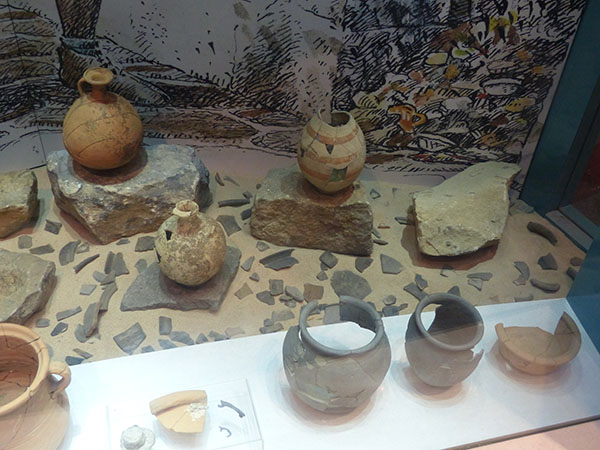
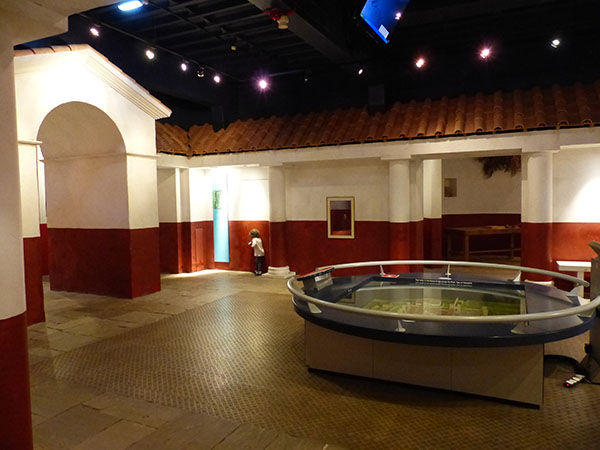
The museum has a reconstructed area showing some of the rooms that would have existed at the fort and also has displays of items discovered.
The northern side of the wall contained a ditch that was over three meters deep, and on the other side of it, barriers of branches would have been laid out to create extra defenses. The wall would have taken at least six years to build but required re-building failed sections. Evidence of the repair and stone obtained from other locations can be seen.
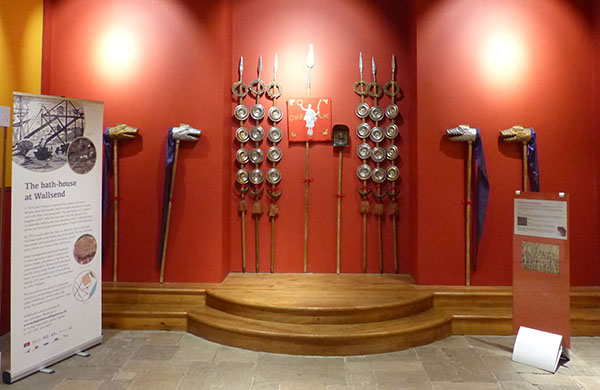
The Roman standards pictured were symbols of the fort and were guarded and protected at all costs.
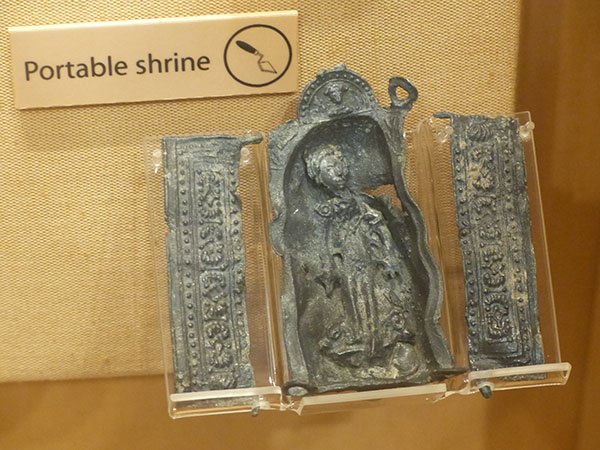
The portable shrine was constructed so that the figure of the god or goddess could slot out and be replaced.
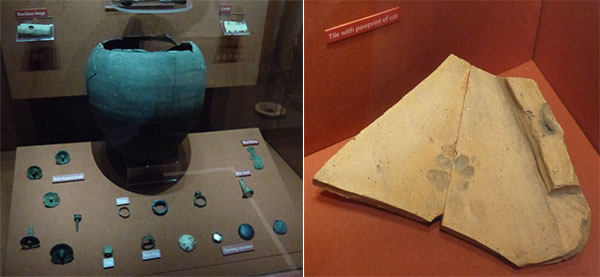
Various personal items, such as rings, were found as well as a paw-print of a cat's paw on a tile. This shows that cats were present in Britain in the early centuries and lived side by side with people. There is also another tile with a human print on it in the museum.
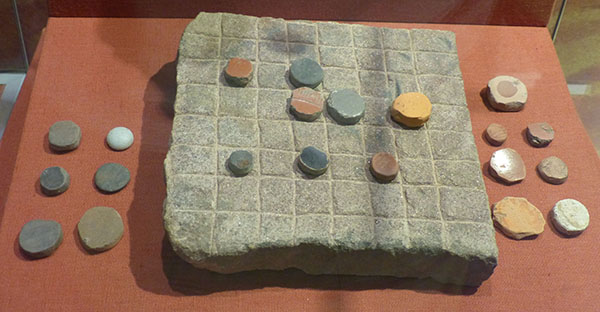
Soldiers would have had board games to play in their free time.
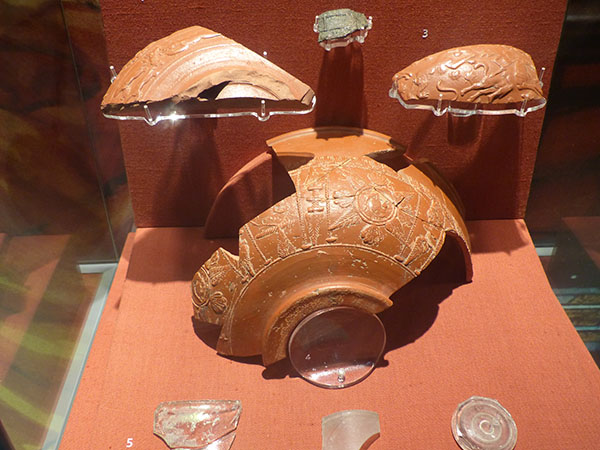
The below pottery was found in the headquarters building.
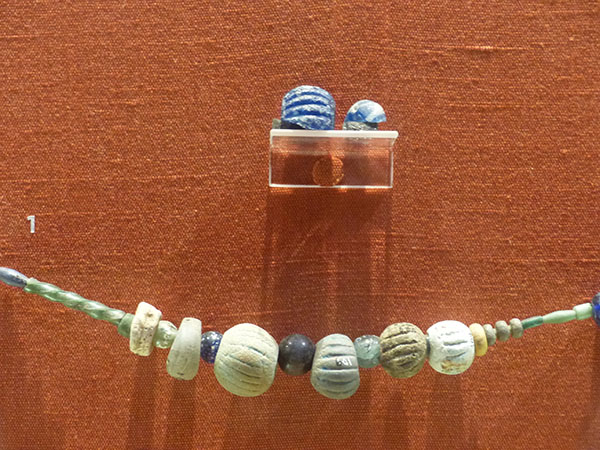
The below necklace has colourful beads.
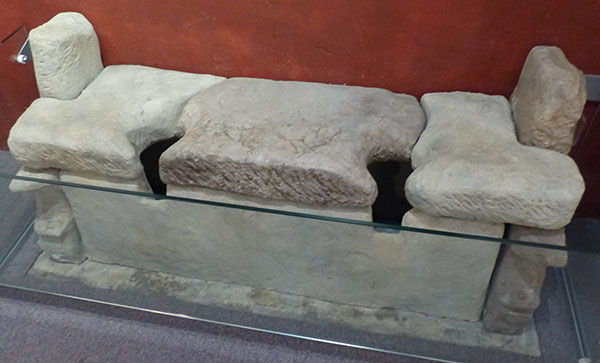
A latrine is made of stone with holes for the waste to go into.
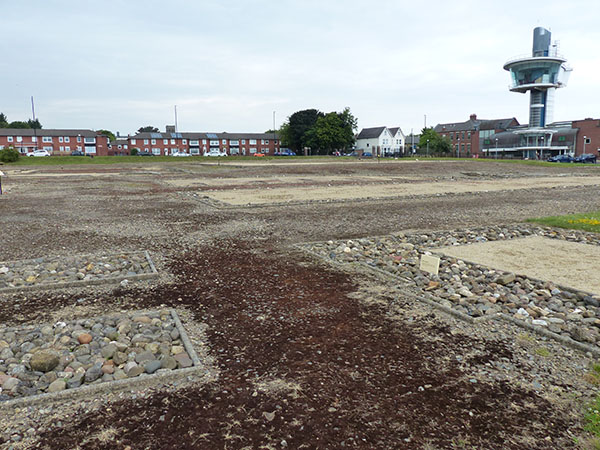
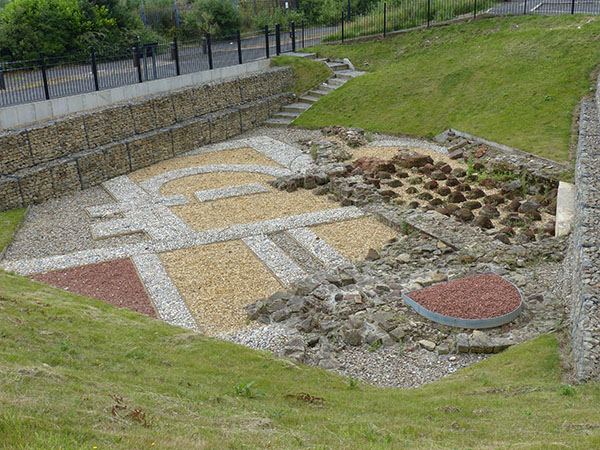
After looking around the museum, visitors explore the ruins of the fort outside. A monument is dedicated to some of the names of the men who worked on constructing the wall.

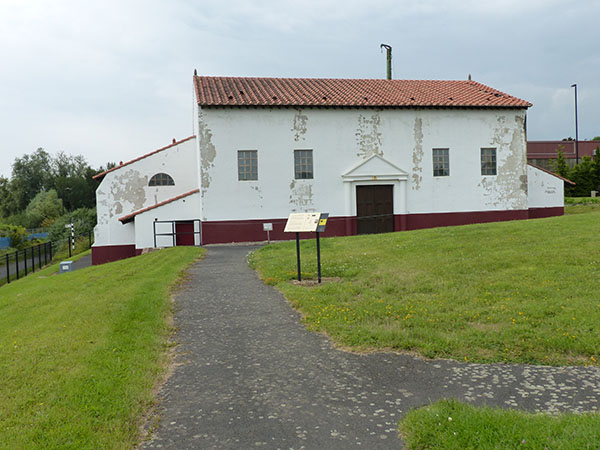
There is a reconstructed bath house located next to the fort, but we could not enter it as the council have closed it as it needs some repair work.
The remains of the stable barracks can be seen below.
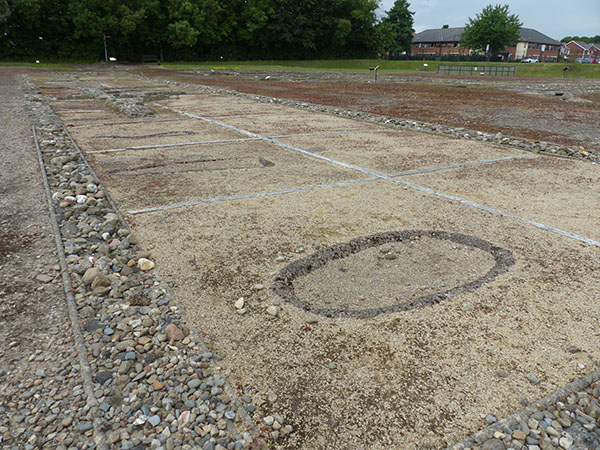
Drains are visible underneath the stonework of the officer's building.
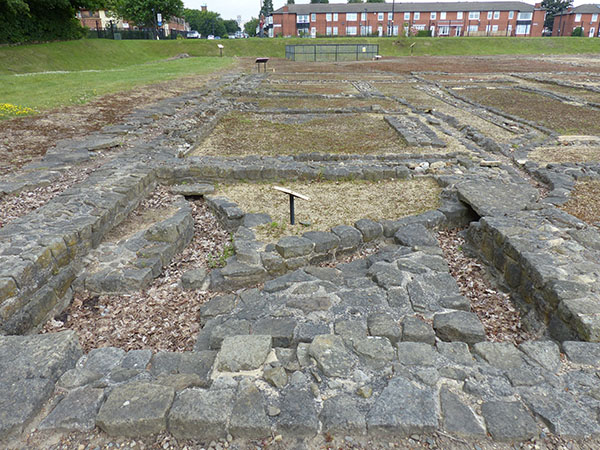
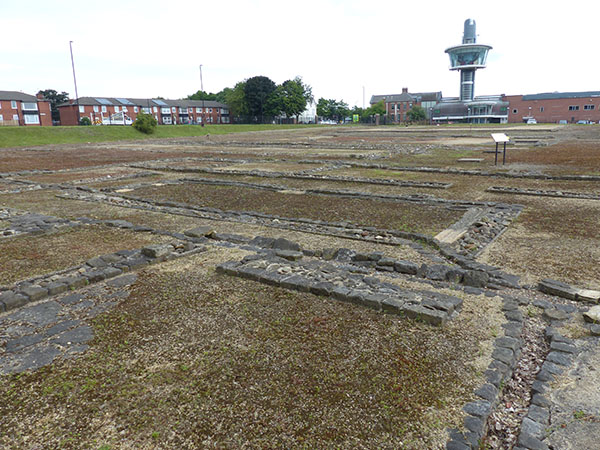
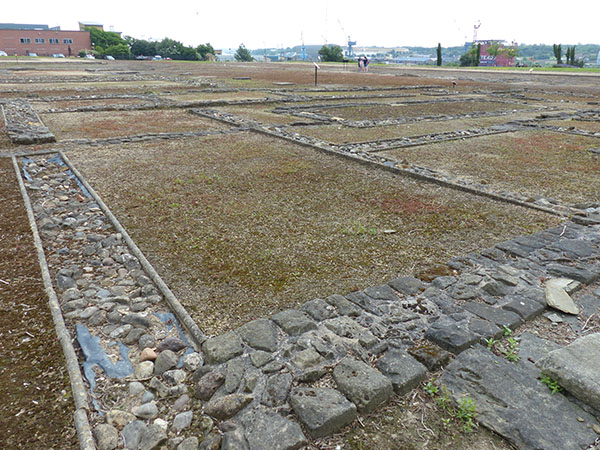
Outside the fort and down closer to the river are the remains of the Roman baths. The bathhouse was constructed on top of, and it was escavated a few years ago.
For additional Hadrian's Wall posts, see:

Leave a comment